Galileo
Launched: October 18 1989
Reached Destination: February 10 1990 (when I say destination I mean of course Venus, though this probe was on its way much further out of the solar system, heading for Jupiter)
Type: Gravity assist
Nationality: American
Results: Not really sure; it only flew by Venus, and its main objective was Jupiter, so there isn’t much about what, if anything, it did as it passed the second planet from the sun.
Photographs Taken: Unknown but probably none
Mission Ended: September 21 2003
Termination of Probe: Crashed into Jupiter
Cassini
Launched: October 15 1997
Reached Destination: April 26 1998 (as above; main destination was Saturn)
Type: Orbiter
Nationality: American
Results: None; seems to have used Venus, and Earth, as slingshots to get to Saturn.
Photographs Taken: None
Mission Ended: September 15 2017
Termination of Probe: Crashed into Saturn
MESSENGER
Launched: August 3 2004
Reached Destination: (as in, Venus) October 24 2006. Performed two flybys, a second on June 5 2007
Type: Gravity assist
Nationality: American
Results: Original flyby, nothing, as the position of the Sun inhibited radio communications. Atmosphere of Venus was imaged and studied on second flyby.
Photographs Taken: Yes, but number unknown
Mission Ended: April 30 2015
Termination of Probe: Crashed into Mercury
Venus Express
Launched: November 9 2005
Reached Destination: April 11 2006
Type: Orbiter
Nationality: European
Results: Longest - at that time - continuous study of the atmosphere of Venus from orbit. Original mission covering 500 days extended five times. Global maps made of the surface temperatures, surface characteristics of the planet studied as well as the plasma environment. First ever European space probe. Ozone layer detected, as well as cold areas in the atmosphere where it is postulated ice may form.
Photographs Taken: Yes, but number unknown
Mission Ended: December 16 2014
Termination of Probe: Crashed into Venus.
Akatsuki
Launched: May 20 2010
Reached Destination: December 6 2010, but failed to achieve orbit. Was eventually sorted December 7 2015.
Type: Orbiter
Nationality: Japanese
Results: After a five-year wait, the probe, the first ever Asian and first ever Japanese mission, finally achieved orbit in 2015. Akatsuki began observing cloud and surface of Venus, as well as its weather, and to investigate the claims of lightning there. Gravity wave detected in the winds above
Aphrodite Terra, one of the two highland plains. Released the experimental solar sail IKAROS.
Photographs Taken: yes, but number unknown
Mission Ended: Still active
Termination of Probe: n/a
IKAROS
Launched: May 20 2010
Reached Destination: December 8 2010
Type: Flyby
Nationality: Japanese
Results: None, other than it’s the world’s first ever solar space sail!
Photographs Taken: None
Mission Ended: Still active
Termination of Probe: n/a
Shin’en
Launched: May 20 2010
Reached Destination: December 2010
Type: Flyby
Nationality: Japanese
Results: None; spacecraft failed after launch and though it flew by Venus, no communication has been possible
Photographs Taken: Unknown
Mission Ended: n/a
Termination of Probe: n/a
An interesting and unique experiment, Shin’en was a joint project between Japanese universities and I guess, certainly in terms of Venus anyway, was the first space probe launched which was not under the control of or financed by a national government. It was to be used to test the robustness, or otherwise, of computers built by the University, but contact was lost very quickly and now it’s probably up there, looking for someone to transmit data to.
Okay, wait what? I don’t get this. It says the dimensions of the probe are about a foot square, and this structure carries a payload of SIX computers? How small can those guys make the things? Answers on a postcard please...
Parker Solar Probe
Launched: August 12 2018
Reached Destination: October 10 2018
Type: Gravity assist
Nationality: American
Results: None; it seems to be another using Venus as a slingshot to get somewhere else, this time the Sun. It’s enough to give a young planet an inferiority complex!
Photographs Taken: None
Mission Ended: Still active
Termination of Probe: n/a
BepiColumbo
Launched: October 20 2018
Reached Destination: October 15 2020 (Venus, on the way to Mercury)
Type: Gravity assist
Nationality: Japanese/European
Results: None as yet; possibility of detecting phosphine
Photographs Taken: None
Mission Ended: Still active
Termination of Probe: n/a
This would appear to be the first ever collaboration between two continents, Asia and Europe, in space exploration; certainly the first involving Mercury, which is where the probe is headed. It’s expected to flyby Venus again in August of this year (2021) and arrive at Mercury sometime in October.
Solar Orbiter
Launched: February 10 2020
Reached Destination: December 2020 (Venus)
Type: Gravity assist
Nationality: European
Results: None; it’s a solar probe
Photographs Taken: None
Mission Ended: Still active
Termination of Probe: n/a
And that’s it for our exploration of Venus so far. No less than six probes are in development between 2023 and 2030, the first of these being a private US concern, then there’s one from India, one from Russia (no longer the Soviet Union, and seeming to have abandoned its observations of Venus since the original glut in the last half of the twentieth century) and another European one, with NASA chafing to get theirs into orbit too. Beyond that, a total of nine proposed missions, some only in the drawing board stage, are being looked at, all except one being NASA’s baby, including one intended to be the first rover on Venus.
It should in all fairness be pointed out that though Americans believe their country the best in the world (well, some of them do) the Russians, or at least the Soviet Union have them beat in space on almost all fronts. Leaving Sputnik aside, ignoring Yuri Gagarin’s historic feat, look at the probes they sent to Venus. They were the first to land on another planet, the first to send back pictures of the surface, the first to record sound, the first to send back
colour pictures, the first to observe gamma-ray bursts, the first to observe lightning, the first to confirm Venus even
had a solid surface. Oh yeah, it’s all down to the Russkies.
To be fair, there weren’t too many surprises for me with Venus. I’ve read and heard a lot about it, and most of the information is reasonably current, so while I learned new stuff about it of course in going into detail about it, I didn’t have the kind of revelation I had with Mercury, about which I knew little prior to researching it. I was intrigued by the ideas for terraforming it, sure, but that’s not quite the same. So as far as familiarity is concerned, I think I knew Venus quite well.
And now it’s time to engage the ion engines and move on.
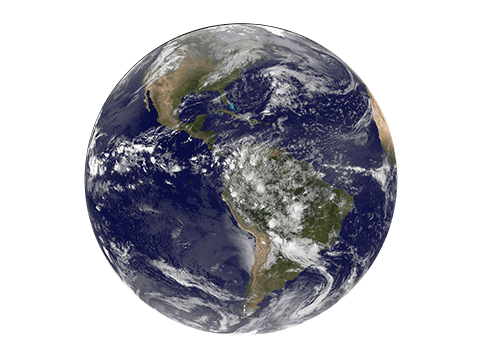
Harmless.
Hey, what did you expect? I’m not going to spend time describing your own planet to you, the one on which you’ve lived all your life! If you want to know more about Earth, get off your arse and go explore it. You don’t need a spaceship for that. Oh, very well.

Happy? No? Tough. Look, we’re only making a brief stop-off here so that Marie can feed her cat and Batty can collect some more comic books. And those of you who have to use the zero-G toilet can you PLEASE get it right? I am tired of encountering floating turds in the air every time I walk in. Read the manual. Thanks.
Right, our brief return to our homeworld over, it’s time to - where is Dianne? Did anyone see… oh, there you are. Didn’t you see there at the back. Right, is everyone here? Let’s head off then. We're about to encounter our first ever moon. And you know what it's called?
Yeah.
The Moon.