And after all that, our first article concerns a murder. Not too surprising: next to rape, or even ahead of it, murder is seen as the most evil thing a human can do. Taking someone’s life is the ultimate theft, the final act from which there is no coming back; you literally can’t say sorry and though you can try to make amends if you feel remorse afterwards, it’s too late for the person or people you murdered. Corpses can’t forgive you. So murder is pretty much always going to be high on the list when you talk of evil. But this isn’t a serial killer - actually, it’s two murderers, but neither are serial killers - in fact, they only killed two people. Only, yeah. But you know what I mean. However, it’s who they killed that made, and makes, this murder all the more shocking. People who, according to some, perhaps in some ways brought retribution of the bloodiest sort upon themselves, but who, according to others, were simply innocents who were killed for one of the oldest motives in human history. People who should have been the last the killers would have thought of killing.
Their parents.
Even that, though is not quite what makes this pair totally evil, in my mind. Murderers come in many shapes and forms, from the cold-blooded ones who either never regret what they have done or even revel in it, to the ones who later realise the enormity of their crime and break down, often turning themselves in or, in perhaps rarer occasions, killing themselves, unable to live with what they have done, or fearing a life in prison or even the death penalty. And then there are the more cunning ones; the ones who try to cover up their crimes, blame others, deflect suspicion, falsify alibis and cry crocodile tears over the people they have killed.
Few though come close to the sort of brazen and arrogant behaviour displayed by these two brothers, who attempted to blacken their parents’ name even in death, turn the tide of public sympathy their way, and invented stories of mob hits and other wild accusations and improbable theories, anything to make the police look the other way. And for a long time, it worked.
“The slaughterhouse of failure is not my destiny.” - Og Mandino, The Greatest Salesman in the World
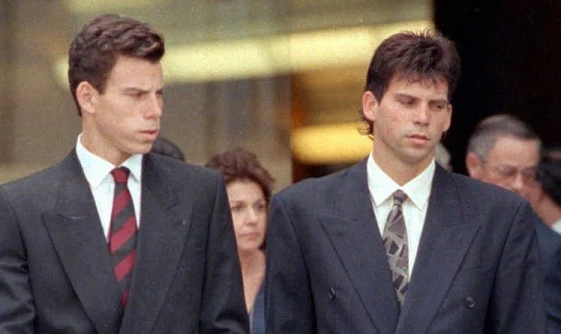 Sharper Than a Serpent’s Tooth: The Menendez Brothers
I: Big in America
Little did the mother of Erik and Lyle Menendez realise, as she shook her head and sucked in her cheeks and declared “Boy, this is lousy writing” that the manuscript she held in her hands, written by her son Erik, about a man who murders all his family, was both a future confession in all but name and a blueprint and pointer to her own vicious death at the hands of he and his brother Lyle. With characteristic lack of flair, the story was titled “Friends”, and the boys had hoped to shop it around to film studios in the belief it would be picked up and they would become famous. They would. Become famous that is, or at least infamous, but for different, and yet almost exactly these reasons.
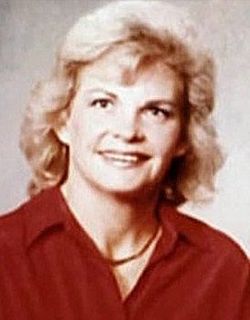
Mary Louise “Kitty” Menendez met her husband to be when she was working on the campus radio station at South Illinois University, and was instantly smitten. Her friends were amazed: Kitty, as she was universally known, was a bright, beautiful and outgoing girl, always ready to party and dance, but allied this to an almost bookish intelligence other girls her age either did not possess, or were afraid, in the repressive American sixties, to display. Kitty didn’t care too much for public opinion or scandal, which was amply demonstrated when she chose Cuban immigrant student Jose Mendendez over all the blue-eyed American boys who drooled after the young and popular beauty. America at the time was less than well disposed towards immigrants of any stripe, but the McCarthy hearings of the previous decade and the revolution led by Fidel Castro in Cuba, presenting Uncle Sam with a fledgling communist country right on its own doorstep, left Cubans at the top of the list of people not to be trusted.
Certainly not to be married, but this is exactly what happened after a short romance - perhaps not to be characterised necessarily as whirlwind, but certainly different from the usual “wait and see, get to know them” idea prevalent in American society. Naturally there was opposition, but less naturally, it came from both sides, as Jose’s family believed him too young to be married at nineteen years of age. Kitty’s family, of course, saw the match as well beneath her. She was considered one of the midwestern elite, coming from a good family with good connections, while Jose was a foreigner, a freshman and most likely (though this was probably not said to his face) a communist. All the same over there, I hear. But in the young immigrant student Kitty had met a kindred spirit. Jose cared little for his family’s protestations, having come to America at age sixteen, and anyway he was a man who, for the rest of his life, would never allow anyone to tell him what to do.
From Kitty’s point of view, Jose was different to the long line of carbon-copy clones of the American Dream she had either dated or been admired by. He had depth, he had feeling, he had drive. Most of her college mates already had their lives and careers planned out for them from an early age by influential and powerful parents, and had little to fear in the big bad world. If these were cardboard cut-outs, Jose was the real thing. She saw something in him; a man who had definitely not been handed everything but who was determined to overcome his social and racial handicaps and make something of himself, a man who would not be led by the nose into a safe life but would instead take the future by the throat, shake it and demand it gave him what he wanted, what he deserved, what he dreamed of and planned for. A man who would take no s
hit from anyone, ever. In this, she would find to her cost she was not exaggerating.
“Dear Jose, I quit. Fuck you.” - Anonymous Hertz Car Rentals salesman
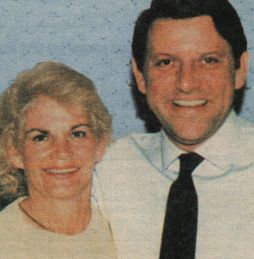
Jose Menendez had fled Cuba at the time of the revolution. His family was a powerful one who had lost everything in the communist takeover, necessitating Jose’s flight from the country in the hope of a better life. Although a mere lad of sixteen, who had never been outside his home country in his life, Jose did not lack for confidence; in fact, he was arrogant to a fault, and this arrogance would only grow as he prospered and his business empire grew. His first real triumph was to wrest the gorgeous American girl away from all her gorgeous American would-be suitors, and to have thwarted people more handsome and who surely believed themselves better than he was a victory indeed. In some ways, though it can’t be doubted he loved Kitty, she was more a demonstration to the world at large of his power. In courting, and winning her, he was growling at the world though those dark, smoky eyes and saying “Look: I take what I want, and you can’t stop me.”
And nobody could. The anti-hero of the BBC period drama
The Onedin Line once remarked that he had “ambition enough for an army of Napoleons”, but Jose’s desire for success would outstrip even the aspirations of the fictional sea captain. In a way, it’s quite remarkable how a Cuban immigrant with literally nothing rose to the heights Jose Menendez achieved, and yet, the nature of his climb and the attitude he adopted, both while getting there and once sitting at the top of the corporate tree, make it difficult to admire him or even have any sympathy for him.
Put simply, one word could describe Jose Menendez: arrogance. He truly believed, not that he was necessarily better than other people, but that he was as good as them, and intended to prove it. Racial prejudices of course fuelled this desire; as mentioned above, America has never been particularly kind to immigrants and foreigners (despite being a land of them), but special repugnance seems to be reserved for Cubans, who are presumably seen as “commies” and “reds” living on the doorstep of the world’s greatest democracy, and dedicated to tearing it down. Then again, no matter your beginnings or your disadvantages, one thing will make you instantly and unanimously, and unquestioningly accepted in American society, and that is money. Jose knew that money was the key to his being taken seriously, and he worked hard to get it.

But he wouldn’t be doing so in Illinois. Taking his new wife east to the bright lights of New York City, where his family lived, Jose enrolled at Queens College as an accountancy student, and forced the best he could out of himself. He wasn’t the greatest student, and times were hard, their income mainly coming from Kitty’s job teaching, something a proud and arrogant man like Jose Menendez would have hated: being supported by his wife. He intended to make his own way in the world, for her to be relying on him, but first he had to graduate and look for a job. For now, he paid his way as best he could by taking a part-time job at the local supermarket, no doubt furious he was just one of many other immigrants there all trying to get by, and treated no differently. He had, however, a talent for figures, and despite not studying for the CPA he passed it a year early, and was taken on as a trainee by the accountancy firm Coopers & Lybrand. Now making a decent wage and able to support his wife, Jose moved them to a decent apartment in middle-class Queens, and in 1968 Kitty had her first child.
Jose began to show what kind of man he was, and what kind of man he intended to be, when he was sent to audit the finances of a client for Coopers & Lybrand. Asked for his opinion after sitting through a long board meeting at Lyons Container, where management pored over unlikely plans to restructure the company, Jose flatly told them their ideas would not work, and they should go with his plan. Although surely shocked and even angered by the temerity of a snot-nosed kid from the firm they paid to do their accounts telling them what they should do, the directors listened and became more convinced as the young hotshot spoke that he knew what he was talking about, and more, that his plan had indeed a better chance of success than theirs.
They clamoured to have him on board as a director, but Jose was a man who was able to manipulate those around him. It was as if he could read their minds and their hearts, see into their souls and find their weaknesses. He pushed the board for a huge salary - three times what he was earning at Coopers & Lybrand, and he got it. So it was back to Chicago for the Menendezes, Kitty taking care of her new son full-time while Jose worked to turn the fortunes of the ailing corporation around. He not only succeeded, but did so in a year, and doubled the company’s revenue. He became chief executive, and hired his brother-in-law, Carlos Baralt, as his assistant. Jose’s management style, however, was unpopular and after a row with the chairman of the board he was forced out of Lyons, taking Baralt with him. Nobody doubted what a wonder he had wrought at the company, just nobody liked him, and he made it easy not to like him, being arrogant, condescending, sometimes brutal in his dealings with others - subordinates or not - and basically making enemies of everyone around him.

This behaviour would continue throughout his life, both in his professional and his family life, and people learned very quickly not to cross him. Everyone got to know what it meant to be on the wrong side of Jose Menendez, and he was almost certainly more feared than respected. This meant, of course, that he had few friends, few equals with which to share his success and brag about how well he had done. In 1971 he joined Hertz Car Rental and again within a year he had progressed like, as my mother used to say, a dose of salts through the management structure, becoming chief financial manager and then general manager, and true to his reputation, began firing people left, right and centre as he flexed his muscles and threw his weight around. This behaviour went against him, and against Hertz, as the executives and salespeople he fired just went to the competition, taking their often years or even decades of contacts, experience and knowledge with them.
Most, it seems, went quietly, but two - both unnamed - did not. One set his sales book on fire and threw it in his ex-boss’s face, the other, deciding to take early retirement over his abuse at the hands of the general manager, left him a caustic note: “Dear Jose. I quit. Fu
ck you.” It would be something of a vast understatement to say that Jose Menendez was neither popular nor liked at Hertz, and this would be the pattern of his working life as he slowly built up his commercial empire. Though nobody could fault his work ethic, one grudging compliment coming from the chief executive of Hertz, Robert Stone, who noted “I never knew anyone who worked harder, worked more towards goals.” However Adrian Bulman, one of the managers, had a different view: “I’m surprised,” he remarked, “that in an industry as tough as this one somebody didn’t punch him out.”
Jose’s arrogance and condescending behaviour even extended to deciding how his employees should wear their hair, as he snapped to a junior, taking an instant dislike to his curly hair, that he didn’t want to see him wearing that style again. Warren Hudson, who had formed an initial good impression of Jose when he met him to be interviewed for a job at Hertz, quickly changed his opinion once he was working for him, remarking that he would have been glad to have killed the man. This was the kind of reaction Jose’s blunt, uncaring, all but abusive treatment of his employees engendered in almost anyone who crossed his path. To say he was not a nice man is probably like saying Hitler and the Jews had their differences. It’s hard to see how anyone could have liked him, but like every powerful man of industry, he cultivated, if not friendships, then acquaintances. After all, you don’t have to like a guy to know he’s going to make you money, and that being on his right side is a good way to go.
Jose was well known and hated for what could probably be described as a “night of the long knives”, to take the Hitler imagery a step further, quarterly review meetings where, if your figures weren’t up to scratch you could find yourself heading out the door, no matter how long you had been with the company, no matter your excuses. Blood on the boardroom carpet was almost a literal thing with Jose; he spared no-one. In fact, it’s probably fairer and more accurate to compare him to Stalin than Hitler. Hitler didn’t particularly care about his underlings, knew little about them and dumped them as their usefulness ran out. But like the great Russian dictator, Jose made it his business to know everything there was to know about his people, even going to the rather ludicrous and surely unnecessary lengths of travelling the country
incognito to spy on them.
In truth, and to bring things slightly more up to date (though at the time such a figure was unknown of course) he emulated Tony Soprano, his constant mantra at the meetings “Where’s my fu
cking money?” You can almost visualise him kicking the s
hit - verbally, or maybe in reality - out of the unfortunate, terrified executives who failed to come up to scratch. Other images come to mind of Jose walking behind one salesman who had particularly displeased him, with a baseball bat…
Why was Jose Menendez such a bastard? Was it a case of taking revenge on the sneering, upper-class nobs who had looked down upon him when he was at SIU? A reaction to the looks of disbelief, shock, and perhaps even snarky pity when Kitty announced she was going out with, and then marrying the young Cuban? Was he showing them all he was as good as, if not better than them? That might have been part of it, but it doesn’t explain why he would be so hard on his sons later on, treatment which would ironically lend credence and substance to their insistence that they were being abused. Personally, I just think he was just what is known in the trade as a f
ucker; he was a nasty piece of work, a man who, without the aptitude for figures he possessed and without the drive he had, might have ended up in some street gang, his blood oozing away in an alley in Queens as he contemplated the waste of his life.

But whatever the reason, though it would make him rich and feared, Jose would never be liked, never truly respected. Everywhere he went he was a dictator, with no regard for people’s feelings, no tact, no humility, accepting no excuses and always looking at the bottom line. He was, in other words, the typical hard-nosed, no-nonsense, heartless and unfeeling businessman the corporate world throws out by the handsful, ready and willing to plunder, rape and kill (figuratively, at least for the last two) in the pure pursuit of money and power. So in 1970s America, though an immigrant from a socialist country, he fit right in.
Hudson was so humiliated by Mendendez that he wrote to his sons after the murder, saying “Having worked under your father and been on the receiving end of more than one of his tirades and having been witness to his destroying people in business meetings, actually reducing grown men to tears, I was wondering if I could ask you a question? . . . I was just wondering if Jose was a whimpering piece of s
hit when the other guy(s) had the big guns and all the power on their side, or if he was still super macho, Mr. Arrogance and spit in their eye. When all the stories came out about the Beverly Hills police department ‘interviewing’ everyone who might have a motive for killing Jose, I called them to ask why they never contacted me . . . and lots of other Hertz people. . . . I explained to them that I would have done the job for nothing, but at the least, I wanted to shake the hand of the actual killer(s).”
That might seem an odd thing to write to boys supposedly shocked and grieving the deaths of their parents, but it does show the kind of long-lasting hatred Jose could engender in people, and with good cause. Given his reputation, and all the people he crossed, ruined, destroyed and humbled over the years, it’s doubtful too many people mourned his passing, even if they paid lip-service at the funeral.
Jose had as little regard for his customers as he did for his staff. During the Oil Crisis of 1979, Jose responded to the rise in inflation and oil prices by unilaterally raising rental rates by a whopping four percent. To him, the bottom line was all that mattered. When told by one of his executives that a particular strategy would work, yes, in the short term but backfire in two years and cost the company money, he shrugged, telling the executive it didn’t matter, as he would no longer be working for Hertz. In Jose’s mind, if he was not there in charge then it was not his problem. He would have made a great politician!