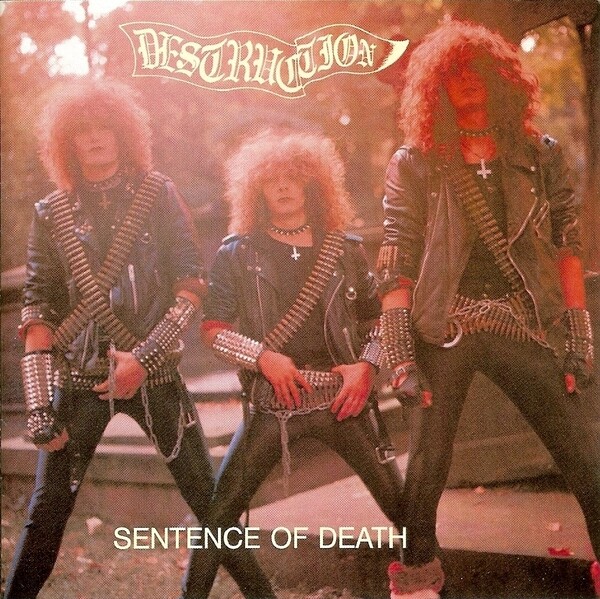
 Destruction - Sentence of Death (1984)
Genres: Teutonic Thrash Metal
I never hear anyone talk about the band Destruction these days, but they still get really good reviews. I guess they're one of those bands you just check out if you like thrash history or have a soft spot for the Teutonic stuff. Since I need to review one of their albums for the list challenges on Metal Academy, I started with their debut extended play, Sentence of Death. The apocalyptic spoken intro was cheesy enough as I expect, but even though there's some pretty good rif***e here, at this point, I've just heard so much thrash like this, even though this is the really early stuff. Having been released about four months after Metallica's game-changing Ride the Lightning, this sounds pretty generic in comparison and many other thrash albums, even better ones, would sound just like this. I suppose all the dark and thunderous sound effects are their attempt at a sense of art, which is fine, but I'd prefer if their riffs more greatly reflected that. Now for early thrash, this relies on darkened screams, general speed, and decent riffs. They go for a speed metal route that comes off a bit punkish, and can even be seen as a small factor in the early development of black metal. But other than that, there's nothing here that Metallica, or even Venom, didn't do better. It's obvious that writing was of least concern as long as they could be fast and edgy, and they kind of succeed at that. But since it's only a debut EP, it';s obviously not the most well-produced thing on Earth. These guys were obviously young and just wanted to rock the basics of a new world and grab a piece of that Metallica action. Decent, but only really necessary if you're a thrash history buff.
68
 Destruction - Infernal Overkill (1985)
Genres: Teutonic Thrash Metal
It's obvious that the band was trying a little harder in the art department to keep things a little more sophisticated, especially from such a progressive intro track. Much more interesting things are done with the hardcore-style riffs, finding clever ways to combine multiple repetitive riffs together for some grand new idea. A very goo example of that is the middle-section to The Ritual, which found ways to be unpredictable despite its lacking progression of, ahem, different notes. But this usually isn't the case. There's still the filler aspect in which production and speed are the major factors. For example, Death Trap just goes on for far too long. It's got some damn good riffs, but it's a bit easy for these guys to draw out five minutes when their biggest concerns are speed and atmosphere. And Tormentor sounds like a broken record until you get to the guitar solo. Hell, the eight-minute closer, Black Death, is basically switching between the same two riffs throughout the run, managing to do less imaginitive things than the four-minute opener. So in a way, it feels like they didn't really care about the fans enough to really write their own Stairway. There are noticeable improvements in the production and a few of the riffs, so there's that, but the fact that they went from the three-minute songs to five minuts with little change in most instances is a little of an insult.
69
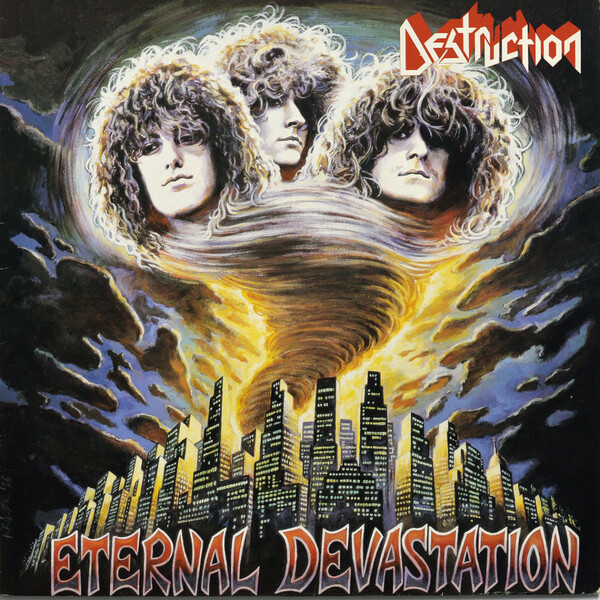 Destruction - Eternal Devastation (1986)
Genres: Teutonic Thrash Metal
Big three of Teutonic thrash? I was starting to question such a decision made by 80's society with Destruction's debut EP and debut studio album failing to meet my standards for greatness. I was really hoping for something more artistic this time. judging from the way Curse the Gods put up a couple more tricks, making six minutes feel like four at the same time, I thought to myself I might finally get that are I was lookin6 for. I mean, sure, they fall in the same tempo and stylistic tropes for the most part, but it seemed like they were really trying to get something historical out there. Or so I thought at first. Unfortunately, there are still times where things feel too drawn out yet again. It's obvious that the five-to-six minute edge doesn't generally work for them.What really bothers me about this album is the way the percussion sounds. It's not heavy enough, being almost entirely drowned out by the lead and rhythm guitars. Now the unpredictable sense of art comes back for the shorter songs on Side B, making things interesting again. The drums can even be heard properly. The last track is even a much better example of the aggression and technique that the band's been largely relying on, being much heavier and more powerful than ever. So while this managed to be a slight improvement in writing, it also fixed its production problem in the first half.
71