Welcome to Music Banter Forum! Make sure to register - it's free and very quick! You have to register before you can post and participate in our discussions with over 70,000 other registered members. After you create your free account, you will be able to customize many options, you will have the full access to over 1,100,000 posts.
Location: Beating GNR at DDR and keying Axl's new car
Posts: 48,199
On Goatsnake
They're definitely a doom band in part, but they're also a stoner metal band. Stoner metal is a doom-adjacent genre, with bands often -- very often -- crossing over from one to the other until stoner metal bands are often as much doom as stoner -- Electric Wizard is an excellent example.
Think of stoner metal as being Black Sabbath's "Iron Man", "Black Sabbath", and "Electric Funeral" (doom metal) vs. their material from Master of Reality (stoner metal): not necessarily as slow and plodding, but equally riff-based, and with an often more rock 'n' roll aesthetic.
This is why I wanted you to listen to Sleep's Holy Mountain, even though you didn't like Dopesmoker, as Holy Mountain was very much a stoner doom metal album -- basically a Black Sabbath tribute album made of original songs rather than covers -- whereas Dopesmoker was almost pure doom, bordering on drone, with the stoner influence being much more in the background.
Listening to Holy Mountain is really like listening to a different band. I'm pretty sure the band even used another band member on vocals.
I'm going to rec you Holy Mountain whenever you open recs on your Love/Hate thread. Whether or not you love it, I have no doubt that you'll like it infinitely more than Dopesmoker. I don't know that there is a geographical scene based on stoner metal (though the American South is kind of a hotbed for stoner, since rednecks like to smoke weed), but it would be a good genre for you to explore for the next Metal Month. If so then...
1. Sleep - Holy Mountain
2. Kyuss - Welcome to Sky Valley
3. Down - NOLA
4. Trouble - Trouble
5. Melvins - Stoner Witch (possibly Houdini, but Stoner Witch is more eclectic)
****, that reminds me that I never did a New Orleans sludge metal list...
1. Eyehategod - Take as Needed for Pain (you'll hate it, no questions asked, but it's required listening for NOLA sludge)
2. Corrosion of Conformity - America's Volume Dealer (band originally from Texas, but by this point their sound was sludge/stoner, as they had taken on a member originally from the New Orleans sludge scene)
3. Down - NOLA (if you don't do stoner metal)
4. Crowbar - Crowbar
5. Soilent Green - Sewn Mouth Secrets
If you hadn't already listened to and not liked Acid Bath's When the Kite String Pops then I'd red you that one.
__________________
Quote:
Originally Posted by J.R.R. Tolkien
There is only one bright spot and that is the growing habit of disgruntled men of dynamiting factories and power-stations; I hope that, encouraged now as ‘patriotism’, may remain a habit! But it won’t do any good, if it is not universal.
Location: Beating GNR at DDR and keying Axl's new car
Posts: 48,199
Quote:
the idea that a baby and a dog could be accepted into the US Army, while already invoking the suspension of disbelief that MacFarlane's shows demand, perhaps says something about the eagerness of military recruiters
You read too much into stuff for seemingly no apparent reason.
__________________
Quote:
Originally Posted by J.R.R. Tolkien
There is only one bright spot and that is the growing habit of disgruntled men of dynamiting factories and power-stations; I hope that, encouraged now as ‘patriotism’, may remain a habit! But it won’t do any good, if it is not universal.
Before the year is out, time to fufil my promise/boast/commitment from last year and complete the third of my discographies. Having already written full discographies for Tom Waits and Marillion, this one holds a lot of personal significance for me, as this was the first band whose records I ever collected, and the one that got me into progressive rock. A byword for some for boring, lazy and predictable music --- and that is hard to deny after the mid-eighties, in fairness --- but for others an iconic band who pushed the boundaries almost before those boundaries were there, who developed a reputation for intricate, complicated and interesting music and for elaborate lightshows, and who would be among the first to use multimedia, and one who in the seventies were in the forefront of the new movement sweeping music as progressive rock was born.
Though I constantly get sneered at for liking them, the band recorded what I believe to be some of the most important albums in the subgenre, and many of their contemporaries today owe a debt of gratitude to them. Sure, they sort of imploded under the weight of their own self-importance and a partial betrayal of their principles near the end, but they remain my favourite band ever. So without further ado, let me introduce you to the music of
And where else would we begin but, In The Beginning...
Spoiler for G2R:
From Genesis to Revelation --- 1969 (Decca)
As I've said many times before, I do not consider the debut Genesis album anywhere near progressive rock. Whether it was the youth of the guys (all nineteen bar Anthony Phillips, who was eighteen; is there any significance to the fact that every member of the original Genesis lineup, bar Phillips, was born in 1950?) which led to a lack of confidence in themselves, or the rigid control exerted by Jonathan King, or even indeed the fact that they were yet maturing as songwriters, From Genesis to Revelation has more in common with a folk record than a prog rock one. It's not even that good: I can pick out a handful of decent tracks, but most of the rest is pretty dire, and there was at that point no real indication of the heights these guys (well, three of them anyway, with a fourth to join later) would scale and the mark they would make on music in general, and progressive rock music in particular.
Genesis believe they owe a great debt to King, who did after all discover them and, though losing interest as they refused to conform to his idea of what the band should be (ie one that would make him money with hit singles) and leaving them to hook up with Tony Stratton-Smith at Charisma Records, it has to be admitted and accepted that without King's patronage and yes, money, Genesis as we know them today would probably never have existed. Stop cheering there, Frownland! Mike Rutherford has pointed out on record that back in those days, just getting into the studio to record was a huge deal, and actually landing a recording contract, especially at their young age and with no background or body of work to look to, was little short of a miracle. However, Genesis would only begin to come into their own the next year, when they released what I, and most fans, see as their first real album.
But back to this one. It opens on a very hippy guitar and keyboard line, with Peter Gabriel's soft, cultured and very English voice exorting people to ”Come and join us now.” Choral vocals (which I have to assume, back then when synthesisers were really only in their infancy, are made by the boys themselves singing) clash somewhat with an almost Latin kind of rhythm before Tony Banks's piano takes the tune, and though this is 1969 theres' still a lot of the hippy flower power ideal in the lyrics here, lots of getting back to nature, living with the animals, love and peace, man and so on. Finger-clicking now as the song heads into its conclusion, fading out on a nice bassy piano from Banks, but it's hardly the first salvo in a barrage that looked destined to take on the world!
The Wiki entry mentions that King wanted this album to be a concept one based on the Bible, but other than a title or two here, I really don't see it, and never have. To me, it's just a loose collection of songs with the odd theme running through them, such as nature, innocence, peace and love. Very simple, very dated, very formulaic, even for the time. All that said, “In the beginning” has quite a dark little bass line and skips along on a nice organ line from Banks, Peter's voice stronger and starting to betray the Hammillisms that it would develop on the next album, the kind of harsh, angry, almost sneering quality he could turn on and off at will. This song has at least got some teeth, whereas the other was just so weak and annoying. We get to see what Rutherford can do on the guitar as he actually rocks out a little, and there's much more energy about this. Nice little bass solo, short but effective, and the song itself is clearly based on the likes of The Beatles and Herman's Hermits, that sort of thing. Maybe the Animals.
One of the standouts comes in the form of “Fireside song”, which opens on a soft piano line that would later become inextricably linked with Tony Banks and would run such songs as “One for the vine” and “Please don't ask”, but that fades out and acoustic guitar is married to rather lovely strings (arranged by King, and in fairness he knew what he was doing, as they really make the song) as Gabriel reverts to his soft, almost apologetic vocal style, with some really nice vocal harmonies coming in on the chorus. I always find it amusing how English singers are so careful to pronounce every word properly: whereas an American or other singer might sing “Once upon a time there was confusion, disappointment, fear and disillusion”, Gabriel uses proper diction, singing “Once up-on a time there was con-fus-ion, dis-ap-point-ment, fear and (never an) dis-ee-loo-see-on.”Oh yes: every “t” and “d” is perfectly pronounced, not a usage of “while” once it can be “whilst”. Those crazy English, huh? Be that as it may, it's a lovely song and it's well titled, the first time when I initially listened to the album that I felt there might actually be something here. Mind you, then the longest track is “The serpent”, and it's kind of like listening to someone trying to copy Jim Morrison, but working in entirely the wrong medium. The song even has a faux start with a kind of guitar/bass opening that then just completely fades away and plays no part in the song that follows. And yes, I get the Biblical reference again. I didn't say there weren't Biblical songs on the album, just that I don't see it as a concept based on the Good Book.
The organ plays a very prominent part in this, but really only succeeds in making the Doors comparisons even stronger, while “Am I very wrong” has another lovely soft piano intro and a gentle vocal from Gabriel, with what sounds like flute --- I know he plays it, so I wonder is it him? The song then gets a little harder as Banks hits the piano keyboard more forcefully, but it returns to the softer style then. It's probably a good example of how versatile Gabriel's voice would get, not quite changing from soft whisper to unhinged cackle here, but you can tell he was going to be a rare talent in the future. However if there's a real glimpse of what he would become it's in “In the wilderness”, which is about as close to a song from Trespass as you can get, even invoking memories of the later “Visions of angels” from that album. Definitely one of my favourites on the album, and again it has that string accompaniment which really makes such a difference. This is actually a song I would prefer to be longer, but it's quite short, with a lovely piano outro too.
This motif is then taken up briefly by Rutherford on the guitar as we head into the hippy-inspired “The conqueror”, which does little for me. It kind of has elements of early Floyd in it, I feel, and again Gabriel's vocal is strong and powerful, but the song itself is unimaginative and quite repetitive, while “In hiding” has a lot more of Gabriel's presence in it, even if it does have a kind of too-jangly guitar, which the strings soften well. Naive as it may be lyrically, “One day” is another standout, and the addition of trumpets works surprisingly well on the chorus. I hear elements of later “Stagnation” here and maybe even “Harlequin”. Lots of that affinity with nature I spoke of earlier in this song, and again very effective backing vocals, something that in fact Genesis would pare back after the next album, leaving Gabriel to drive the songs in his own inimitable way.
A nice kind of jangly piano opening “Window” (hah!) with some more of that flute, though lower register this time, so I have a feeling it's part of the orchestration, maybe clarinet or oboe or something. Another gentle vocal, very hippy/mother nature in the lyric, and yes it's another standout, one of the better tracks, and yet would disappear in the face of the much longer and more complicated song structures that the band would pursue from 1970 onwards, though it would resurface in shorter tracks like “More fool me” and “For absent friends” among others. “In limbo” is very wishy-washy though, too much of the jazz and touches of soul in it for my tastes, but then the almost classical piano on “Silent sun” is quite nice, though that's about as much as I can say about it. It's pretty obvious that it was intended as a single. And it was. And failed. Miserably. The album ends then on the shortest track. “A place to call my own” runs for three seconds short of two minutes, and it's a really nice, low-key ending to what is generally a pretty low-key album, and on the face of it, probably exists as something of an embarrassment to a band who went on to find such fame.
TRACKLISTING AND RATINGS
Where the sour turns to sweet
In the beginning
Fireside song
The serpent
Am I very wrong?
In the wilderness
The conqeueror
In hiding
One day
Window
In limbo
Silent sun
A place to call my own
As I said, if you had been listening to Genesis prior to this album and only went backwards later, as I did, to check out the earlier stuff, you might be hard-pressed to believe this was the same band. It's quite incredible really how much and how startlingly they changed in less than a year, and by the release of their second album they had parted company with Joanthan King, cut their first proper progressive rock album, and were on their way to spearheading the first wave of progressive rock in Britain. Of course, they would not achieve fame until much later, but before that happened they would release a slew of classic albums that would make the memory of this third-rate debut a very dim and thankfully forgotten one indeed.
__________________ Trollheart: Signature-free since April 2018
Last edited by Trollheart; 06-27-2025 at 08:39 PM.
Having ditched (or been ditched by) Jonathan King, Genesis were now free to explore the more creative side of their music, without worrying about someone trying to direct them towards hit singles. The last album to feature guitarist Anthony Phillips, you could say he lost out on a chance at fame and fortune, but as I wrote in my review of his and Andrew Skeet's Seventh Heaven last year, Phillips found that he suffered from chronic stagefright, and once Genesis became well known and began to gig properly that would have been a major problem. You can't have one member of the band who refuses to appear onstage, can you? So after this album he made the decision to leave, and admits himself he never regretted it, nor had any real choice in the matter at the time.
Nevertheless, with or without him, this album --- which most fans see as Genesis's first real album --- would be the one that would begin to define and shape their sound and their musical identity, and lead to them spearheading the progressive rock movement of the seventies, and eventually becoming household names, despite having really only a small number of hit singles in their now over forty years together. This album would be something of a barometer as to what a progressive rock album could be, following in the footsteps of the likes of Procul Harum and Van Der Graaf Generator, and would set them on a road that, while far from being an easy one to stardom, would elevate them into the highest echelons of music and inspire generations of musicians for decades to come.
Trespass --- 1970 --- (Charisma)
Beginning a relationship that would last for pretty much all of their career (the last official release on Charisma was 1986's Invisible Touch, though future recordings, made on the Virgin label, can still in effect be said to have been on Charisma, as Branson's monster absorbed the smaller label in 1983) and make a success of what was then a struggling minor label (Tony Stratton-Smith used to manage bands in his spare time, when he was not writing sports articles in his job as journalist), only in existence two years but fated to become inextricably linked with not only Genesis, but progressive rock bands, Trespass is really the dawning of what would become known as the Gabriel era, which would last up until 1975, when he would leave the band to pursue a solo career.
Although every musician on the album deserves credit, the first thing you hear when the needle hits the vinyl (yeah, yeah!) is the plaintive voice of Peter Gabriel as he declares he is “Looking for someone”, the title indeed of the opening track. Next Tony Banks's soft synth lines smooth in before percussion cuts in and Anthony Phillips's guitar comes into the mix too, filling out what had been a rather hollow, lonely sound. You can already see here how Gabriel is able to switch from a fairly gentle vocal to a more animated, almost manic one at times, as he does in the first verse here. Certain publications, including of course Wiki, have labelled this as pastoral music, and yes, some of it most certainly is. But it would be a mistake to think there are no more intense, faster, punchy moments on the album. Tracks like “The knife” (which closes the album, and is anything but pastoral), “Visions of angels” and parts of “White mountain” all speak to a band more than ready to rock out when the occasion, or the song, demands it. To think of this as a folk album or something would be wildly inaccurate and well short of the mark. There are many folk-tinged passages on it, to be sure, but it is so much more than that. Before our eyes, a whole new way of crafting songs is coming into being.
Not that I'm suggesting that Genesis began progressive rock or anything, but up to the release of this album the only thing comparable in sound would have been the likes of The Moody Blues and to some extent Van der Graaf Generator, though the latter tended to have a harder, more jazzy edge to their music. Procol Harum were tinkering with such ideas too, but Genesis seem to have been the first band to really explore this idea of, for the want of another phrase, “English countryside music” and marry it to harder, rockier sections, often in the same song. Yes had released their debut album the previous year, but even that was more symphonic than what Genesis were doing. Genesis would have many imitators, some of whom would carry on into the twenty-first century with the likes of Big Big Train and Gazpacho using their template --- often a little too closely --- but few if any would ever approach their unique style over the years.
Other, non-standard instruments are used on this album too. Not for the first time ever do we hear flutes and accordions --- Zappa, Tull, The Moodies, all of these and probably more had used them by this point --- but I feel Genesis tend to blend them better into their compositions here. Also one of the first bands to bring keyboards to the fore (The Nice had of course led the way under Keith Emerson, and later with ELP, and Yes would also champion the keyboard), an instrument that is now not only synonymous with but integral to any prog rock band, even now. Can you think of a prog rock outfit that doesn't use keys? Neither can I. Anyway, back to the album. We're only on track one and we have a ways to go yet.
Less than two minutes into the seven-minute opener and we have a galloping drumbeat develop as Banks fires off the Hammond organ. It slows down then for an instrumental passage, and if you're a fan you should be able to hear the embryonic “Supper's ready” in there. In the fourth minute it kicks up again, striding into another but heavier instrumental section, driven by Banks's Hammond again with flourishes from Gabriel's flute. The guitar from Phillips comes in here pretty heavily too. I will admit that this song has never been one of my favourites on the album, and tends usually to kind of pass me by when I play it. Even now, as I review it, it's not quite engaging my attention and interest as other songs on Trespass will. A slick little guitar solo then as we near the end of the song, more flute and we end as we began on Gabriel's yearning vocal.
It's not the most powerful or, indeed, impressive of starts, but with elements of “Return of the giant hogweed” in its closing sections, it's a statement of intent by a new band who choose to start their “first” album off with a seven-minute song that changes more times than the Irish weather. You can't say they're not ambitious, and playing it safe has been firmly removed from the table! Going further off the reservation, so to speak, they then decide to tell the tale of treachery and betrayal in the world of the wolf, as we move into “White mountain”, a song with not a single intrusion by a human, a beautiful acoustic guitar by Mike Rutherford taking it in, backed by soft, humming keys before Gabriel begins the tale. The song bears the title of the album, so technically it can be regarded as the title track, and it speaks of a wolf called Fang (hmm) who trespasses on the sacred ground of his people, and is pursued and killed for it.
”Outcast he trespassed where no-one may tread/ The last sacred haunt of the dead” snarls Gabriel, as the pack sets off after Fang. There's quite the role for flute here, and Banks's frenetic keys set up a great atmosphere of a chase, a hunt, helped along by new drummer John Mayhew's thunderous fusilade, but the song really rides on Rutherford's uptempo acoustic guitar, his first real chance to step out from behind Anthony Phillips and show what he can do. This song, too, is long ---- well, they all are: the album only has seven tracks --- though slightly less so than the opener at a shade under seven minutes, and like “Looking for someone” it changes as it goes along, another hallmark of what was slowly coalescing as progressive rock. In the middle it stops to a slow, doomy march, as Fang is accused of the crime for which he stands trial, Gabriel loudly declaiming behind slow, almost funereal drums, which I consider a great performance from Mayhew, though he would be fired after this album ”Only the king sees the crown of the gods/ And he, the usurper must die!”
Another sprightly keyboard run is the backdrop for the fight between Fang and One-Eye, with the old wolf emerging victorious, and Gabriel's flute plays a soft, sad but victorious melody as whistling takes us out, accompanied by the humming chant that began the song. If that was characterised by Phillips's and Rutherford's guitars though, “Visions of angels” rides almost entirely on Banks's piano and keyboard lines, and I've always wondered if Gabriel used some sort of phased effect on his voice as it gets kind of, I don't know, metallic or something, a little out of phase. Banks's swirling keyboard attack mocks the hymns sung in church as Gabriel snarls ”I believe there never is an end/ God gave up this world/ Its people long ago.” This is one of my favourite early Genesis songs; I've always loved it and I always will. Choral vocals wash over the keyboard as it stabs in fury towards a heaven that may not exist, and for a band whose original album was supposed to be based on the Bible, this is very much a stepping away from that, separating themselves out from what Jonathan King wanted and declaring their own leanings, making their own way, making their own music.
This is one of the songs too where the pure anger and bitterness Gabriel can put into his voice comes through very strongly, dropped to a soft croon and then building again to that raging, impotent fury as the song winds to a close. Almost the longest track on the album at just short of nine minutes, “Stagnation” tells the tale of the last man on Earth, who retreated to a bunker deep beneath the planet, and survived, but alone. He sings of his loneliness, how he misses the things he used to take for granted, and quite possibly at the end goes mental. Phillips drives this with his smooth electric guitar lines, dancing and weaving through Gabriel's voice which, beginning soft and almost murmuring, soon changes to a more strident, insistent, accusatory and then pleading tone as the enormity of his loneliness, the totality of his being the only human left alive sinks in.
He speaks as if to someone, but there is nobody there to hear him. The song is full of long instrumental interludes, each of which leads, it would seem, to a change in the man's mental attitude and sanity. After the first verse, a frenetic Hammond solo breaks out, hammering along and carrying the tune until eventually it builds to a mad crescendo and then just ... stops. As it does, Gabriel sings ”Wait” and begins the next verse, in which he speaks of going home, or wishing he could. I think he's reliving the memories of the life he used to lead. The vocal here is again almost muttered, but gaining in strength as it goes on, then he uses that phased (if it is phased) effect again as his voice acquires a distinctly weird, almost alien tinge, all of which leads up to another big explosion of guitar and keyboard, the drums leading the passage in.
”I want a drink!” Gabriel yells. ”I want a drink to take all the dust and the dirt from my throat!” Then begins a slow flute melody that is taken up by the guitar and then the keyboard, getting stronger as it grows, Banks virtually hammering the keys as the song barrels to a close with a big intense flourish. “Dusk” is again propelled on a lovely, I think, twelve-string guitar with a soft vocal from Gabriel, and some really nice vocal harmonies. Almost immediately the music takes a turn towards the ominous, then slips back into its original groove, Hammond now sighing into the mix. This by far the shortest track on the album, barely over four minutes. There's some fairly prominent flute in it and some lovely classical guitar before it heads into its closing section with another phrase that will become a signature of this band. It ends quietly, but Banks sets his seal on the end by again hitting the final piano key with some force. Shortest is followed by longest, and when I first heard this it came as something of a surprise to me.
Genesis are not, and never have been, known for hard rock numbers. They have had, in the interim, some fast pop songs, yes, and some pretty intense passages in songs, but by and large you don't think of them in terms of what you get with “The Knife”, which seems to be a song about a Hitler-like figure who whips up his followers to revolution, advising them ”I'll give you the names of/ Those you must kill/ All must die with their children/ Carry their heads to the palace of old/ Hang them on stakes/ Let the blood flow!” It is interesting --- and intentional of course --- that the “messiah” figure makes sure he does not get his hands dirty, warning prophetically ”Some of you are going to die/ Martyrs of course to the freedom/ That I shall provide!” This all rides along on a bouncy, ebullient Hammond line from Banks, the euphoria of the masses being set free (so they think) to strike at their masters (those who stand in the way of their self-appointed leader) perfectly captured as the song careers along.
The guitars are almost boogie blues as they follow the keyboard melody, and Gabriel is at his most manic as he leads his followers through blood and fire to victory, or so he says. In around the middle everything falls away to Rutherford's ominously pulsing bass, then crying guitar before we hear the sound of an army, police force or other symbol of authority yelling ”Fire over their heads!” and the ensuing sounds of panic as people run headlong, trying to get away from the firefight, suddenly aware that they could be killed. Despite this obvious rout, Gabriel screams ”We have won!” and the song end on another powerful, frenetic guitar solo and keyboard passage as Gabriel yells, perhaps somewhat superfluously, ”Some of you are going to die/ Martyrs of course to the freedom/ That I shall provide!” and with some final hammered keyboard chords and a flurry on the drums, the curtain comes down.
TRACKLISTING AND RATINGS
Looking for someone
White mountain
Visions of angels
Stagnation
Dusk
The knife
From beginning to end, you can see right through this album that this is a new Genesis, the real Genesis if you will. Mike Rutherford would later characterise From Genesis to Revelation as nothing more than "a bunch of kids on their holidays", and as I said in the previous review, that's pretty much what it feels like: some young lads taking time off school to go and have a few larks bashing out some tunes. Despite what King wanted or hoped for, this at that time was not a band who were ready for the charts, and they were never going to make him big money.
This, however, was a total different proposition. The earnestness with which the band worked, the blood, sweat and tears you can hear leaking out of every song, as Gabriel struggled to get the words perfect, and indeed the songcraft in these six songs, show a band ready to stop playing around and get down to the serious business of playing music. It helped of course that the album had mostly been played in its entireity (not in one go of course, but tracks from it) live, so Genesis already had an idea what people liked, and more to the point, what they didn't like.
The strain of making and touring the album though, together with a bout of glandular fever and severe stagefright would cause Anthony Phillips to depart the band, shocking his compatriots but leaving them no choice but to audition for a replacement, which they would find in a young guitarist called Steve Hackett. Drummer John Mayhew, having failed to meet the exacting standards of the band, would be let go too, and be replaced by a lad called Collins, as what would become the classic Genesis lineup of the seventies coalesced.
Although Trespass sold a mere six thousand copies on its release, hardly world-shattering sales, the band were pleased with its reception and soon set about recording its follow up. This would contain some future classics, though decent sales would continue to elude them, as would chart success, for a time.
But then, these guys were young, and time was one thing they had in abundance.
__________________ Trollheart: Signature-free since April 2018
1971 saw some major changes for the band. Already having separated themselves from the vision, and control of Jonathan King, they now decided that drummer John Mayhew did not cut the muster and fired him. After some auditions they settled on a young guy called Phil Collins, and also added a second guitarist, mostly to replace the by now departed Anthony Phillips. His name was Steve Hackett. Expanding on their penchant for long, involved songs with different time signatures and esoteric lyrics, and helping in the process to lay down the blueprint for what would become the progressive rock of the 1970s, they released their third album in November of that year.
Nursery Cryme (1971)
Similar to the previous album, this one was based not so much on track numbers as lengths, with one more track than Trespass but its opening song already becoming their longest to date, at almost ten and a half minutes. It was pretty clear even at this early stage that Genesis were not writing albums with a view to releasing hit singles, though there are two shorter songs on this one. Even the album sleeve shows a determination to look back to the past, with a young girl in Victorian dress playing croquet with heads on a lawn, and yet there's a nod to the future (or at least, the present) as the young girl's nanny, who is coming out seemingly to stop her, appears to be on wheels. All of this is drawn from the opening track, “The Musical Box”, while yet retaining an air of a sort of twisted version of Lewis Carroll's Alice in Wonderland. The opening song is as weird as they come, with the lyric “explained” in the inside cover of the album, and basically being the story of a homicidal young girl called Cynthia who kills her cousin, Henry. He then returns to her via a (supposedly) enchanted musical box, but when she opens it and it plays the nursery rhyme “Old King Cole”, Henry ages rapidly, and wishing to explore a lifetime's carnal desires in a single moment tries to rape Cynthia, before the nanny rushes in, throws the musical box at Henry and both disappear in a cloud of smoke. Yeah. This is the kind of thing you would come to expect from Genesis; their lyrics were seldom if ever rooted in the real world of real people, something which earned them labels such as “snobs”, “musical intelligentsia” and no doubt “pretentious bastards”, all of which pretty much has to be accepted.
While bands like Free were writing about wishing wells and their cousin Jake, and Sabbath were running from the devil, Steppenwolf were heading out on the highway and Marc Bolan was getting it on, Genesis became part of a sort of quasi-underground movement of bands who did not fit into the normal strictures of what was seen as rock music, and didn't want to. With stablemates like ELP, Yes and Pink Floyd, they would go on to explore different musical boundaries, break through them and create a whole new idea of what rock music could be. For a while, this new music, which would become known as progressive rock, would be the darling of the students, the educational elite, the hipsters of the day, and then at one point it would grow so big and bloated and self-important that it would just implode, and fall victim to the ravening jaws of punk rock.
But all of that was in the future, and even as they recorded this album Genesis could have had little inkling of how well their music would be received, how big they would get and how many people they would reach. Right now, they were just experimenting, flexing their musical muscles, seeing what they could do. Trespass had failed to gain any real interest, nor indeed would this album, but in Italy it would be an entirely different story, where, after a very successful tour to support it, Nursery Cryme would climb to the dizzy heights of number four in their charts.
But back to the music. “The Musical Box” opens with a strummed twelve-string guitar, played in an almost medieval manner, then the soft voice of Peter Gabriel comes in as he, in Henry's returning form, entreats Cynthia ”Play me “Old King Cole”/ That I may join with you.” The song again, somewhat like “Visions of angels” on the previous release, seeks to not only distance the band from the notion of the Bible and God, but to actively deconstruct it. When Gabriel snarled ”I believe there never is an end/ God gave up this world/ Its people long ago” he was pretty much taking his first real potshots at the idea of a supreme deity, and here, in his role as Henry, now an old man, he snaps to Cynthia that ”The nurse will tell you lies/ Of a kingdom beyond the skies” but he has seen what lies beyond, and there's no Heaven, or even Hell. It's just a ”Half world” according to him, and he therefore wishes to dispel the young girl's foolish notions, put there by parents and guardians and nannies, of a reward, or even punishment, after death.
Gabriel's voice turns from soft and cajoling to bitter and angry in a moment, but the music remains gentle, carried on Steve Hackett's twelve-string, then Gabriel adds in some flute, the whole thing deceptively pastoral. It could almost be a tryst between lovers, which in a way it kind of is. IN the third minute the music becomes a little more intense, stately, grand, almost a musical declamation, but this fades away quickly as Henry again asks Cynthia ”Play me my song” at which point Tony Banks's newly-purchased mellotron makes its voice heard, and with the addition of percussion from new guy Collins as well as a scorching solo from Mike Rutherford the tempo increases as things begin to spiral a little out of control. Whereas on Trespass there is little of what might be kindly called hard rock until last track, the midsection here is a powerpunch in the face (for a Genesis album), then Gabriel recites the “King Cole” nursery rhyme, his voice dropping to almost a whisper as the music follows him down, deceiving the listener who relaxes just before a powerful aural assault takes us into another galloping instrumental which allows everyone to give vent to their talents, Collins hammering away at the kit, Banks trumpeting the keys and the two guitarists trading licks until finally it all stops suddenly as Gabriel takes us into the final section, a slow, yearning ode to love that, characteristically for this song, does not remain gentle for long, pounding up into a manic vocal with thundering drums and blaring keys, finally ending with Gabriel's desperate plea to Cynthia ”Why don't you touch me now?”, the whole thing finally ending on hammered mellotron chords, driving, wailing guitar and punching drums.
After that somewhat breathtaking introduction to this album, the next song is the shortest on it, and is a simple look at growing old, as two people visit a church to remember “Absent friends”, the first time Collins takes lead vocals. It's very pastoral, very folky and has echoes of “She's leaving home” in its melody. It's never been one of my favourites on the album to be honest, and owes more to the debut album than the second, but it's a nice opportunity to catch your breath after the epic opener, and not much of a breather, as the next one is eight minutes long and again shows the “heavier” side of Genesis, opening with a dancing, swirling keyboard run from Banks as “Return of the Giant Hogweed” relates the tale of a mysterious plant found in Russia and brought back to England during Victorian times. Honestly, I thought it was about John Wyndham's The Day of the Triffids but it appears to be based on actual events. There are elements of “The knife” and later “Watcher of the skies”, as Banks seeks to make the mellotron a signature sound for Genesis.
It proceeds mostly on a sort of marching beat, building to a frenetic crescendo, with a dangerous, warning and even frantic vocal from Gabriel as he warns ”Hurry now! We must protect ourselves/ And find some shelter!” The idea of an implacable enemy advancing is represented really well by the bass and the ticking drumbeats, and is something that thematically the band would return to almost a decade later on Duke. About halfway in, there's a powerful instrumental break which seems to presage the situation spiralling out of control as the Giant Hogweed threaten to take over the Earth. Even Gabriel's flute sounds somehow menacing. Then a rolling, rippling piano line from Banks almost offers some respite, a lonely guitar solo sounding a note of alarm as the tempo increases and things begin to build. This, again, has not ever been a favourite track of mine but you have to admire the way it's constructed, almost like a movie soundtrack. The wave breaks as the Hogweed prepare to attack and there's a big keyboard finish.
Apparently as I say this is based on real events, but I've never heard of such a thing happening. I could research it, but let's be honest: in all likelihood nobody's reading this review and if you are then I doubt you are bothered that much, so I'm not going to trouble myself. As is becoming the trend for at least this album, we have an epic piece of bombast followed by a more serene, gentle and simple tune. “Seven stones” talks about prophecies, farmers, sailors and “the changes of no consequence”, but I have to be honest, I have no idea what it's about. Possibly the fallacy of putting faith in seers? Anyway, it's a nice soft tune driven on acoustic guitar and gentle keys, with some nice backing vocals, pretty much a vehicle for Banks to show his softer side after the manic intensity of “Return of the Giant Hogweed”. It has a nice chorus with quite the hook in it, and though there's not as much in it as either of the two epics, it's a song I do enjoy and return to from time to time. A fine vocal performance from Gabriel, who for once doesn't descend into his harder, rougher style, and adds some more of what is becoming his trademark flute passages.
There the pattern breaks, as the next two songs are both short, just under three minutes each, but “Harold the Barrel” reveals the playful side of Genesis, typified by the tale of a man who ”Cut off his toes/ And served them all for tea”! There's great humour in the song, and it cannons along at a loping pace, starting fast and only breaking down once for a rather beautiful little interlude where Harold, stuck on a ledge and about to jump, imagines himself ”Sailing in an open boat on the sea.” Something else that would come through later is a cast of characters, with people like Mister Plod the Policeman (really!), the BBC reporter, Harold's mother, the Lord Mayor and others all making an appearance. Real wisecracks like ”He can't last long/ Hasn't got a leg to stand on” and Harold's own advice to the policeman who tries to coax him off the ledge, ”Take a running jump!” help to pull the song along and it ends on a last descending piano chord from Banks, presumably indicating that poor Harold has taken his own advice. A soft ballad in a folky vein, reminiscent of the best of CSNY, “Harlequin” again has a lyric I don't understand, but it's not that necessary when it's driven by such a beautiful performance by Steve Hackett on the twelve-string and with sweet vocal harmonies, and it leads into the final epic, and one of my favourite Genesis songs.
Again, ploughing a path which would seem them alienated lyrically from other bands who concentrated on more “earthy” subjects, “The Fountain of Salmacis” is based on the ancient Greek myth of the nymph Salmacis who pursued the demigod Hermaphroditus, until she ended up merging with him and they became one being, hence the idea of hermaphrodites. You keeping up? Good. But lyrical matter aside, it's a beautiful song, which opens with a swirling, almost echoing keyboard that grows and falls back, grows and falls back, almost like the tide ebbing and flowing, that then gives way to Collins's workmanilke drums and Gabriel's vocal as he relates the story. The tempo picks up then as Hermaphroditus, pursuing a stag, finds himself chased by a lusty nymph. Again there are some great vocal effects, with Gabriel singing the main line and Collins (?) singing another one, as Marillion would later repeat on “Fugazi”.
The song runs for eight minutes, therefore making it the third epic on the album, and around the second minute that swirling, rising keyboard line returns to usher in the next verse. In the denouement, as the demigod shrinks back from the nymph and she refuses to be parted from him and calls on the gods to witness their union, Collins goes mad on the kit, with Banks setting up a real tarantella on the mellotron, driving home the danger and the urgency as Hermaphroditus tries to get away, unsuccessfully. A squealing guitar solo from Hackett underlines the struggle, then a vocal chorus witnesses the joining. Another long instrumental passage, somewhat in the mould of “Hogweed” before Banks takes control again with first the mellotron then a reprise of the keyboard intro to take the song into its final verse, the doom of the god and a sonorous organ brings everything to a close as Gabriel sighs ”Both had given everything they had” and they had, quite literally, each giving up their individuality to become one. A metaphor for marriage? Maybe. Don't ask me. All I know is there is a superb guitar solo to almost close the track, and the album out, before a rising organ and sussurating cymbals underline the final chapter in this tragedy, and with that final flourish the album comes to an end.
TRACKLISTING AND RATINGS
The Musical Box
For absent friends
The return of the Giant Hogweed
Seven stones
Harold the Barrel
Harlequin
The Fountain of Salmacis
There's nobody, myself included, who could deny this album is self-indulgent, and on a grand scale. Not really until Yes began getting established, and ELP came on the scene, would rock see such excess both in terms of lyrical content and musical interpretation. None of these songs, like the previous album in fact, feature anything like a rock guitar solo, a verse/verse/chorus/verse structure; in fact, some of the songs don't even have choruses and in that way I suppose they're as close to jazz in terms of being freeform. The songs tend to look to teach rather than just repeat cliches, to open up a world of classical influences, including literature, theatre, philosophy and religion, and to make the listener actually think about the lyrics. It's a heavy album, but worth the slogging through I believe.
But if their newly won fans thought that was epic, they would be knocked sideways by what they would hear next.
__________________ Trollheart: Signature-free since April 2018
A year on from the partial success of Nursery Cryme, with their new, now stable lineup working well together and a major tour under their belts, Genesis returned to the studio to cut what would be their fourth album, and one which would finally lift them into the British charts, as well as produce some timeless tracks that would go on to become classics. It would also further develop Peter Gabriel's stage persona, as he wore the infamous red dress and fox mask on the tour to promote the album. As if that wasn't enough, it would have the longest Genesis track ever, one of the few progressive tracks of the time to exceed twenty minutes in length.
Foxtrot (1972)
Another album that was short on actual tracks, but of which one track would take up an entire side of the original vinyl LP, Foxtrot began to be fleshed out while the band were still on tour, and as Steve Hackett, exhausted by the pressures of being on the road, contemplated leaving the band. It would also see the departure of three producers, as their original one, John Anthony, was dismissed by Charisma Records. Bob Potter, brought in to replace him, was dismissive of their music, having been more used to working with folk sensations Lindisfarne, and Tony Platt did not get on with the band either. Finally, they settled on a combination of Dave Hitchcock producing and John Burns engineering, a team that would last them through their next three albums.
We open on “Watcher of the skies”, with a deep, sombre, classical sounding mellotron chord, with another coming in behind it, quiet at first then gaining in volume and power as, with the percussion, it blasts open the song and Gabriel begins singing. Moving slightly away from their fantasy/mythology themes of previous albums, this song is a science-fiction tale, the story of a galaxy-travelling entity who comes across Earth after Man has long since passed, and wonders what the creatures who lived here once were like. Its iconic opening still delights crowds whenever Genesis plays, and it is a highly requested song, even over forty years later. Collins plays some powerful stuff here, driving the tune along, but it can't be denied that it is Tony Banks who breathes life into it and maintains it all through its seven-minute plus run, especially in the closing minutes, when he plays a kind of game of call-and-answer with Collins and Hackett before the whole thing explodes into a massive solo to take the piece to its thundering end.
As in previous albums, a bombastic epic is followed by a simple short song, and again “Timetable” is probably the only song on this album I don't care for. With its medieval lilting melody and its Beatlesesque feel, it's a song longing for simpler times. It's sung well, but it has always come across as the weak song on the album for me, again looking back more to the debut album than anything that has gone since. There's a really nice piano line running through it, and Gabriel is in fine voice, but I'm just waiting for “Get 'em out by Friday”. I was always of the opinion this song paid respects to the Douglas Adams books of The Hitch-Hiker's Guide to the Galaxy, but it seems I am wrong. It's an odd little tale, concerning the forced resettlement of tenants by greedy, unscrupulous landlords. Like “Harold the Barrel” on the previous album, it's another cast effort, with Gabriel taking various parts, the song itself blasting away the softer vestiges remaining as “Timetable” fades into the distance with a blasting keyboard flurry and then a marching, thumping drumbeat from Collins as Gabriel introduces John Pebble, of Styx Enterprises (nice to see the nod to Greek mythology, tying a link back to the closer on the previous album, and also at a stroke painting this company as evil) who needs tenants cleared out of their houses so he can sell them.
“Get 'em out by Friday!” he warns his agent, known as The Winkler. ”You don't get paid till the last one/ Is well on his way!” and the Winkler approaches Mrs. Barrow, who has been living there for all her life, and does not want to move. The music is frenetic, jumping, urgent: Pebble needs those people out, and does not particularly care what measures his agent uses to ensure this comes about. Initially the Winkler uses the tactic of simply raising her rent, making it impossible for her to remain there, then later he offers her a cash incentive to move to a new tower block --- and then Pebble raises the rent again! Some gorgeous twelve-string work here from Hackett, as Mrs Barrow considers her options, reluctant to leave the home she has lived in all her life. Nice flute from Gabriel too.
After a long instrumental section which gets very dreamy and pastoral, time passes and we are now in the year 2012 (remember this was written in 1972) where Genetic Control have decreed that all humans must be reduced in height to four feet, in order that more may be housed, and once again Mrs Barrow is evicted from her home, not meeting the height requirements. Pebble is now Sir John, heading one of the largest construction conglomerates on the planet, and intends to make even more money by buying up all the tower blocks and kicking out the tenants who are too tall. Where will they go? Hey, that's life in the big city, as they say! The song then reprises the opening section before ending with some thumping drumbeats and a sort of angelic arpeggios on the keys as we're advised ”Invest in the Church for your Heaven.”
The legend of King Canute, who tried to prove how mighty he was by commanding the sea to recede, is explored in the cleverly-titled “Can-Utility and the Coastliners”, with a harpsichord opening and a soft vocal, keyboard and flute rising a little as does Gabriel's voice, as Canute decrees ”By our command, waters retreat!/ Show my power, halt at my feet!” An extended instrumental section then builds, trundling along nicely with mellotron and bass, guitar and drums before the mellotron takes over fully, carrying the tune into the final minute, almost echoing parts of “Watcher of the skies” before guitar joins in and the song gets a little rock and roll. Tweedling keys from Banks brings back the stately grandness of a song about a king, and it heads for the big finish, with a sort of chaotic ending, Gabriel singing a little manically, Collins and Banks blasting out the final notes as it ascends and then stops abruptly.
“Horizons” is the first Genesis instrumental, and a chance for Hackett to show what he can do, and why he would become one of the most respected guitarists of the progressive rock era. It's short, only just over a minute and a half, but beautifully simple and yet intricate, recalling the traditional ballads played by minstrels in medieval times. It's his solo effort, and is the calm before the approaching storm, which breaks slowly but will, if you've not heard it before, take your breath away.
The longest ever Genesis composition, and one of the longest songs even in the ever-indulgent world of prog rock, “Supper's ready” is a multi-part epic in the grandest tradition of classical symphonies and epic poems, and is split into seven sections. It opens on “Lover's leap”, which begins with Gabriel's soft retelling of an experience he and his wife once had, an out-of-body thing, where they looked into each other's eyes and suddenly found themselves in other bodies. What were they smoking? I don't know, or even if the story is true or just anecdotal, but it's led on acoustic guitar in a soft, relaxing melody, that somehow has the potential in it to turn into something much darker. And it does. On a twelve-string and piano instrumental it moves into part II, “The Guaranteed Eternal Sanctuary Man”. It's often pointless to try to figure out Gabriel's lyrics, and I've never understood what this is about, but it drives on a powerful guitar, the soft ambience lost as the song takes off.
”I know a farmer who looks after the farm” Gabriel advises us, ”With water clear he cares for all his harvest.” Indeed. A bubbling keyboard melody from Banks takes the tune, mellotron booming in the background as Gabriel smirks ”Can't you see? He's fooled you all!” Perhaps a sly wink at those who read too much into his lyrics? On a children's chorus of ”We will rock you, rock you little snake/ We will keep you snug and warm” we slide into part III, “Ikhnaton and Itsacon and their band of merry men”, the tempo increasing as the characters join a battle with a ”Host of dark-skinned warriors”. Again Banks's synth jumps, dances and whirls all over this piece as battle is joined before it all falls down in part four, “How dare I be so beautiful?” to slow, dreamy, drony synth in the aftermath of battle, and ”Wandering the chaos that battle has left” the characters come across Naricssus, who stares morosely at his reflection in the water, turning into a flower.
A flower? Two words which mean more than nearly anything to Gabriel-era Genesis fans, as they then signal the cosmic shift as the song moves into its fifth part, “Willow farm”, where things just get silly. Onstage, this also marked the moment where Gabriel would appear dressed as a huge flower. Um. Anyway, riding on a twenties-style melody, the lyric is past ridiculous as Gabriel sings about ”Winston Churchill, dressed in drag/ He used to be a British flag!” It goes on like something out of Alice in Wonderland or Monty Python, before for some reason the characters become seeds in the ground and we move into part six, “Apocalypse in 9/8 (Co-starring the delicious talents of Gabble Ratchett)” (yeah) with a return to the soft, gentle meandering guitar and flute, with lush organ backing it until it ramps up into a real rocker (presumably in time signature 9/8, though I'm no musician) building towards the big conclusion as Judgement Day looms. A bubbling keyboard solo brings us into the apocalypse and returns us to the opening section, as the travellers finally return home, I guess into their own bodies, to witness the return of Jesus Christ in part seven, “As sure as eggs is eggs (Aching men's feet)” and a beautiful almost orchestral ending with a superb guitar solo to take it out.
TRACKLISTING AND RATINGS
Watcher of the skies
Time table
Get 'em out by Friday
Can-Utility and the Coastliners
Horizons
Supper's ready
I: Lover's leap
II: The Guaranteed Eternal Sanctuary Man
III: Itknaton and Itsacon and their band of merry men
IV: How dare I be so beautiful?
V: Willow Farm
VI: Apocalypse in 9/8 (Co-starring the delicious talents of Gabble Ratchet)
VII: As sure as eggs is eggs (Aching men's feet)
Foxtrot was an important album for Genesis in many ways. Firstly, as mentioned, it provided the band with their first measurable chart position in their homeland, though the single released from it sunk without a trace. Well, what did they expect? Whose bright idea was it to release “Watcher of the skies” as a single? Surely the shorter “Time table” (even though I don't like it) or even “Horizons” --- instrumental singles were nothing new at the time --- would have been better choices? But apart from that, it was also the album on which the lineup finally solidified, with Steve Hackett's reservations about playing live and remaining with the band put to rest for now, and it shows a major jump in Gabriel's talent for lyrical mastery, even if often I haven't a clue what he's singing about.
The track “Supper's ready” is indeed the focal point of the album, but it would not be fair to say that the rest of the songs are filler, not at all. They do play second fiddle to the epic composition of course, and it was this closer itself that would be both the shining jewel in Genesis's crown as they went forward, and the tool of their ultimate downfall, seen as originally evocative, powerful, compelling and exciting as well as ambitious, but in latter years as overblown, pretentious, ridiculous, overlong and pointless, a real symptom of what was seen as the malaise afflicting progressive rock, and which would ultimately bring it down under the weight of its own hubris. But the album marked almost a creative peak for Genesis, and while almost everyone disagrees with me, I feel this is the quintessential Peter Gabriel era album, and the one that was to come, though lauded by so many as their best, somewhat pales in comparison to this masterwork.
__________________ Trollheart: Signature-free since April 2018
Despite what I said earlier, it cannot be disputed that though Foxtrot got Genesis their first proper album chart placing, the next album yielded them their first ever hit single, and also capitalised on the success of the previous album and their growing fanbase to push this album to the number three slot, and even make inroads in the hard-to-crack American market. Nevertheless, as they were being dogged in the music press by accusations of trying to sell out to the US, Genesis made sure that the album retained a very quintessentially English feel, and it is one of their first political works, attacking the hierarchy, railing at poverty and inequality, and asking that question so many people were asking, and would for some time ask: what happened to this green and sceptred isle? The influence of American culture, seen as beating down traditional English values, is a recurring theme throughout the album, and helps to lend it its title.
Selling England by the Pound (1973)
With regard to this album, I'm reminded of Tom Baker's excellent turn as Captain Redbeard Rum in the TV series Blackadder II, when Edmund Blackadder observes "I was of the view, Captain, that it was common practice to have a crew aboard a ship." Rum fixes him with Baker's almost maniacal stare and retorts “Opinion is divided on the subject”. Blackadder, who responds with an arched eyebrow and a quizzical “Is it?” receives the answer “Yes. All the other captains say it is, I say it isn't!” Which is kind of how I am with this album: almost everyone I've spoken to, read of or known who is into Genesis considers this their finest album, but for me, while I do like it, I much prefer some of the later offerings, and feel this has very much its weak points, so cannot, in my mind, stand as, as some would have it, the perfect Genesis album.
While Foxtrot and indeed Trespass both open almost on Peter Gabriel's solo vocal, this one really does, with him singing a whole line before the music comes in, Hackett's twelve-string frolicking along in a very middle ages style as Gabriel asks ”Can you tell me where my country lies?” and almost immediately references the album title when he remarks ”It seems he's drowned/ Selling England by the pound.” In the second verse Banks comes in strongly with the piano, then after a little lilting guitar the percussion pounds in, and Rutherford joins the tune as the intensity powers up and “Dancing with the moonlit knight” gets going properly. A choral vocal, achieved through use of the ARP Pro Soloist, which Banks would rely on quite a lot, flute and oboe with trumpets and a military style drum gives way to a hard rock guitar as Gabriel unleashes one of his many puns (one already being in the title) as he sings ”Knights of the Green Shield stamp and shout!” This reference will only be got by those of my age, but suffice to say that Green Shield stamps were trading stamps given away at petrol stations, and the more you collected the better prizes you could buy with them.
Banks's Pro Soloist sets up the full choral vocal as the song reaches its midpoint, everything slowing down in pace before it launches off into the second chorus. The song ends then on a soft fading twelve-string guitar, almost like a clock ticking, and into what would become their first hit single. With the sound of buzzing bees, birds and the hum of a lawnmower, Gabriel mutters It's one o'clock/ And time for lunch/ When the sun beats down/ And I lie on the bench/ I can always hear them talk” and we're into “I know what I like (in your wardrobe)”. It's not hard to see why it became a hit, with its shades of the Beatles, easy melody and the superb hook in the chorus, and the lyric, while a little obscure, is a little earthier than previous attempts. Basically it seems to concern a lazy gardener who is happy mowing lawns and doesn't want to get a job, something that would probably resonate with a lot of the hippies and dropouts who would have been grooving to this.
It did however show the world for the first time that, as well as tricky, intricate compositions that could take up whole sides of albums, this band could write an accessible, catchy hit song. People who had no idea who they were suddenly found themselves dancing to this song. It also became a massive favourite onstage later. Some fine flute from Gabriel adds to the whimsical nature of the song, but then it's back to the serious business with “Firth of Fifth” (those puns just keep coming, don't they?) introduced on a glorious piano solo from Banks, who wrote most of the song himself. It's one of the longer songs on the album, at just over nine and a half minutes, with the first minute taken up by Banks's solo performance. It gets heavier then as the vocal begins, slowing down with a stately and even ominous feel and the lyric ... well, I have no idea what it's about. Something to do with a town flooding? Neptune is mentioned, so it might again be a mythological thing, or an allegory. Or god knows what.
In the third minute Banks comes back with the piano and takes over again for an instrumental piece that runs for five minutes and is attended by some haunting flute from Gabriel, a lovely pastoral piece that soon ramps up as it heads into the fifth minute with trumpeting keys and Collins breaking out the drumkit to carry it along to its sixth minute, where some really nice guitar from Hackett changes the melody slightly, and fools you into thinking that it's ending. But there are yet three minutes to go, and the guitar solos and riffs alongside the keys, taking the piece almost to its triumphant conclusion. Gabriel returns for one last verse in the final minute, and it ends on shimmering piano. Essentially, “Firth of Fifth” is an instrumental with some vocals not quite tacked on, but you can see how it would have worked as a complete instrumental.
This takes us into only the second time Phil Collins has sung on a Genesis album during the Gabriel era. “More fool me” is nothing more than a simple ballad, which would be revisited in “Many too many” six years later, when he was at the helm and Genesis were releasing their eighth album. Collins sings in a very low and yet falsetto voice, accompanied by Hackett on the guitar and a duet with Gabriel in the chorus; it's a nice little song and something of a novelty, and has a good enough hook in the chorus, but it ends rather too abruptly for me. Mind you, I'd hear it a thousand times rather than endure the next two tracks. This is, for me, where the album takes a serious dip in quality. I've always hated “The Battle of Epping Forest.” I hated it when I first heard it, and I hate it now as I review this album. I always will hate it. It's the most un-Genesis song I've ever heard, with its tale of rival criminal gangs in the East End, and while it's entertaining enough thanks to the humour running through it --- ”Liquid Len with his smashed bottle men/ Is lobbing Bob the Nob across the gob” --- and starts well with a marching flute melody, it quickly degenerates into something that should not be on any Genesis album, in my opinion.
It's fast and uptempo, it's rock and roll and it has some decent solos and passages, but it's way too long at almost twelve fucking minutes! I know Gabriel was intrigued with the gang wars in London, but being intrigued with something does not necessarily mean that you include it on your album. This song has polarised Genesis fans, and is I believe one of the arguments against this being the classic Genesis album. It's strained, laboured and just completely self-indulgent. I find it hard to really pick out anything good about it. It's another of those character songs, with colourful characters like Liquid Len, Jones the Jug and The Bethnal Green Butcher, but it's nowhere as clever for my money as “Harold the Barrel” or “Get 'em out by Friday”. It eventually lurches to a close, and the rather appropriately titled “After the ordeal” is then an instrumental which runs for a mere four minutes, and while I don't like it because of its links to the previous song, it's a whole lot better, driven as it is on piano and guitar and without any annoying lyrics.
The album could have fallen apart here, but luckily it's saved by one more epic, which would again become a favourite live. “Cinema show” is another of the tracks here that really serves as a long instrumental with some verses thrown in, and it too runs for eleven minutes. Unlike “The Battle of Epping Forest” though, it has a lot to recommend it, though what it's about, well again your guess is as good as mine. It opens on a harpsichordical piano, twelve-string and then flows along slowly as Gabriel sings about Romeo and Juliet, the percussion only coming in after the second verse as the chorus (such as it is) hits. More mythology as he sings about Tiresias, who apparently lived as a man and a woman, and the music runs on rippling piano and a rising guitar line. However, as mentioned, the vocal only really runs for the first four minutes, then it develops into a pretty special instrumental, recalling some of the guitar work from “Supper's ready” before the whole thing kicks into life and takes on a life of its own. Mostly, it must be said, on Banks's trumpeting keyboards, with some fine drumming from Collins and then in the seventh minute what becomes the signature of the piece comes through, a lovely wandering keyboard run that is quickly joined by the vocal chorus from the ARP Pro Soloist and really adds gravitas to the tune. A great strumming guitar from Hackett and some thick, almost funky bass from Rutherford and the keyboard bubbles all the way to the end, fading right down as it segues into the closer.
Bookending the album perfectly, “Aisle of plenty” looks into the rise of consumerism and what it means for the English shopkeeper and shopper, and uses many puns on supermarket names in the lyric, such as “Fine Fare discount”, “Tess co-operates” and “the safe way home”. It also uses a reprise of the opening lines and melody from “Dancing with the moonlit knight”. The Pro Soloist then runs the show for the closing part, slowly and grandly marching along as Gabriel rattles off various “special offers” to fade.
TRACKLISTING AND RATINGS
Dancing with the moonlit knight
I know what I like (In your wardrobe)
Firth of Fifth
More fool me
The Battle of Epping Forest
After the ordeal
Cinema show
Aisle of plenty
If this were truly the quintessential Genesis album, I would expect it to be near perfect, and it's not, far from it. As I said, the overly bloated and so-comical-it's-tragic “Battle of Epping Forest” puts a large blot on what is overall a very decent album, which opens and closes well, but even at that, the better songs on this album survive on their instrumental merit rather than their lyrical, which is at this point unusual for Genesis, who are known for writing deep, thoughtful and meaningful lyrics. The sparsity of the lyric in “Cinema show” and “Firth of Fifth” really makes the opener the only one that has really good lyrics, and while the closer is clever it's too short to really qualify as any sort of saviour, if one were needed, of the album.
When playing this, which I rarely do, there are then certain points at which I skip over. “More fool me” doesn't particularly interest me, and I've made my feelings about the other track clear. “Aisle of plenty” is great but really only works within the context of the album and so is not a track you take for, say, a compilation or playlist. I've heard “I know what I like” so much now that it doesn't really do anything for me any more, but even allowing that in, that leaves half the album I don't care for. I don't call that classic, not by any means.
But they're just my observations. As already mentioned, this got Genesis to number three in the album charts and number twenty-one with the single, so it was certainly a giant leap for them commercially. Unfortunately, rather than capitalise on that popularity, the next year they released a baffling double concept album, the aftermath of which would lead to the biggest seismic shift in the band as one of the founder members decided to sever the ties and part company with the rest of Genesis.
__________________ Trollheart: Signature-free since April 2018
There has been endless debate as to what this album's concept is about, and even its writer will not come clean, if he even knows. Very much the baby of Peter Gabriel, it was he who wrote all the lyrics, he who created the concept and he who kept extremely tight control over what would turn out to be the last Genesis album he would work on, the controversy over which rages even to this day among Genesis fans. In the seventies, concept albums were cool. Pink Floyd, Yes, Jethro Tull and David Bowie had all released concept albums, some of which had gone on to become classics. With their love of storytelling, their passion for long, epic, multi-part suites and their education in the classics, Genesis seemed the perfect band to follow, or even redefine, this practice.
But there's a problem. Most concept albums have a story or plot you can follow, or try to piece together. This one, frankly, still bewilders me. Which is not to say that it's not a great album, because it is, but when you write a concept, it's a good idea I feel to let the listeners and fans in on your thought processes, even a little. As far as I can see, Gabriel played his cards so close to his chest here that he virtually excluded his fanbase, and left a lot of people wondering what the hell was that all about?
The Lamb Lies Down on Broadway (1974)
It's a rippling piano that opens the album with the title track, and you definitely get a sense of a movie or a theatre production as the music swells and bursts into the boppy melody, in which we're introduced to the protagonist, a Puerto Rican street punk who goes by the name of Rael (an anagram for real? Like just about everything about this album, I don't know but it's possible) as he emerges from some vandalism in the local subway --- ”Rael, imperial aerosol kid/ Exits into daylight, spraygun hid” and witnesses the very odd phenomenon of a lamb appearing and lying down before him. On, you know, Broadway. This song rides on a hard guitar line from Steve Hackett but in the middle it falls to Banks to take the sprinkling, shimmering melody as Gabriel tries to put into words what Rael sees. With a group vocal singing ”On Broadway”, Gabriel purloins The Drifters' “On Broadway” for the ending of the song, and things, already a little weird, go completely off the rails.
“Fly on a windshield” (the use of the Americanised word, whereas we would say windscreen, lending some credence to the fact that Genesis were trying to appeal to an American audience, but then after all, this does all take place in New York City so, you know, when in Rome. Or on Broadway...) comes in on a soft piano and choral vocals on the Pro Soloist with acoustic guitar, very ethereal and almost spiritual, as a cloud forms around Rael and moves towards him, he being apparently the only one who can see it, and filching from the midsection of “Harold the Barrel” Hackett softens the mood even more before hitting with an unexpected punch as the verse ends. A big, booming, driving drumbeat now takes the tune, stomping along as the cloud envelops Rael and crashing musically at least into the “Broadway Melody of 1974”. Still thumping along, there are many references to the old movie stars, like Groucho Marx, Lenny Bruce and other figures of the time such as Howard Hughes and even the Ku Klux Klan. It's a confused and confusing song, deftly written yes, and I'm sure there's some sense in it but I can't make any out.
To be fair, the guy who writes the Wiki page for this album makes a good stab (whether correct or not I have no idea) at understanding/explaining it, and his take is that while Rael is enveloped in the mysterious cloud that only he can see, these images play out across the moviescreen-sized viewer in front of him. Hey, it's as good an explanation as any, and better than any I could come up with! A short, sweet and laidback guitar etude, presumably meant to represent Rael falling asleep, takes us then into “Cuckoo cocoon”, where he awakes to find himself encased in a chrysalis, deep underground. A truly gorgeous piece of guitar from Hackett opens the song, a short one at only two minutes and change, but it runs then into one of the standouts on the album, “In the cage”, where everything changes and the music takes on a much more manic, frenetic tone, semi-carnival with a real underlying element of horror. With a slow bassline resembling a heartbeat and swirling keys, its starts gently enough, but Banks's Mellotron soon begins the carnivale and dark voices issue from the Pro Soloist, as things begin to take shape. Trapped in his odd cage, Rael looks beyond its bars and sees others imprisoned like him, then beyond them, he catches sight of the figure of his brother, John. He entreats him to help him, but John just looks at him and runs away, leaving Rael to his fate.
The sense of panic woven by the music here is a credit to Genesis, who really create an almost claustrophobic atmosphere, with keyboard flurries by Banks almost taunting Rael with their power to run free and do as they please. As the music slows into a grand almost waltz, dark and doomy, Rael realises that the cage is dissolving, but he himself is now beginning to spin, as the music resumes the carnival tempo, fast, energetic, crazy, spiralling, spinning, unable to do anything, he staggers and faints. When he comes to, he finds himself in a factory, where he watches “The grand parade of lifeless packaging”, human bodies being packaged up as product. This is I believe the first and possibly only time Genesis invited another performer onto their album, and here it is Brian Eno, whose weird soundscapes (he or they call them Enossifications) really paint a vivid picture of the weird assembly line. Gabriel's voice is distorted by Eno to make him sound quite alien, and the music trips along on a sort of shuffle, only short of finger-clicks, building towards something as Rael watches the odd spectacle of ”People stocked in every shade/ Must be doing well with trade/ Stamped, addressed in odd fatality/ That evens out their personality” and for the first time in a while Gabriel gets to unleash the manic side of his voice.
What this is about, of course, I have no idea, although it could be a clever comment on the wasting of human resources, or how people are treated like commodities. “Back in NYC” is new wave ten years before it hit, with a burbling synth from Banks leading the line, and Gabriel screaming the vocal, which seems to look back to Rael's start as a street gang member. Interesting possible irony when he snarls ”Your progressive hypocrites hand out the trash/ But it was mine in the first place/ So I'll burn it to ash!” This is indeed suddenly a very different Genesis, and it's obvious to see that Gabriel was, through his bandmates, trying out ideas that would surface on his own solo albums, as this in particular reminds me of the main melody from “On the air” off his second one. It's also clear from the lyric here that Rael is not anyone's hero; in fact, if anything he's an anti-hero, as he spits ”I don't care who I hurt/ I don't care who I do wrong!”
It's also worth noting that this is an album that uses the word “rape”, and although music uses that liberally now, in 1974 this was surely a big culture shock, especially from a band who had, up to that time, not been known for their abrasive lyrics. To put it simply, through Gabriel's acerbic lyrics Genesis had got angry all of a sudden. It's very raw, very in-your-face; for a band more used to gentle acoustic interludes and songs about nymphs and wolves, this is a major change for Genesis, which may be one of the reasons why it didn't sit too well with the other bandmembers. At least there's a guitar instrumental in “Hairless heart” before Gabriel pushes the envelope further with a wickedly tongue-in-cheek but risque song about sexual practices in “Counting out time”, with a real rocking beat and a sly grin and a twist of the lip in a devil-may-care vocal from Gabriel.
”Erogenous zones I love you!” he exults. ”Without you, what would a poor boy do?” And those who have been brought up on albums like Selling England by the Pound, Foxtrot and Nursery Cryme shake their heads and wonder what the world is coming to when a band like Genesis can sing about teenage sex? Genesis! Is nothing sacred? It's got a very poppy, almost David Cassidy style about it, which jars violently with the OTT lyric and the unexpectedly harsh guitar that punches through, reminding us this is a rock song, dammit, not pop! Something like a kazoo leaves us wondering though. We may also wonder where the story has gone at this point,and don't ask me because I really have no idea, but this attempts to get it somewhat back on track, with the return of that soft, rippling piano from the opener and another standout, “The carpet crawl”.
A gentle vocal from Gabriel tells us that Rael has found himself in a chamber, along the floor of which people crawl, trying to reach the door, which is at the top of stairs they cannot climb. Opinions differ wildly about what the chamber is, but I like the idea that it is the womb, where fertilised eggs struggle towards the light to be born. Or maybe not. In any case, it's driven, once it gets going, on a lovely guitar melody, and paraphrases Hawkwind's Choose Your Masques when he sings “We've got to get in to get out” as its main chorus motif. It really is a beautiful song, the first ballad on the album and a fine example of Steve Hackett's unbridled talent. There's a slight increase in intensity as the song progresses, perhaps to reflect the anxiety of the carpet crawlers as they try to reach the faraway door, but basically it keeps the same melody throughout until it fades out at the end. I should also mention there is some truly stunning backing vocalwork here from the others, notably Collins.
Rael, of course, not having to crawl, is easily able to reach the portal and walking through it finds himself in “The Chamber of 32 Doors”, unsure which one to exit via. Around him, people rush to and fro, trying different doors, trying to find the right one. A metaphor for decisions made, perhaps, or the fear in all of us of taking the wrong path at a crucial time in our lives? There's also cold irony in the discovery that those who manage to make it out of the room below only really exchange one prison for another, as they wander here through door after door, returning to the same place every time, trapped in almost a repeating loop. A powerful guitar kicks the melody off, and Rael, just like everyone else, finds that it's hard to pick the right door. Bells peal and choral vocals then give way to a rising, urgent keyboard line and a hopping bassline as Gabriel considers the merits of country folk and workingmen, preferring to trust ”A man who works with his hands” than a businessman, perhaps a shot at their treatment by record companies in the past? Nice piano lines from Banks, and for a six-minute song it goes through many changes. In the end, Rael sinks down, exhausted, as ”Every single door that I walk through/ Brings me back here again” and he prays for ”Someone to believe in/Someone to trust.”
This brings to an end the first disc, and rather appropriately too, as we leave Rael confused and alone, desperate, not knowing which door to choose, literally at a crossroads in his life, trying to find the path that will take him away from this eternal loop of time.
__________________ Trollheart: Signature-free since April 2018
Help is at hand though in “Lilywhite Lilith”, which opens disc two and introduces us to the strange blind woman who asks for help, is aided by Rael and who guides him by feeling the breeze and determining which is the correct door. It's a big powerful rocker, driven on guitar and pounding drums, with Lilith leaving Rael in a cold stone chamber with the chilling remark ”They're coming for you/ Now don't be afraid”. The piece slows down as something approaches, light floods the room and we're into “The Waiting Room”, where strange, eerie sounds (Eno again) fill the air --- tinkling, crashing, ringing, very expressionist, with what may be violins making a kind of dark laughter, creaking doors, thumps and steps and many other weird and alien sounds, all serving to unnerve the listener and put them on their guard, wondering what is going to happen. This strange passage of sound goes on for over five minutes, nodding to effects from Floyd's “On the run” and “Welcome to the machine”, leading into “Anyway”, a beautiful piano run from Banks against which Rael, believing he is dying or dead, reflects on the nature of life, God and Heaven and Hell, asking ”Does Earth plug a hole in Heaven/ Or Heaven plug a hole in Earth?” and then in “Here comes the Supernatural Anaesthetist” Rael meets Death.
On a strummed guitar, it's pretty much an instrumental, with barely four lines of lyric and evidence of melodies Hackett would use on the next album. It then leads to yet another standout track, as we reach the second ballad and Rael meets “The Lamia”. These are strange, exotic, erotic snakelike females who seduce him, tasting of his blood but then dying as they do so. It's driven on beautiful classical piano and flute which softly undulates like the very snake-creatures who give it its title. A tale of beauty never lasting, it's a beautiful tragedy, so well written, and when Gabriel sings ”With the first drops of my blood in their veins/ Their faces are convulsed in mortal pain/ The fairest cries “We all have loved you, Rael” you really feel the tragedy unfolding. The hero is suffused by a dreadful sorrow as the corpses of the Lamia now float on the water beside him, love changed so quickly and so horribly to death. Aghast, horrified, lost, Rael consumes the flesh of the Lamia (why?) and leaves the pool, the saddest instrumental Genesis have I think ever written following him as “Silent sorrow in empty boats” brings this chapter to a shuddering, heart-rending close. It's again mostly Banks, making sounds with his synth like the honking of ships, sad sounds of sorrow and grief, and it fades in like a slow classical concerto on trombone, with attendant choral voices from the Pro Soloist, rising to a pitch of sorrow that brings tears, and then slowly fading back out, the two songs (which originally ended side three of the four-side double vinyl album) making this one of the most moving sections on the entire record.
Everything changes then for “The colony of Slippermen”, which is divided into three sections, the first, “Arrival”, opening on a weird little instrumental that would not be out of place on a Tom Waits album, then bouncing into the song itself, wherein Rael meets the grotesque Slippermen, who are all deformed, and is informed that they too have tasted the flesh of the Lamia, and this fate awaits him also. In addition, he is reunited with his brother, John, who has undergone the same transformation. On a crazy, trippy, madcap beat the song rides along, almost like some children's nursery rhyme or game, Bank's bubbling mellotron pulling everything along, some great vocal harmonies and typically odd vocalisations from Gabriel as he takes on the persona of a Slipperman. Rael and John are advised that the only cure for what they have is to have their penises removed (yeah) and to this end they go to visit Doktor Dyper, in “The Doktor”, as the same basic tune, increasing in urgency and coming quite close, if I'm honest, to elements that would surface six years later on the Duke album, carrying the song.
However, once the deed has been performed, a raven swoops down and grabs the tube into which Rael's pride and joy has been put, and flies off with it. The romping keyboard run that forms most of “Raven” has become ever since enshrined in the medley Genesis play onstage and so is very recognisable to concert-goers. Rael asks John to help him chase the raven, but just as he did from outside of the cage, his brother refuses and walks away. Rael pursues the bird until it finally drops the tube into a stream, and Rael watches in despair as it floats away. Again, eerie sounds on the synth create the ambience here in “Ravine” and then we come almost full circle with “The light dies down on Broadway”: as Rael walks disconsolately along the riverbank he suddenly sees a screen in front of him in the air (the same cloud that brought him here?) showing images of New York and his past life, and he feels homesick.
Reprising the melody from the title track as well as “The Lamia”, it's a clever reminder of what has gone before and serves to link the two halves of the album, but before he can move towards the cloud, Rael hears shouting and sees that his brother is struggling in the rapids, and has to make the decision: does he go forward and find his way home, abandoning the brother who twice left him to fend for himself, or does he turn his back on his escape route and save John? With a despairing look as the window begins to close, he turns away and goes to help his ungrateful brother. “Riding the scree” has a real funk about it, peppered all over with Banks's keyboard parts from “Supper's ready” and a sonorous organ. To be perfectly honest, it doesn't conjure up an image of the title to me, and I hear elements again that would be used in Duke, years later, but it ends on a big powerful synth run and soft keys into “Riding the rapids”, in which Rael manages to rescue his brother, holding on tight but seeing his face change to ... his own?
There's quite a lonely melody attending this, which is unexpected, as you would expect a big, frenetic, exciting denoument, but it's very low key. Some really nice guitar work, soft percussion and piano, almost a ballad in effect, then at the end it ramps up as it rises into the final track, the enigmatic “It”. Bouncing along on a fast rocky beat, it's supposed to be I guess the explanation of what has happened, and in essence it seems John and Rael have merged, or were the same person all along, perhaps each being aspects of the one personality, which has now become one. There's a lot of wordplay in the lyric, and even time for Gabriel to tip a sly wink to his listeners when he claims ”If you think that it's pretentious/ You've been taken for a ride!” This closing section also survived into Genesis's live set, usually merged with a truncated “Watcher of the skies”. At the end, Gabriel even paraphrases Jagger as he fades out on ”It's only knock and knowall/ But I like it.” He could be saying here that those who think they know it all (music critics?) love to knock Genesis's music, or even that he's the know-it-all, knocking on the doors of consciousness and perception, carrying on Jim Morrison's stated aim with the Doors. Or it could be just gibberish, who knows?
TRACKLISTING AND RATINGS
DISC ONE
The lamb lies down on Broadway
Fly on a windshield
Broadway melody of 1974
Cuckoo coccoon
In the cage
The grand parade of lifeless packaging
Back in NYC
Hairless heart
Counting out time
The carpet crawlers
The chamber of 32 doors
DISC TWO
Lilywhite Lilith
The Waiting Room
Anyway
Here comes the Supernatural Anaesthetist
The Lamia
Silent sorrow in empty boats
The colony of Slippermen
(i) Arrival
(ii) A visit to the Doktor
(iii) Raven
Ravine
The light dies down on Broadway
Riding the scree
In the rapids It
I'm happy to take the explanation of the plot provided by Wiki guy, and drawn, it would seem, from the book The Annotated Lamb Lies down on Broadway by Jason Finegan, Scott MacMahan and members of Paperlate. It does a good job of deciphering the plot, and makes some conclusions I would agree with or that shed new light on something I had always found difficult to understand. However, as they say themselves, it's a mistake to think this album is “about something,” and is more “something that every listener must decide a personal meaning that satisfies as an explanation.” That's probably true about this album, but it does beg the question, what did Gabriel mean when he wrote this? He did not just sit down and string ideas, concepts, lyrics and meanings together without any overall cohesive vision. He knows what it's about, but like most artistes, he preferred to keep it shrouded in mystery, and still does. It's the age old answer to the question: “Well, what do you think it's about?”
Even if its meaning can't ever be comprehensively and definitively understood, even if it's a code that is so well written that it will never be broken, unless when he passes away Gabriel leaves an actual, clear and unambiguous explanation in his papers (which I believe is very unlikely; the mystery of The Lamb should outlive its creator), The Lamb Lies Down on Broadway remains one of the deepest, most intricate, well thought out and comprehensive works of not only Gabriel or Genesis's careers, but of progressive rock music, and more, of music itself. There are few concept albums that refuse to give up their secrets, but The Lamb is one that jealously guards its mystery, retaining the shroud over its meaning like the very cloud that descended on Times Square and spirited Rael away to this weird underground world.
But you can enjoy it for what it is, a collection of mostly pretty damn fine songs, some gorgeous linking instrumentals, a rollercoaster ride through either one man's descent into, and ascent from insanity, a drug-fuelled trip or dream, or an actual occurrence that can never be explained. It divides Genesis fans, with some thinking it was the pinnacle of their creativity while others believe this was the point were Genesis began eating its own tail, like the serpent of myth, and that had events not unfolded as they had, this could have spelled the end of the band. It's no secret that the tensions evident when making the album, Gabriel's insistence on almost total control and then his unlikely disappearance during its creation to work on a movie that never saw the light of day, all served to place undue strain on a band who were already beginning to fragment as that old chestnut, “musical differences”, hovered on the horizon.
To place him in the actual position of Rael in the real world, Gabriel, staring at the many doors he could walk through, was about to make a decision which would, for many Genesis adherents, lead indeed to silent sorrow in empty boats, and for the first time since they had played their tentative tunes on their debut album under the watchful eye of Jonathan King, the light was beginning to die down on Broadway.
__________________ Trollheart: Signature-free since April 2018











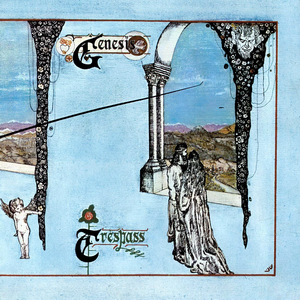
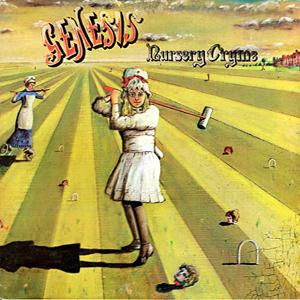
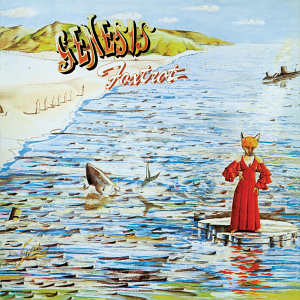

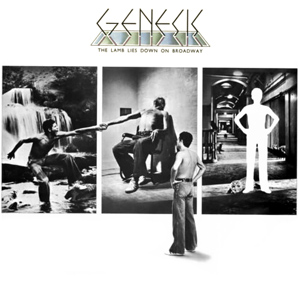

 Hybrid Mode