Welcome to Music Banter Forum! Make sure to register - it's free and very quick! You have to register before you can post and participate in our discussions with over 70,000 other registered members. After you create your free account, you will be able to customize many options, you will have the full access to over 1,100,000 posts.
I finished listening to Into the Labyrinth about an hour or so ago. Absolutely loved it (brilliant second half in particular), meaning I'm pretty much sold when it comes to DCD now. Definitely gonna go for Spleen and Ideal there as a next stop in their discography now.
Keep up the great work mate. I'll be looking forward to the next one.
Yes, ITL is a pretty interesting one... It has some of my favourite Perry tracks, but we will get to that later I suppose.
Either way, glad you enjoyed it, hopefully you enjoy Spleen and Ideal.
Cheers for the heads up that you were doing this thread Zarko. A quality read. Let me know when you put up more review's as I am more than interested in your "new" takes on the brilliant career of Dead Can Dance.
I have been giving the 2 Gladiator soundtracks that Lisa Gerrard contributed to a serious listen this last week and they are very very good indeed. I see via her site that she has a new album, The Black Opal, released in September/October so hopefully she backs this with a tour. She also has a soundtrack release for the movie Balibo. I have not heard it yet but will get it as soon as I can.
The long rumoured Perry album has still yet to see the light of day. Oh well us fanatics will just have to wait I guess.
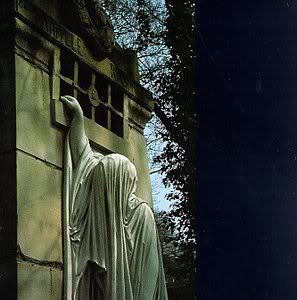
In 1987, the band released their third studio album, ‘Within the Realm of a Dying Sun’, which followed in similar vein to Spleen and Ideal. The neoclassical influence is still heavily present, but it is mixed and matched with a darker tone, reaching a point of minimalism at times. Sounds are often more distinct and individual in comparison to the large drone-ish walls of sound present in Spleen. This accommodates a largely ethereal sound present in the self titled, but reflected in a different manner. The album is also quite different to previous releases in that the album is cut into two distinct halves; One half belonging to Perry’s performances whilst the other caters to Gerrard’s talents. Each has their own four songs, with minimal interaction between the two. The album cover is from a picture taken in Paris, at the Père-Lachaise cemetery. The grave taken is of former politician Raspail.
Perry is given the first chance to shine and, as mentioned, he dominates the first half of the album. Anywhere out of the World follows the form of the band introducing albums with spectacular songs. Opening with a heavy metallic chime, the sound reverberates through the song, as other orchestral pieces are slowly introduced; once again producing an eerie choir sound similar to De Profundis.
Windfall carries an almost macabre carnival style with the import of fanciful wind based instruments and sounds. The elongated and dull sounds lend themselves well to the overall atmosphere of the album, the instrumental track the only one from the album (Another continuation from Spleen). The plodding and discreet In the Wake of Adversity does nothing particularly special but is still a nice track overall, with some solid vocals from Perry and percussion.
The first three songs seem inauspicious, and purely used as a lead up to one of Perry’s most powerful performances through his career in Xavier. Sublime story telling is ever present, as Perry seems to almost be reading from a poem of epic standards. The subtle touches to Perry’s vocals at various intervals are wonderful in the studio version, and there is not much more I can say than to listen to the song it self.
Xavier (Average quality from 1987 bootleg)
From then onwards, Gerrard takes the reins and in standard fashion, raises the standards of the album sky high. Dawn of the Iconoclasts bombasts the listener with all the marching brass and war drums in their possession before Gerrard displays the vocals, subdued and controlled by her own standards. At only two minutes in length it works well as an introduction to her work as the song builds up in vigour and alarm.
A bit more world music is infused into the goings as Cantara carries a distinct Middle Eastern tone. The slow introduction of sharp string plucks and keyboard lead way to a feverish attack, as the pace is increased and Gerrard’s exceptional vocal work begins, quite unlike anything else she has produced yet early on with sharp and high pitch singing dominating, occasionally accompanied by a male vocalist. As per normal, she is in stunning form.
Cantara (Live performance from one of their DVDs)
Summoning of the Muse continues the form, kicked off with procession music, with Gerrard producing the most dramatic song of the album. Only the ending of the album can bring about the ending to Gerrard’s consistency, as Persephone matches a wonderful balance between the previous two songs, catching some of raw beauty of Cantara and mixing it with the simple elegance of Muse in another impressive and somewhat sad finale to the album.
The album is filled with some amazing pieces of individual glory that must be checked out if you have enjoyed any of their other previous works. However, the album still suffers from a few problems overall. There is a relatively poor balance throughout the album, partially due to the fact that it was divided into the two sides so blatantly. Whilst Perry’s work seems like a developing story, with the eventual climax, Gerrard is able to suckle each and every drop from her time to make everything seem individual and unique, despite being lined up one after the other. I am not sure how much it would have helped to spread things around, but Perry seems a bit same-same until he does something special, unlike Gerrard who is always special. All things considered though, it is an underrated album by the group, with enough great moments to have it right up amongst their best.
Anywhere Out Of The World (5:07) Windfall (3:30) In The Wake Of Adversity (4:14) Xavier (6:16) Dawn Of The Iconoclast (2:06) Cantara (5:58) Summoning Of The Muse (4:55) Persephone (The Gathering Of Flowers) (6:35)
In a Few Words: An obscure and somewhat forgotten album with enough special moment to earn it a tick, a solid continuation from Spleen and Ideal
Best tracks: Xavier and Cantara
Running time: ~39 minutes
Favourite Lyrics: “These were the sins of Xavier's past”
Released 2 years after the majestic “The Serpent’s Egg” in 1990, Aion had rather large shoes to fill. By this time the previous neoclassical and melancholic tone had been well developed to its peak by the band, and it was seeking a fresher road to travel. Aion signals the introduction of a much wider medieval and folk-ish style, filled to the brim with quick songs that do their part and then breeze off into the sunset. A rapid departure at times from the ethereal Serpent’s Egg, it manages to captivate in a vastly different way. The album cover comes from the well-known Hiëronymus Bosch painting, ‘The Garden of Earthly Delights’, which the band had previously alluded to, naming its first EP ‘Garden of the Arcane Delights’.
The band indicates the direction they will be heading with The Arrival and the Reunion, one and a half minutes of medieval chanting, which is spectacular and powerful on high volume. Saltarello follows this up, which is an instrumental dance from Italy, going back to the 14th century. The frenetic pace and folk sound/instrumentation makes this a favourite from the album, as it lifts the spirits. A short interlude follows, Mephisto lasting less than a minute, yet is beautiful in its subtlety and repetition.
Saltarello (Terrible live bootleg. **** you WMG)
The first hearty song comes with Songs of the Sibyl, again capturing the more classical and harmonious side of medieval type music, with Gerrard leading the proceedings. It creates the imagery of a vast church, filled with onlookers, Gerrard captivating them as the procession begins, and is another modern interpretation of a tradition song (Catalan, composed in the 16th century). Fortune Presents Gifts Not According to the Book introduces Perry vocal-wise to the album, and he happily agrees the invitation. Beginning with minimal acoustic plucking of a guitar with a mysterious haze throughout, John Bonnar joins in on keyboard, with a whole manner of percussion building depth. The lyrics are almost read, story-like, outside of the chorus, when Perry repeats, “When you expect whistles it's flutes,
When you expect flutes it's whistles”. The song screams simplicity is often the better form of elegance.
As the Bell Rings the Maypole Spins is similarly structured, an instrument beginning in isolation (This time Gerrard’s voice) before other elements are bought in, of particular strength are the bagpipes. Despite its occasional domineering moments, the song maintains its sense of remoteness and gloominess, the basic beat and base percussion maintaining a deep beat and tone. The song has multiple small elements that are easy to pick out yet make the song all the better. These two relatively long songs are followed by The End of Words, which reaches a measly two minutes in length. It once again introduces the deep choral work, used throughout the album already, however guest vocalist David Navarro Sust is used well.
This is all a lead up to the best song on the album bar none, in Black Sun. Aggressive, fast-paced, wild, the instruments are released. Pounding drums introduce the track before hard-hitting trumpets bellow from bellow at majestic pace. Basic percussion adds amazing depth as Perry sings over the top, “Like having a black sun, in a white world.” Every factor works to perfection as Perry slowly builds up his song before entering its peak. It all goes too fast in comparison to some songs on the album.
Black Sun (Average quality, starts at about 30 seconds)
Wilderness is yet another intermission type of heavy orchestral/Gerrard vocal work. The Promised Womb uses an combination of bass and tenor violin to create an interesting and dynamic backing to Gerrard’s most focalised performance on the album. The Garden of Zephirus is a treat, despite it being a rather short one. Summoning recollection of Satyr tales in my memory, it’s a simple and short frolic through the plains. The album’s finale comes with Radharc, in yet another sensational album ending. It uses various small woodwind instruments well to create the most unique sounds on the album that take centre stage before Gerrard enters the piece in my favourite performance of hers on the album.
Aion was quite the change from their previous albums. It took a few risks, some that paid off and some that didn’t. The album, however, is interesting in its lack of creating some standout songs in my opinion. The album works well as a whole, yet there are few shining moments that are ‘must listen to’ on their own, save Black Sun, Saltarello and possibly Radharc. The album is also relatively scarce of individual vocal performances, another interesting twist from their previous works. I did have a problem with the relative shortness of songs. Few were allowed to develop, and rather hit hard from the get go with less development. This isn’t bad when used in moderation, but in this album it is used far too often, and becomes a major detriment.
The Arrival And The Reunion (1:39) Saltarello (2:34) Mephisto (0:54) The Song Of The Sybil (3:45) Fortune Presents Gifts Not According To The Book (6:30) As The Bell Rings The Maypole Spins (5:16) The End Of Words (2:05) Black Sun (4:56) Wilderness (1:24) The Promised Womb (3:23) The Garden Of Zephirus (1:18) Radharc (2:48)
In a Few Words: Best appreciated in its entirety
Best track/s: Black Sun, Saltarello and Radharc
Running time: ~36 minutes
Favourite Lyrics: “Murderer!
Man of fire.”
Dead Can Dance released Into The Labyrinth in 1993, however at this point in time there were some key factors in their personal lives that affected the creation of the album. Given the pair had separated pre-Aion, they were no longer writing music together. Perry worked his craft in Ireland, having recently purchased Quivvy Church and converting it into a recording studio whilst Gerrard went home to Australia. The duo moved from a heavy medieval influence seen in their previous albums to a more tribal and ethnic influence. The album runs for over 55 minutes, unlike the normal ~35-45 minutes due to the increased popularity in CDs rather than LPs.
As per normal, the dup kick off proceedings with a Lisa Gerrard epic, this time in Yulunga. Dark and ominous is its early minutes, Gerrard’s elongated tones open up the world to a mixture of ethno-percussion and instrumentation, emoting a seductive, snakelike substance. Perry follows this up with what was to become one of DCD’s very very few radio hits, The Ubiquitous Mr Lovegrove, one of my personal favourites. Popular with the alternative/gothic crowd of the early 90’s, Perry summons a slow beat, mixed with worldly instruments and sounds. Perry’s deep basslines control proceedings along with an assortment of Indian wind instruments and tribal drums, with fantastic lyricism sprawled throughout.
Yulunga
The mood is quickly changed with a Gerrard interpretation of a traditional folk song, The Wind That Shakes The Barley. Calm and collected, the result is one of sadness and isolation, in one of my favourite Gerrard songs away from glossolalia. The Carnival Is Over is yet another Perry track, this time recollecting memories of his childhood and a carnival. Light string plucking accompanied by a string ensemble lead the way with Perry’s poetic voice calling upon emotions of magnificence, splendour, amazement and yet, sadness in yet another great track. Some may also note a homage of sorts to Joy Division in the lyrics.
The Carnival Is Over (Official video release)
The song leads into Ariadne, a short song using a basic level of percussion and Gerrard’s vocals the change the tone to one of hope. It is followed by an even shorter track in Saldek, which encompasses the ethnic style of the album best from the album so far, as Gerrard produces high pitched and paced tribal vocals. Towards The Within sees both performers offering their vocals, initially chanting leading into Gerrard’s glossolalia high points. Middle-Eastern percussion springs forward sporadically, lush drumming ever present. Gerrard begins a subdued solo roughly half way through the song before various whimsical sounds and percussion become more prevalent to create a fleshed out world.
Tell Me About The Forest has some quiet tendencies throughout with some occasional outbursts vocally from Perry, as well as some horns and brass, not yet seen in the album so far. The Spider’s Stratagem carries a funky groove throughout for a Dead Can Dance track led by tribal drumming and flute work, with Gerrard’s ethereal and haunting vocals overlaid, the result is a fairly passive track that doesn’t really do much.
Emmeleia is a poignant vocal track by the duo, light echoing vocals existing in an empty space for two minutes. The album ends with a grand nine minute track, How Fortunate The Man With None. Using the translated words of famous German lyricist Bertolt Brecht, Perry ends the album on the perfect note that words don’t do justice to.
How Fortunate The Man With None (From 2005 Reunion Tour)
Into The Labyrinth symbolled some dramatic changes in the band, both on a personal level and on a stylistic level. Swept with grandeur, the recurring themes of sadness and distrust make it a reflective album, much more so than previous albums. Sometimes its duration can be a bit much in comparison to their earlier LP creations, but unlike its earlier compatriots, the album is full of songs that can be taken as single doses and still be fully appreciated. In the end, it is one of the Dead Can Dance albums that can either sit on top of the pile consistently. It is a must-experience album as far as I am concerned.
Yulunga (6:56) The Ubiquitous Mr. Lovegrove (6:16) The Wind That Shakes The Barley (2:50) The Carnival Is Over (5:28) Ariadne (1:54) Saldek (1:07) Towards The Within (7:06) Tell Me About The Forest (5:42) The Spider's Stratagem (6:42) Emmeleia (2:04) How Fortunate The Man With None (9:15)
In a Few Words: Top of the pile material
Best track/s: The Ubiquitous Mr Lovegrove, The Carnival Is Over, The Wind That Shakes The Barley, Emmeleia and How Fortunate The Man With None
Running time: ~55 minutes
Favourite Lyrics: “Dream on my dear
And renounce temporal obligation”
I said before in this thread that Into the Labyrinth was the first DCD album I ever got, and I had it for months without ever listening to it (such is the flaw of downloading from blogs like some kinda junkie eh). I'm really glad I did eventually though, as it's an absolutely spectacular album (spot-on review, as per norm). It's a testament to the sheer talent of Perry and Gerrard that they can take a new artistic turn of sorts and make such a beautiful album out of it, which is something a very precious few manage to do successfully.
I'll admit Into the Labyrinth wasn't quite the slap in the face the Serpent's Egg was for me (at least not on the first listen), but it's still an album I've grown to really love since. Although I'd add Tell Me About the Forest to them, I agree with your picks of album highlights too - How Fortunate the Man With None is a stunner!
Cheers for the review anyways. Top stuff, as always.
Fortune Presents Gifts Not According to the Book introduces Perry vocal-wise to the album, and he happily agrees the invitation. Beginning with minimal acoustic plucking of a guitar with a mysterious haze throughout, John Bonnar joins in on keyboard, with a whole manner of percussion building depth. The lyrics are almost read, story-like, outside of the chorus, when Perry repeats, “When you expect whistles it's flutes,
When you expect flutes it's whistles”. The song screams simplicity is often the better form of elegance.
It's based on a poem by Quevedo (1580-1645) one of the most notable Spanish-language writers of all time. And by the way, with a deep social criticism:
"Because in a village a poor lad has stolen one egg he swings in the sun while another gets away with a thousand crimes"
I think that's why there are some reminiscences of Baroque music in that song.
__________________
"Lullabies for adults / crossed by the years / carry the flower of disappointment / tattooed in their gloomy melodies."








 Hybrid Mode
