I know what I like: Trollheart's History of Progressive Rock and Progressive Metal - Music Banter Music Banter

Go Back   Music Banter > The MB Reader > Members Journal
Register Blogging Today's Posts
Welcome to Music Banter Forum! Make sure to register - it's free and very quick! You have to register before you can post and participate in our discussions with over 70,000 other registered members. After you create your free account, you will be able to customize many options, you will have the full access to over 1,100,000 posts.

Reply
 
Thread Tools Display Modes
Old 01-06-2017, 10:39 AM   #1 (permalink)
Born to be mild
 
Trollheart's Avatar
 
Join Date: Oct 2008
Location: 404 Not Found
Posts: 26,996
Default


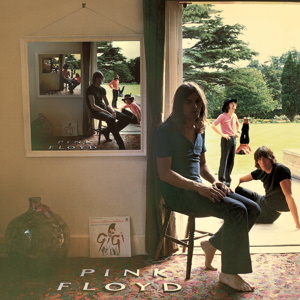
Album title: Ummagumma
Artiste: Pink Floyd
Nationality: British
Label: Harvest
Year: 1969
Grade: B
Landmark value: Given that this was essentially the first official live Floyd album and also featured compositions from each member, as well as being the first produced entirely without Syd Barrett, I'd say it ranks pretty high amongst the classics of prog rock, but I wonder does it really deserve to? Even the band have all dismissed it as “horrible” (Gilmour), “a failed experiment” (Mason) and “a disaster” (Waters). It was, however, received very favourably at the time, and is probably only seen as “the worst of rock excess”, as one critic put it in 2001, after the takedown of prog by punk rock, with Floyd being one of the major targets accused of being overblown and pompous.
Tracklisting: (Live)Astronomy domine/ Careful with that axe, Eugene/ Set the controls for the heart of the sun/ A saucerful of secrets (Studio)Sysyphus (Parts 1 -4)/Grantchester Meadows/Several species of small furry animals gathered together in a cave and grooving with a Pict/ The narrow way (Parts 1-3)/The Grand Vizier's garden party (Part 1: Entrance; Part 2: Entertainment; Part 3: Exit)
Comments: AS the live tracks have already been discussed within the confines of their original studio versions, (other than "Careful with that axe, Eugene", which is a great instrumental but I can't write too much more about it) I'll jump right to the solo material, which opens with a thirteen-minute classical piano driven composition by, who else, Richard Wright, which, while excellent, certainly can't escape the accusation of being indulgent. You know, after a rather unexpectedly relaxing listen to Zappa I find this hard to get through; it's so up its own arse. I like Wright, but frankly this never needed to see the light of day, and doesn't give me much confidence for the rest to follow. The last part, at least, is soothing and relaxing after the somewhat histrionic effects of the previous two. Waters's effort seems to be more in the vein of a laidback folk song, very low-key and seemingly on acoustic guitar, the birdsong is a nice touch, but then in typical Waters fashion, where everyone else has one he has to have two, and so “Several species ...” is another of his, following hard on the heels of “Grantchester Meadows”, and as different to it as can be. A real experimental, pscyh, avant-garde piece, it's the only one I know from here, as I had heard it before when some guys I knew were discussing crazy song titles and were trying to get this right (they didn't); it's nonsense but it's damn funny anyway.

Gilmour then gets his chance, with “The nervous way”, and unsurprisingly it's very guitar based. It's good, there's no doubt about that, but it's clear it's a moment of pure indulgence for him, a chance to play around with some of his toys, although part three is the closest of what I would call a proper Pink Floyd track, with nice vocals from Gilmour and some cool slide guitar. Meanwhile Mason's three-part “The Grand Vizier's garden party” of course contains an extended drum solo: to paraphrase the spoken lead-out on their classic Dark Side of the Moon, matter of fact, it's all a drum solo. Almost. Of the eight minutes it runs for, seven are skinbashing. Sigh. There's some nice flute from his wife and some interesting effects, but still, sigh.

Favourite track(s): Grantchester Meadows, The nervous way (part 3)
Least favourite track(s): The Grand Vizier's garden party
Overall impression: I'm never really sure what the idea is with this album. For a band who had put out basically two proper albums (and one soundtrack) prior to this, I don't see the need for a live recording, but even if so, if that was all it was, then fine. It would then not be featured here until much later, if and when I decide to include live albums. But then you have each of the band members indulging themselves, basically solo, for the other half of the record. As Richard Wright himself later admitted, “pretentious”, and I would certainly agree with him.
Personal Rating:
Legacy Rating:
Final Rating:
__________________
Trollheart: Signature-free since April 2018
Trollheart is offline   Reply With Quote
Old 01-11-2017, 05:29 PM   #2 (permalink)
Born to be mild
 
Trollheart's Avatar
 
Join Date: Oct 2008
Location: 404 Not Found
Posts: 26,996
Default


Album title: To Our Children's Children's Children
Artiste: The Moody Blues
Nationality: British
Label: Threshold
Year: 1969
Grade: A
Landmark value: No more so than any other Moody Blues album, I think. Another concept
Tracklisting: Higher and higher/Eyes of a child I/Floating/Eyes of a child II/I never thought I'd live to be a hundred/Beyond/Out and in/Gypsy (of a strange and distant time)/ Eternity Road/Candle of life/Sun is still shining/I never thought I'd live to be a million/Watching and waiting
Comments: I suppose back then it must have seemed like the dawn of a golden age, Man walking on the Moon, and it's this great human event that apparently inspired this album. However, as we know, we did sod-all on the Moon other than blow billions in taxpayer dollars, and Neil Armstrong's first steps seem a long way back now. And they are. Nearly half a century back, would you believe? But the Moodies obviously envisaged some bright future for their children (and their children, and theirs) that so far at least we have completely failed to realise. Well that's the thinking behind the album, but what about the music? “Higher and higher” opens with something like a crash, then a rising noise effect (to signify the launch of the Apollo rocket?) before a choir comes in, then we have a narration against a rocky guitar piece, not bad at all. “Eyes of a child I” is a lot more laidback and gentle, the vocal slowly rising into the tune, then “Floating” is slightly more uptempo, though hardly a rocker. Quite a lot of Beatles in it I would think.

“Eyes of a child II” basically takes the same melody but pumps it up, though it lasts just over a minute, and so does the next one, enigmatically called “I never thought I'd live to be a hundred”, giving us the first Justin Hayward vocal and a nice acoustic guitar accompaniment. They'll come back to this later. The only instrumental is “Beyond”, which is uptempo and catchy, some nice flute mixing with electric guitar, though it then slows down kind of oddly into a keyboard-driven sort of dirge, then, um, comes back to the original theme. Okay. There's some very nice orchestration here, that's not in doubt. The Beatles influence returns with “Out and in”, another ballad, this time with Mike Pinder on vocals. “Gypsy (Of a strange and distant time)” is a bit rockier and gives us Hayward back on vocals while “Eternity Road” tails it back a little, even though there is some good guitar work on it. Some fine fluting too there from Pinder. It fades into “Candle of life”, with the first duet vocal, between Lodge and Hayward. Like the piano line, and the song itself is quite laidback with a sort of bitter edge. Love the orchestration in this.

Nice jangly guitar in “Sun is still shining”, it's quite uptempo in a laidback kind of way, god work on the tambourine at the end. It leads into the followup to “I never thought I'd live to be a hundred”, which this time is suffixed by “a million” but lasts only thirty-four seconds and is the penultimate track, as “Watching and waiting” takes us out easily, very gentle and relaxed, with a fine vocal from Hayward.

Favourite track(s): I pretty much like everything here.
Least favourite track(s):
Overall impression: Good album. Nothing terribly special really that I can see, but pointing the way towards a development in the Moody Blues' sound that would go on to stand them in good stead as the wave of progressive rock began to break over England, and then the world.
Personal Rating:
Legacy Rating:
Final Rating:
__________________
Trollheart: Signature-free since April 2018
Trollheart is offline   Reply With Quote
Old 01-17-2017, 02:22 PM   #3 (permalink)
Born to be mild
 
Trollheart's Avatar
 
Join Date: Oct 2008
Location: 404 Not Found
Posts: 26,996
Default

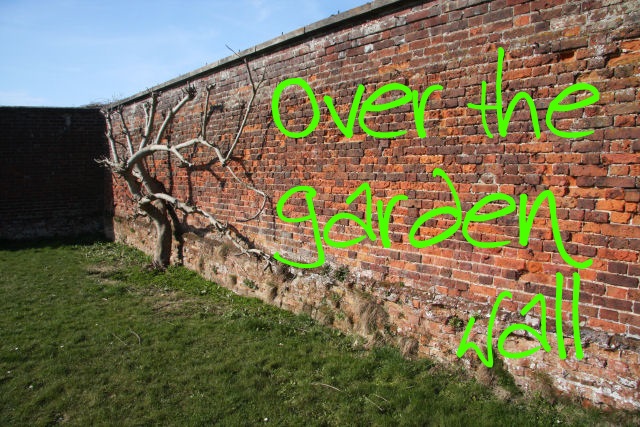
We're actually getting close now to the end of our trip through 1969, with only two albums remaining to be reviewed. With that in mind, and given that there are still three “oddball” albums to be looked into, make sure you're not wearing your Sunday best and come with me as we scale the bricks and spend some more time

These albums are proving to be a mixture of eclectic material just on the fringes of prog rock and ones that are completely outside it, yet still linked to it in a very tenuous way. This one I have no idea about, but it looks interesting and Wiki thought it eligible for its list, so who am I to argue?

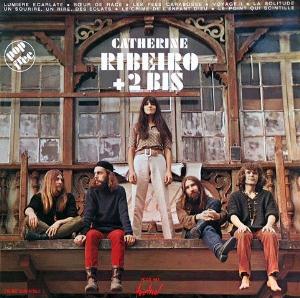
Catherine Ribeiro is a French experimental and avant-garde vocalist, who performed with Patrice Moullet on this first album, whereafter she changed partners (musically speaking) and, I'm told, this was the pattern for every album she recorded after that; she also changed the name of the band to Catherine Ribeiro + Alpes. Given the quip I made about the title of this one, I don't know if that was the reason, but it does sound damn funny. Give Ribeiro her due though; she has so far recorded about thirty albums, and even in her seventies is still recording now, with her last release in 2006. Impressive.


Album title: Catherine Ribeiro + 2Bis
Artiste: Catherine Ribeiro
Nationality: French
Label: Disques Festival
Year: 1969
Previous Experience of this Artiste: Zero
The Trollheart Factor: 0
Tracklisting: Lumière Écarlate /Sœur De Race /Les Fées Carabosse /Voyage 1/La Solitude/ Un Sourire, un rier, des Éclats/Le Crime De L'Enfant Dieu/Le Point Qui Scintille
Comments: Nice acoustic guitar then her voice is pretty out-there, shaking and howling then dropping down to a gentler register but still sounding pretty raw. It's all in French of course so I have no idea what she's singing about but she certainly seems to be singing with passion. Reminds me a little of that mad wan that Batty tried on me in the Torture Chamber, singing about diseases or something. Can't recall her name. Scary bitch. The next one is purely acoustic, and a lot more easy on the ear, almost pastoral. I could see this being labelled as a sort of prog rock track, sure. It's called “Sœur De Race” which I think might mean “saviour of the race” or something, while the next one is on what sounds like classical or Spanish guitar and hops along at a faster pace. It's quite interesting how Catherine dominates every song; even though the guitar is obviously driving the tune here, she's seldom absent and comes to the forefront every time. Powerful personality indeed. Goes a bit mad at the end, almost like providing human feedback. Intense!

Sounds like our man Patrice might be trying to grab some spotlight for himself here, with a big dirty riff opening this, and then what sounds like violin and some very cool congas. This may very well be an instrumental. Yeah, it kind of is, though Catherine throws a few sharp barking laughs and moans in along the way. That man is something else on that violin. This is excellent. “La Solitude” starts out very gentle and relaxed, then burst into something of a diatribe, accompanied by a fast classical guitar (maybe Spanish; classical is mentioned in the track listing so I'm going with that). Great vocal, very emotional. Almost a Beefheartesque hard guitar in “ Un Sourire, un rier, des Éclats”, quite choppy and also sounds like this may be a live track, though surely that's unlikely on your debut album? Well, maybe. Another good guitar intro, more rocky at first this time for “Le crime de l'enfant Dieu” with rather a lot of laughing for such a serious title, then we end on “Le point qui scintille”, good fast Spanish guitar (or classical) and a sort of playful vocal from Catherine.

Favourite track(s): Sœur De Race, Les Fées Carabosse, Voyage 1
Least favourite track(s):
Overall impression: Decent stuff; probably would appreciate it more if I could understand the lyrics, but not a bad album. Wouldn't be mad about it though.
Personal Rating:
__________________
Trollheart: Signature-free since April 2018

Last edited by Trollheart; 03-23-2021 at 03:59 PM.
Trollheart is offline   Reply With Quote
Old 01-18-2017, 08:45 AM   #4 (permalink)
Born to be mild
 
Trollheart's Avatar
 
Join Date: Oct 2008
Location: 404 Not Found
Posts: 26,996
Default


Album title: Dracula's Music Cabinet
Artiste: The Vampires of Dartmoore
Nationality: German
Label:
Year: 1969
Previous Experience of this Artiste: Zero
The Trollheart Factor: 0
Tracklisting: The Torture chamber of Dr. Sex/ Crime and horror/ The Fire-dragon of Hong Kong/ Murder in the Ohio Express/Dance of the vampires/Hello Mr. Hitchcock/The executioner of Dartmoore/Killers end/Soaked body/A handful of nitro/Dr. Caligari's creeps-cabinet/Frankenstein greets Alpha 7
Comments: Very little information seems to exist on this act. Why, if they were German, did they choose the name Vampires of Dartmoore, a place in England, and why add the extra “e” (Dartmoor is spelled this way)? Only two of many questions which I suppose will never be answered. What I do know is that the creative genius behind the effort were Horst Ackermann and Herbert Thusek, apparently both known for their work in the field of jazz. Who plays on the album? No idea. What's the premise behind it? Not a clue. Is it good? Well, now there we can at least answer one question...

A dark creepy voice bids us welcome, there are screams, footsteps, creaking doors, an organ, sounds of some girl being smacked and what may be someone being sliced up, with a kind of kitschy smooth jazz tune going on and someone moaning as if in pain or pleasure, and the opening piece ends on a female scream. Next there's some nice striding guitar shuffling along, very funky and jazzy, bringing in organ and, um, slide whistles as well as sax, the sound of someone walking downstairs, a demonic laugh, a woman screaming, more slapping sounds, the sound of a struggle, breaking glass. All very weird. Dogs barking now. This goes under the name “Crime and horror”, while there's a distinctly oriental flavour to “Fire dragon of Hong Kong”, which mostly runs along on a peppy organ (Hammond?) but occasionally breaks for a moaning vocal.

“Murder in the Ohio Express” is carried on a bright guitar line, but occasionally breaks to allow what sounds like an effect meant to convey the motion of a train with the music in the background. Someone is shot. The music surges back up. And it just goes on like that. The next one has springs, lounge keyboard and a really nice melody but it's hard to concentrate on the music with all the odd effects being thrown in. Think someone's gasping out their last breath or something, then “Hello Mister Hitchcock!” croaks a creepy voice, “In two minutes you will be dead!” while happy keyboard hums along, and the man counts down the time, finally telling Hitchcock he is dead. The next one appears just to be a simple instrumental, very similar to the music that formed the background to the previous track, followed by a jazzy little upbeat tune interspersed with ambulance or police sirens. And gunshots. It's kind of like watching a movie while listening to some background music, or more like watching a movie while someone else listens to music, and occasionally the door opens and their music gets louder, then recedes as the door is closed again. Not too surprisingly, “A handful of nitro” features a lot of explosions, and there's maniacal laughter, footsteps, creaking doors and a grandfather clock in “Dr. Caligari's creeps cabinet” and we end as we began, with a big helping of weird and some weird on the side.

Favourite track(s): Um...
Least favourite track(s):
Overall impression: It's hard to know what to think of this. I have no idea why this project was created, other than perhaps as a bit of fun for the two guys involved. It certainly is a fun album, but it's so out there, so verging on the edge of being frankly ridiculous that it's hard, even impossible, to treat it in any way seriously and make any sort of critique of it. Still, I reckon I would listen to it again for fun. Would definitely recommend it. Everyone should hear this at least once.
Personal Rating:
__________________
Trollheart: Signature-free since April 2018

Last edited by Trollheart; 03-23-2021 at 04:00 PM.
Trollheart is offline   Reply With Quote
Old 01-20-2017, 10:15 AM   #5 (permalink)
Born to be mild
 
Trollheart's Avatar
 
Join Date: Oct 2008
Location: 404 Not Found
Posts: 26,996
Default

Back to the serious albums we go.

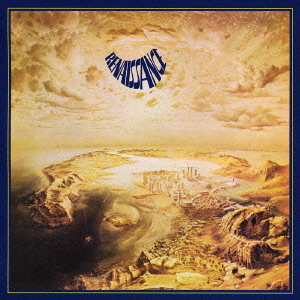
Album title: Renaissance
Artiste: Renaissance
Nationality: British
Label: Island
Year: 1969
Grade: C
Previous Experience of this Artiste: The hit single “Northern lights”.
The Trollheart Factor: 0.01
Landmark value: I doubt it has one, other than being the first album (I think) by a prog rock band to feature a female lead. Why did I always think these guys were Canadian?
Tracklisting: Kings and queens/Innocence/Island/Wanderer/Bullet
Comments: What can I tell you about Renaissance? Nothing really. I only ever knew of them, as above, from that single, and even then I didn't realise they were prog. It will however be interesting to hear a prog band fronted by a female singer – don't think we've had that before, Catherine Ribeiro excepted. Only five tracks, but two of them are in the eleven-minute bracket. Powerful classical piano intro to “Kings and queens” (that sounds like a real prog song title, doesn't it?) which is one of those eleven-minuters. Hmm, doesn't sound like a female when the vocals come in. Maybe Jane Relf shares vocal duties with her brother Keith, who used to be with the Yardbirds apparently. John Hawken is certainly giving it socks on the piano here. Excellent work. Okay, that is definitely a man's voice also on the second track, bit boppier but slowing down into a quite beautiful piano sonata about halfway through. I think Hawken must have been seen as the heart of this band; he's certainly driving most of the melodies so far. Speeding up now, again on the piano, great stuff.

Ah, now I hear Jane Relf's voice as we hit “Island”, a slow, acoustic guitar-controlled ballad with unsurprisingly some great piano although as the keys come in it shifts the pace up slightly, with a superb harpsichord solo halfway through. Actually, it's almost as if the song itself ends and then Hawken throws this in as an extra. I'm not complaining! And it just gets better as the harpsichord continues into “Wanderer”, the shortest track on the album at just over four minutes, and features the almost operatic voice of Jane Relf again. Very hippyish man. The closer then is the other eleven-minute opus, and at this point it would probably surprise me if it wasn't opened with a big piano – ah. It's actually sort of muted tribal drums that kick in “Bullet”, though the piano does come through. The song has a very African feel to it, with a kind of chant going on in the background against a pretty funky piano line. It features Keith Relf back on the vocals. Ooh, harmonica! Always like harmonica. Some really nice soft guitar on this too. Weird effects near the end, very atmospheric.

There's an extra track here on the Spotify copy that doesn't appear anywhere on their Wiki page, but it's only a short one, so I'll include it, not knowing if it should be there, or if it's a bonus track or only available on reissues or something. It's Jane again on vocals and it's a nice sort of uptempo bluesy tune called “The sea”.

Favourite track(s): I like everything here.
Least favourite track(s):
Overall impression: A pretty impressive debut, though if a selling point was to have been that they had female lead (I don't know if that was the plan, or if things just happened that way) then maybe they might have used her voice on more tracks. A real talent though in John Hawken, who really makes this album.
Personal Rating:
Legacy Rating:
Final Rating:
__________________
Trollheart: Signature-free since April 2018
Trollheart is offline   Reply With Quote
Old 01-25-2017, 07:33 PM   #6 (permalink)
Born to be mild
 
Trollheart's Avatar
 
Join Date: Oct 2008
Location: 404 Not Found
Posts: 26,996
Default

Nothing says the sixties better than the words hippy commune, and that's where our last actual band to be featured for 1969 began, in a political, artistic and radical commune in Munich. Perhaps disturbingly, it seems future founders of the Baader-Meinhof terrorist group were also members. Hmm. Anyway, apparently many of the members of the commune – which was called Amon Duul – didn't think that talent or musical ability was that necessary for what they wanted to do, but others did, and so the more musically proficient (and you would have to say, based on their success, the more serious) members split into a faction which became known as Amon Duul II, in order to differentiate it from the other, less musical Amon Duul. This is supposedly widely believed to be one of the first Krautrock albums.

Album title: Phallus Dei
Artiste: Amon Duul II
Nationality: German
Label: Liberty Records
Year: 1969
Grade: B
Previous Experience of this Artiste: Zero
The Trollheart Factor: 0
Landmark value: Seen as the first Krautrock album, as above, and therefore also makes Amon Duul II the fathers of the entire Krautrock scene, if true.
Tracklisting: Kanaan/Dem Guten, Schönen, Wahren/Luzifer's Ghilom/Henriette Krötenschwanz/Phallus Dei
Comments: Sounds like sitar and drums with a nice bassline opening the album, and now we get some vocals, though they appear to be spoken in German (obviously) while some woman croons or moans behind the male voice. Picks up a fair lick of speed as it goes along. Some very cool guitar indeed bringing the song to something of a crashing close and we're on to the second track, which is a little more pastoral, almost like someone running up octaves on a fretboard, while a weird and warbly voice says something I can't understand and laughs a lot. Music is decent though. Next one seems a bit more cohesive, very nice rapid acoustic guitar and percussion, no vocal yet ... oh. Sounds like he's rapping in German, though of course I guess rapping wasn't even a thing this early. Well, talking fast and in rhythm certainly.

Pretty atmospheric opening to the title track (all twenty minutes of it), kind of like a film score or maybe incidental music to same; lots of weird sounds, effects, someone chanting or moaning, someone shouting and now we have a snarling sax. I'm willing to bet Frownland loves this album. In fairness, it's not as harsh as I might have expected, but it's a little formless in terms of being able to review it. Eventually a bassline is laid down with some percussion then some good fast guitar and a violin join in. Sounds like a rendition of “While shepherds watched their flocks by night” to be honest, then it all dissolves into a mad tribal drumfest with lots of yelling and cheering.

Favourite track(s): I can't honestly say I enjoyed any of that; I doubt I could remember much of it but similarly
Least favourite track(s): can't say I hated anything enough either.
Overall impression: ? Well, all I can say is that if that's the serious musicians I'd hate to hear the other side! No, seriously though, it's clear these people could play; they just chose to do so in a ... different way. Still, if this is Krautrock, or proto-Krautrock, ain't likely to be for me.
Personal Rating:
Legacy Rating:
Final Rating:
__________________
Trollheart: Signature-free since April 2018
Trollheart is offline   Reply With Quote
Old 01-26-2017, 03:05 PM   #7 (permalink)
Born to be mild
 
Trollheart's Avatar
 
Join Date: Oct 2008
Location: 404 Not Found
Posts: 26,996
Default

Before we leave 1969 then, it's time to take one more trip

to find an album by a band who basically lived in an attic. Well, sort of. With very little money, no transportation and barely enough food, the band ironically called It's A Beautiful Day hung out in a cramped freezing attic in Seattle while they recorded their debut album. Now that's rock and roll! Or, perhaps, not. At any rate, this is the one we're finishing up our look at the sixties with.

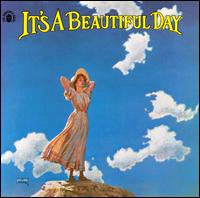
Album title: It's a Beautiful Day
Artiste: It's a Beautiful Day
Nationality: American
Label: Columbia
Year: 1969
Tracklisting: White bird/Hot summer day/Wasted union blues/Girl with no eyes/Bombay calling/Bulgaria/Time is
Comments: You can hear what I guess would be called the California sound, the kind of thing you'd have heard from The Mamas and the Papas around this time as “White bird” gets things underway with a nice soft organ line and pretty good double vocals from David and Linda LaFlamme, with some beautiful violin from David. The way these two complement each other vocally is very impressive, and I think the dude is playing violin and flute here, almost on top of each other (or produced that way anyway); it fleshes out the song, but I still think six minutes is pushing it a little. “Hot summer day” has a nice line in organ and some fine harmonica, and again the singing is superb. Another lovely violin solo, really adds something to a song I already like.

Then there's a total (and I mean total) shift for “Wasted union blues”, with a big nasty squealing guitar and hard piano, some of it a little discordant, the song perhaps reflecting the band's frustration at their situation as described in the intro. Some slick harmonica coming in though, however it gets seriously frenetic at the end, and we're into “Girl with no eyes”, a lovely little gentle waltzy ballad, with what sounds like a harpsichord solo, really beautiful song. Oh yeah, I hear it, the elephant in the room. I know Deep Purple were accused of ripping it off for “Sweet child in time”, and the opening of “Bombay calling” does sound really similar. Think it will turn out to be an instrumental. Great work by David on the violin, and yes, it is an instrumental. Seems like “Bulgaria” may turn out to be a really nice ballad, very evocative and moody, totally superb and builds up to a hell of a climax.

The last track is nine minutes long, but somehow I don't think that's going to be a problem, as I have thoroughly enjoyed everything (almost) here. “Time is” starts off as some sort of mad frenetic folk dance style and then the vocal comes in and it just gets better. Just David on the mike initially anyway, kind of has an almost Nick Cave thing going, very energetic. Some superb organ work here, and there's even a drum solo that doesn't suck or have me reaching for the Glock. Bit of a fun jam all round, very enjoyable.

Favourite track(s): Hot summer day, Girl with no eyes, Bombay calling, Bulgaria
Least favourite track(s): Wasted union blues
Overall impression: Really surprised how much I loved this. I thought it was kind of a joke record, but it obviously is not, and in fact displays emerging talent and vision that would see this band release another three more albums into the seventies, although by the second album Linda LaFlamme had left. They apparently still gig even now, over forty years later.
Personal Rating:
__________________
Trollheart: Signature-free since April 2018

Last edited by Trollheart; 03-23-2021 at 07:16 PM.
Trollheart is offline   Reply With Quote
Old 01-28-2017, 09:28 AM   #8 (permalink)
Born to be mild
 
Trollheart's Avatar
 
Join Date: Oct 2008
Location: 404 Not Found
Posts: 26,996
Default

Before we move on to 1970, a few last words about the late sixties. The effect, both of the bands formed and of certain albums released, as well as the overall embryonic first steps of progressive rock can't be overestimated. Although much of the better known and indeed more successful albums, the ones that have stood the test of time and gone on in some cases to become classics, and which broke certain bands commercially, happened in the seventies, it's likely that they would not have had the chance to do this had it not been for the trendsetting (and, perhaps paradoxically, trend-defying) bands who came first. As noted in the original intro, though prog rock later became known for and reviled as overblown, pretentious and up itself – accusations I can not, in most cases, defend – at the time of its birth it was something entirely new. Breaking away from the restrictions of the standard song format, sacrificing chart success in order to produce meaningful albums, utilising instruments and arrangements that had not been popular before, and not worrying about the length of songs were all ideas that were very new, and indeed risky at the time, so there was no guarantee that they would find favour with the music buying public.

And in many cases, they did not. Prog was not by any means successful by itself initially; many of the bands who played prog, or dabbled with it, or skirted along its edges, were of course already known for other, more perhaps standard and accepted forms of music – the Beatles, Chicago, Santana – so did not have as much to lose, theoretically, as did the newer kids on the block – Pink Floyd, Yes, Frank Zappa, Beefheart, Soft Machne, Van der Graaf Generator – who had no following and had to rely on the hope that people would buy into the new music they were creating. But as more and more of these types of bands began to rise up, and as psych and blues and jazz crossed over and mixed, and elements of classical married up to more conventional rock, a strange kind of hybrid was being born, and soon most if not all of these bands would be a part of it. As 1969 gave way to 1970, the following decade would produce some of the most iconic and important albums in the genre.

1969 was also more or less the death knell for the end of the flower power and hippy movement, the Summer of Love would be followed by the Winter of Discontent as the shootings at Kent State loomed large and ugly on the immediate horizon, and overall protests against the Vietnam War escalated and got more militant, leading to crackdowns by the US government against their own people, as the gulf between old and young, traditional and new ideas, establishment and counter culture grew. It wasn't a civil war of course, not on the streets anyway, but within the hearts and minds of the young people who had grown up in this era of war on one side and peace and love on the other, there was certainly a battle raging, and one that would not be easily won. Haight-Ashbury was closed for business, free love now had to be paid for and hippies turned their energies from writing songs about wizards and castles to chanting “Hell no! We won't go!” as those in power watched, simmering with rage as the beloved Stars and Stripes went up in flames, a harsh symbol of and rallying cry for a country opposed to a war they did not believe was their concern, but which their young men were expected to die in.

Musically, the 1970s would see a huge shift in musical direction with the explosion of disco and funk, which would expand on the soul music coming out of Detroit in the sixties and move to take over the charts for most of the decade, while slowly, hard rock would metamorphose into and give birth to heavy metal, while there would also be a minor resurgence in folk and Country music, with the likes of John Denver, Cat Stevens and Gordon Lightfoot all making it into the charts. Against this background, progressive rock would strive and thrive, and for a while it would be seen as the thinking man's music, as fluffy disco and chart hits peppered the top reaches of the charts, and whimsical folk tunes would also make a respectable showing. Prog rock would without question champion and make popular the idea of buying albums, as distinct from the chart-topping record-buying public, who would prefer to shell out on singles and often not care what else the artist had written or played if it was not popular. Prog would introduce the idea of stories in songs, stories in albums, and birth the idea of the concept album as well as pioneering a trend which would see some of the most lavish and detailed cover art adorning their albums, with artists like Roger Dean and Storm Thorgerson rising to the top of their field.

Prog bands would also engineer huge advances in the concept of the stageshow, with lighting, effects, the emerging video technologies and stage art all being used to their utmost, often leading to a band so wreathed in dry ice and surrounded by such massive backdrops that it could be hard to see them onstage. Gigs would become no longer just a way to see the band and hear the music; they would become totally immersive experiences, equivalent in some cases to seeing, or even participating in, a movie only the audience there would ever get to see, and bring the fans closer to the band while simultaneously, if not deliberately, pushing them back and holding them at arm's length. Massive talents would rise in the seventies who would go on to become legends, dominate the music scene for decades, some of whom are still with us.

In 1970 alone, both ELO and ELP would be formed, and this first year of the new decade would also see the rise of Gentle Giant, with already formed bands like Genesis and Yes releasing important albums, and others, formed but without an album, releasing their debuts, such as Supertramp, Egg and Focus. Though it would really take another two or three years before prog rock really found its stride, it was at this point climbing out of the cradle and if not actually walking yet, certainly crawling across the floor like certain characters in a later Genesis song. And to further paraphrase that song, these bands were already beginning to lift their faces to the sky, like the forest fight for sunlight that takes root in every tree, and soon those trees would blossom, grow and yield wonderful fruit.
__________________
Trollheart: Signature-free since April 2018
Trollheart is offline   Reply With Quote
Old 03-03-2017, 05:38 PM   #9 (permalink)
Born to be mild
 
Trollheart's Avatar
 
Join Date: Oct 2008
Location: 404 Not Found
Posts: 26,996
Default

We will of course be getting back to the timeline presently, but I'd just like to diverge slightly from the laid down path, stop and take a breath, and pay tribute to the bands and artistes that did so much for progressive rock, some of whom are rightly lauded, some of whom are not, but all of whom are what I would definitely class as
The first guys I want to look at probably fit more into the latter category, and personally I know little about them, and have heard I think one album (though that will of course change as we move along the timeline), but they are certainly recognised to be a large part of the progressive rock movement overall.
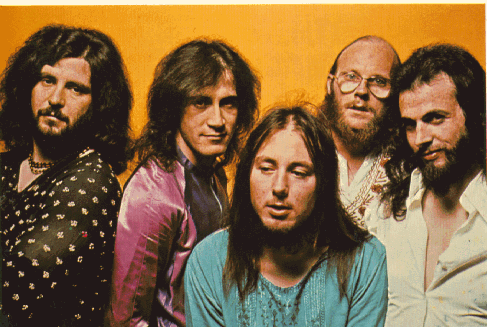

With a name like that, if you don't know them, you'd probably think they were a folk band, quite low key and laidback, relaxed sort of chaps. You might be interested to hear that although yes, they did incorporate folk music in their sound, they also used soul, jazz and classical elements, and over their ten-year career they produced no less than eleven albums. Perhaps one of the only prog rock bands to not only contain, but be founded by, three brothers, Gentle Giant was Derek and Ray Shulman, and their younger brother Ray. Perhaps not too oddly, but still interesting, the first two were born in Scotland (Glasgow) while Ray did not arrive until the family had moved to Portsmouth, perhaps as far from his brothers' birthplace as it is possible to get and yet remain on the mainland of Britain, and so would be technically English while his siblings were Scottish.

With a musical family background, the boys were all encouraged from a young age to learn whatever instruments they could, with the result that the three of them grew to be multi-instrumentalists, again something of a rarity in a family, but certainly good groundwork for their later ventures into progressive rock. Originally though – and again almost uniquely – they were a soul/pop band which turned to psychedelia as that became popular and actually had a top ten hit single. Instead of capitalising on that though, the brothers hated the new sound their record company was pushing them towards and dissolved the band, and after a short stint as another band called The Moles, they eventually decided to create and found Gentle Giant.

The oddities with these guys continue. With three of them in the new band they hired three more bandmembers, two of which were ... wait for it ... multi-instrumentalists too! These were Gary Green and Kerry Minnear, and drummer Martin Smith. He wasn't a multi-instrumentalist. How left out he must have felt! Not to mention that the newly-formed band now had three lead vocalists – Derek and Phil Shulman and recently-joined Kerry Minnear – and even two of the remaining six members also sang on occasion. Gentle Giant released their first, self-titled album in 1970 (which we will be looking at soon), a relatively short affair with only seven tracks and clocking in at just over a half hour in total.

Less than a year later they were back with their second, much more experimental album, which contained their “mission statement”: ”It is our goal to expand the frontiers of contemporary popular music at the risk of being unpopular.” Their, even for prog rock, eclectic approach to the subject matter for their songs was evident in their usage of the writings of a French Renaissance humanist in one of the songs. The album, again, was short, just over half an hour with this time eight songs.

The title may have been quite appropriate, as it was certainly not to everyone's taste, and in what was becoming, and would become, the standard for prog rock bands in the seventies, their third album was a concept. Even at that, it was short and had again only six tracks. It would appear Gentle Giant were not eager to follow the likes of Yes and ELP with side-long compositions and multi-part suites.
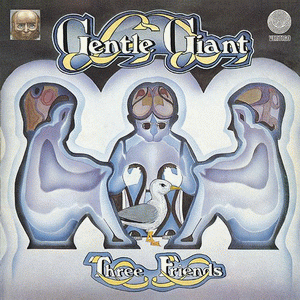
Nevertheless, that same year they released their fourth album, Octopus, which is generally regarded as one of their best works. Sadly, during the tour to promote the album Phil Shulman left the band, and the remaining band members carried on to release their fifth album, 1973's In a Glass House, another concept, followed by yet another concept album, The Power and the Glory in 1974, which is generally rated as a favourite among fans but which of course did nothing commercially, and also led to them changing labels, to move to Chrysalis Records, with whom they spent the rest of their career.

The first album released on the Chrysalis label was the more accessible, almost commercial Free Hand, which even scraped into the top fifty in the US, followed by the weird In'terview in 1976, a concept album based on the idea of an actual interview (not surprisingly, that bombed and failed to capitalise on their recent mini-success in the States). Although their albums were not exactly shifting platinum or gold units, Gentle Giant did become famous for their incredibly versatile onstage musical prowess, and their fame spread that way, but soon the advent of punk would make its mark upon the world, and Gentle Giant found their eclectic and energetic music no longer appealed to the general populace. They retreated into a sort of semi-pop style, as both 1977's The Missing Piece and 1978's all-out pop Giant for a Day!. Their final album, 1980's Civilian maybe says it best with its title: after trying to live up to their grandiose statement on their second album, Gentle Giant had slowly succumbed to the pressure of commercialism and the changing attitudes towards music as the 1970s became the 1980s, and finally retired after their eleventh album.

Perhaps one of the great “could-have-been” stories of the prog rock movement, Gentle Giant typified a band who started off with lofty ideals, tried to remain true to them despite little real commercial success or recognition, and eventually gave it up as a bad job. We'll be sampling all of their catalogue (or most of it, depending on the years and what was released) as the timeline goes on, so I can't speak to whether or not they deserved to be bigger, or it was right that they faded away, but whatever the truth is, it's a pity they didn't make it as they seemed to be genuine musicians with a genuine desire to entertain and please.

Unfortunately, as bands like Genesis, Yes and Rush learned, sometimes that just isn't enough.

__________________
Trollheart: Signature-free since April 2018

Last edited by Trollheart; 03-23-2021 at 08:27 PM.
Trollheart is offline   Reply With Quote
Old 03-04-2017, 10:11 AM   #10 (permalink)
Born to be mild
 
Trollheart's Avatar
 
Join Date: Oct 2008
Location: 404 Not Found
Posts: 26,996
Default


As mentioned in the previous article, progressive rock bands really started something of a trend, later taken up by hard rock and metal bands, as well as AOR ones but for a long time almost exclusive to prog rock, for intricate and often rather beautiful album covers. I'll be looking at some of the best in this section.

Bearing a striking resemblance to much of the artwork from 70s Yes album covers, which is no coincidence as artist Roger Dean worked on both, and this was basically a Yes album by any other name, Anderson Bruford Wakeman Howe was the debut, and only album by the ex-members of Yes before they got back together with the rest of the band.

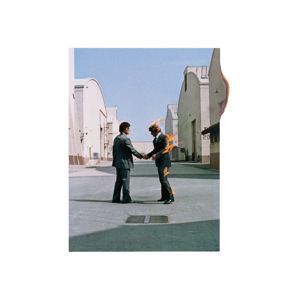
Although their early album covers were nothing much to write home about, once Pink Floyd joined forces with Hipgnosis they began turning out some very iconic sleeves, such as this one from Wish You Were Here.

Rush had some great ones too, like 1977's A Farewell to Kings

Early work from HR Giger, who would go on to become famous as the designer of Ridley Scott's Aliens, this is the 1973 album from Emerson, Lake and Palmer, entitled Brain Salad Surgery.

Camel's 1979 I Can See Your House From Here uses a rather risque subject, the joke about Jesus on the cross, and transposes it to an outer space setting. Very clever.

I like the pure expressionism on this one from Eloy, entitled Floating

while King Crimson's Lizard is ornate, detailed and intricate.

Finally, this 1975 album from Hawkwind shows the beginnings of fantasy art becoming almost standard on prog rock album covers.
__________________
Trollheart: Signature-free since April 2018

Last edited by Trollheart; 03-23-2021 at 08:28 PM.
Trollheart is offline   Reply With Quote
Reply


Similar Threads


© 2003-2025 Advameg, Inc.