Four Green Fields: Trollheart's History of Ireland - Music Banter Music Banter

Go Back   Music Banter > The MB Reader > Members Journal
Register Blogging Today's Posts
Welcome to Music Banter Forum! Make sure to register - it's free and very quick! You have to register before you can post and participate in our discussions with over 70,000 other registered members. After you create your free account, you will be able to customize many options, you will have the full access to over 1,100,000 posts.

Reply
 
Thread Tools Display Modes
Old 11-04-2019, 02:42 PM   #1 (permalink)
Born to be mild
 
Trollheart's Avatar
 
Join Date: Oct 2008
Location: 404 Not Found
Posts: 26,996
Default

Hugh O’Neill and the Nine Years War: Ulster Stands Alone


Banished at an early age from Ulster by Shane O’Neill, who feared his claim to the lordship of Tyrone, Hugh was brought up at the English Court, and was in fact made Earl of Tyrone in absentia. Though he had lived his adolescence in England, Hugh hated the English and their occupation of his native land, and planned a rebellion, which would in fact turn into a war. He waited his chance, and when Shane O’Neill was killed and then succeeded by Turlough Luimneach, he became The O’Neill on Turlough’s death in 1595.

When the lord of Fermanagh, Hugh Maguire, fought back against English incursions into his land, he was aided by Red Hugh O’Donnell (no, I don’t know why so many people were called Hugh in Ulster: must have been a Nordy thing, as we say here in the south) and eventually he would form an alliance with O’Neill as they took on the English together. As The O’Neill, and also Earl of Tyrone, Hugh had the clout to enlist Scottish warriors, Irish mercenaries and even Spanish aid from Philip II. However he did not at first show his hand so early, siding with the Englishman chosen to impose the authority of the Crown on Ulster, Sir Henry Bagenal. There was bad blood between the two men, as Hugh had abducted Sir Henry’s sister and married her without his consent. She had later died, some say as a result of a broken heart over the infidelities of Hugh, who seems to have become bored and uninterested in her once he had accomplished his adventure. In time, these two men would face off against each other, but for now they were allies, if uneasy ones.

The execution of The MacMahon in Monaghan, along with the seizing of other counties by the English invasion force pushed more and more Irish chieftains into opposition against Bagenal, and Hugh O’Neill, realising that Queen Elizabeth had no intention of granting him any royal commission that would give him power in Ulster - he had hoped or expected to be named Lord President - switched sides, deciding that his loyalty to his homeland was stronger than his ambition, at least as far as English rule went. Besieging the English castle at Monaghan, O’Neill engaged his erstwhile ally as Bagenal marched to its defence. The two-day Battle of Clontibret was the first major defeat for England in the Nine Years War, and demonstrated that Hugh O’Neill was a capable commander, a charismatic leader and a focal point for Irish resistance, and an enemy to be respected and feared.

Only a few hundred are known to have perished in the Battle of Clontibret, but the next time Bagenal and O’Neill clashed it would be much different, and only one would survive to tell the tale. A mere three years later O’Neill had again besieged an English fort, this time Lord Deputy Thomas Burgh’s one on the River Blackwater, and Bagenal, after some argument with the authorities at Dublin Castle, marched to relieve it. O’Neill gathered his forces, pulling in reinforcements from Red Hugh O’Donnell, whom he had previously been hunting with Bagenal. The English learned too late there was a very good reason why they hadn’t ventured too far into Ulster: the territory. It was hilly, rocky, mucky and provided little cover. The Ulstermen knew it intimately, the English were completely out of their depth. Cue ambush after ambush, and a major victory scored for the Irish in the Battle of Yellow Ford, wherein Sir Henry was killed by the man who had originally come back to Ulster as his ally.

Significantly, and as was to prove the case for centuries to come, the southern Irish did not support O’Neill, though he requested their help to push the Protestants out of Ireland. Their shared religious belief was not enough to overcome their aversion to the “wild Irish” and they still considered themselves at heart English, and loyal to the Crown. However, the aid of the Spanish raised the stakes for Elizabeth, who could not afford to allow Philip to gain a foothold in Ireland, a staging post from which he could launch an invasion of England, and so the repression of the Irish rebellion in Ulster - now a war really, hence the name - was stepped up and more commanders sent in to pacify, and destroy the resistance.

Not by any means for the first, nor the last time, did old enmities, bribes and pure enlightened self-interest among the Irish families lead to their defeat. After the Earl of Sussex had returned in disgrace to London, having failed to achieve his and Elizabeth’s objective even with 17,000 men, command of the English forces was given to Lord Mountjoy, who proved a more savage prosecutor of the war against the Irish, making great gains in Leinster and Ulster. He bought off though one of the major Irish chieftains, Finghin MacCarthy, who promised to remain neutral and therefore did not respond to Hugh O’Neill’s demand for reinforcements for James Fitzmaurice Fitzgerald of Munster, leaving the earl on his own to face Mountjoy, and soon to be defeated. MacCarthy got his though, as the treacherous English repaid his collaboration by arresting him along with Fitzgerald and putting both to death, thereby effectively ending resistance in the south.

In Ulster, now standing alone, Mountjoy continued to advance, his army now all but unstoppable, driving O’Neill and his forces back. But Hugh was waiting for his allies from Spain to arrive, which they did in 1601. Like the original Spanish armada though, this fleet of ships fell foul of the temperamental English weather and was scattered, a third of the six thousand troops having to return to Spain. The remaining 4000 landed at Kinsale and dug in to await the arrival of O’Neill, and the final battle.

The Battle of Kinsale (1600)

Hearing of the landing of the Spanish, Mountjoy rode to besiege them, and O’Neill, reluctant to venture into enemy territory in the south, delayed his march from his stronghold as autumn turned to a particularly bad winter. Finally realising that if he let the now surrounded Spanish force be defeated, further aid from Spain would dry up, O’Neill marched to face the English and help his allies, who were at this point in a bad way, most of their arms and ammunition having been taken back to home port on the ships that had had to turn back during the storms.

But in the freezing and wet winter weather, as Christmas Eve 1600 approached, and the forces of O’Neill and O’Donnell arrived at Kinsale, it was obvious things were not going to go their way. Far from home, on unfamiliar territory and without the cover of their beloved bogs and forests of Ulster, the Irishmen were easy prey for the English cavalry and artillery, and they and the Spanish were routed in the final pitched battle between Irish and English for another several hundred years. The Spanish, surrendering while unaware that reinforcements from their king were already on the high seas, were allowed return home with honour. The fleet due to join them, on hearing of the defeat at Kinsale, also turned and headed home. Spain would no longer involve herself in Irish military affairs.

The Flight of the Earls and the End of Free Ireland


Broken, beaten and in disarray, the two main leaders of the rebellion fled, O’Donnell to Spain where he died a few months later, O’Neill back to Ulster where he fought on in what was becoming a hopeless war, and in which he admitted defeat in 1603, signing the Treaty of Mellifont in which he swore fealty to the Crown. English anger at the lenient terms allowed him and the other rebel lords forced him and Red Hugh O’Donnell’s father, Rory, The MacHugh of Fermanagh and other Irish lords to take a ship out of Ireland for Spain, in the hope of raising an army to retake their homeland. This became known in Irish history as “The Flight of the Earls.”

Blown off-course on their way to Spain, the earls landed instead in France, from whence they made their way to Rome, but though they were welcomed no monarch was willing to lend them military support, either in fear of the might of the victorious English army, or out of political necessity, unwilling to make an enemy of a country with whom they were not currently at war. Add in the fact, not inconsiderable, that after nine years of conflict the greatest chieftain in Ireland had been roundly defeated by the English, and a new offensive under his leadership seemed doomed to fail. Who, after all, backs the losing horse again?

So none of the earls ever saw Ireland again, living and dying in self-imposed exile, while the country they left behind, leaderless now, fell to the merciless English sword. Ulster was planted, settlers from Scotland and England, all Protestant of course, encouraged to move onto the land and build upon it, the native Irish reduced to little more than slaves. Thus did Ulster become almost an outpost of England, which it still is today, but more on that later.

Elizabeth did not live to see the eventual defeat of Ireland, dying in March of 1603, only six days before O’Neill’s surrender, and succeeded by her cousin Mary’s son, James VI of Scotland, who then became James I of England. It was however through her efforts that Ireland was subdued, even if James reaped the rewards of such a successful campaign.

Ireland’s last gasps of resistance died in the Battle of Breifne, where Brian Og O’Rourke was defeated by his half-brother Tadhg, aided by Henry Folliot and Rory O’Donnell (who would later flee Ireland with O’Neill and MacHugh and the other earls), bringing at last all of Ireland under undisputed and unchallenged English rule.

To paraphrase H.G. Wells: Ireland belonged to the English.
__________________
Trollheart: Signature-free since April 2018
Trollheart is offline   Reply With Quote
Old 11-05-2019, 09:51 AM   #2 (permalink)
midnite roles around
 
Tristan_Geoff's Avatar
 
Join Date: Sep 2015
Location: Raleigh, NC
Posts: 5,330
Default

Quote:
Originally Posted by Mindfulness View Post


my names on there in the northern part of the country, which isnt even Ireland...
Your name's Tyrone? Rad.
__________________
YW Fam: All MB Music Projects Under One Roof

Emo/Pop Punk Journal

Techno Journal


Quote:
Originally Posted by Neward Thelman View Post
"SMOKE CRACK MUDA****KKA"

I'll check that dictionary, but in the meantime I'm impressed - as is everyone else in the world - by your eloquence, obvious accomplishments and success, and the evidence of your blazingly high intelligence.
Quote:
Originally Posted by Frownland View Post
He just doesn't have a mind so closed that it rivals Blockbuster.
Quote:
Originally Posted by elphenor View Post
I own the mail
Tristan_Geoff is offline   Reply With Quote
Old 11-18-2020, 07:54 PM   #3 (permalink)
Born to be mild
 
Trollheart's Avatar
 
Join Date: Oct 2008
Location: 404 Not Found
Posts: 26,996
Default


(Other than at football, rugby, cricket, healthcare, decent wages, and of course being invaded. We're fucking champions at being invaded!)

Chapter VII: Under the English Heel, Part I: New Kingdoms for Old

Timeline: 1603 - 1658

On the death of Elizabeth in 1603 the son of her cousin, Mary Queen of Scots, James, who had reigned as King James VI in Scotland, became James I of England, uniting all three realms - England, Scotland and Ireland - under one monarch, and thus becoming James I, King of England and Ireland. Although as a Protestant he was initially tolerant towards Catholics, even Irish Catholics, the Gunpowder Plot of Guy Fawkes, Robert Catesby and other rebellious English Catholics hardened his attitude towards those not of his faith (and therefore seen as disloyal) and in accordance with this new policy he accelerated the policy of plantation of Ireland begun by his predecessor.

The idea of plantation was basically not only just colonisation but also control. Grants were given to families - always noble ones of course, and loyal ones too - mostly in Scotland and England, who would settle the land in Ireland and swear allegiance to the king. They were abjured to speak only English, follow the Protestant faith and assist in breaking the control of Irish lords over the country. With the Flight of the Earls in 1607 there was little left to stand against English rule of the country, and the most fiercely Irish and resistant of the provinces was singled out for special attention, plantation that would forever change the northern half of Ireland, and lead to the state of affairs we have today.

The Plantation of Ulster

Spearheaded by the Lord Deputy of Ireland, Sir Arthur Chichester, the Plantation of Ulster involved confiscation of their traditional and ancestral lands from Irish chieftains, these including the strongholds of the exiled earls of Ulster, the Irish reduced to little more than serfs on land which had once been theirs. Six counties were to be planted in all - Cavan, Fermanagh, Derry (renamed to Londonderry), Donegal, Tyrone and Armagh. In time these would become the “six counties” of Northern Ireland and be under British control and rule, while the other twenty-six counties south of the border would become the Free State and later the Republic of Ireland, as is the situation today.

The new landowners were forbidden to rent land to Irish tenants or employ Irish workers, and had to ensure their new settlements were protected against Irish rebellion. They were also banned from selling land to Irish people. Unsurprisingly, all the lands previously owned by the powerful Catholic Church was granted to the Protestant Church of Ireland, in the hope that the population could be converted and the power of the Church of Ireland stretch across Ireland. In general this did not happen, due mostly to the language barrier. Protestant English and Scottish clerics spoke only English, while the population of Ulster were all native Irish speakers. The plantation itself also suffered from many setbacks, some of these being due to the English casting their net too wide.

Around this time the first permanent English colony had been established in America, the plantation town of Jamestown in Virginia, and many of the guilds and firms who had intended to support and finance the Ulster Plantation by investing capital and infrastructure in Ireland decided instead to sink their money into opportunities in the New World. Many of the settlers, too, originally keen to colonise Ulster, changed their minds and headed over the Atlantic. As surely must have been expected by James and his ministers, the plantation of Ulster did nothing to quell anti-English sentiment among the native Irish; in fact, it fuelled and fanned the flames, and led, inevitably - though not in his reign - to rebellion. Again.

Don’t Lose Your Head, Your Majesty: Charles, Cromwell and the Irish Confederate Wars

Distraught and angry at their fall, Catholic lords petitioned the new king, Charles I, for the restoration of their lands and right to worship, in what were known as The Graces. Put off by Charles, the lords then attempted a coup by taking Dublin Castle, the seat of English rule in Ireland, but failed. They worried that an invasion of Ireland was coming, as Scottish and English Parliamentarians, impatient with the weakness of the king, drew England closer to civil war and into what would become known as The War of the Three Kingdoms. No, it’s not the latest volume in A Song of Ice and Fire: this one was real, and involved, well, three kingdoms: England, Scotland and Ireland. Ireland’s contribution to it would be known as the Eleven Years’ War.

Bad harvests, poor weather and spiralling interest rates all helped to create a crucible in which dispossessed Irish nobles and even peasants heated the steel of rebellion, and given that it had been so heavily planted, and had been the most aggressive opponent of English rule, it’s no surprise that the leaders of the rebellion came from Ulster. Hugh (yeah, another one!) Og MacMahon and Conor Maguire planned to take Dublin Castle, while confederates Pheilim O’Neill and Rory O’Moore were charged with taking Derry and northern towns in Ulster. As usual though, it was a traitor who sold them out, and MacMahon and Maguire were arrested.

O’Neill and O’Moore did better though, taking several forts in the north and calling on all of Ireland to join them, most of which did, provoking a disproportionate response from the English, who sent troops in to massacre the populations of Wicklow and Cork, though the rebellion had been planned as, and mostly succeeded as, bloodless. In Ulster, rebels rose with a vengeance and descended on the hated settlers, vowing “We rise for our religion. They hang our priests in England!” The intended bloodless coup/rebellion quickly spun out of control, with more and more people now killed rather than just being beaten up and robbed, and horrible massacres in Ulster, including at Portadown, Armagh and in Kilmore, where not even children escaped being burned alive by the Irish. As ever, there were atrocities on both sides, as settlers fought back and often took the initiative, taking the fight to the Irish, and it’s hard to say who was the more savage or inhuman.

The Enemy of My Enemy: Charles I (1600-1649)

After five hundred years of resentment against the English invader and later occupier, and standing against a total of twenty-one monarchs of England, why did the Old English - and the Irish lords themselves - decide to ally themselves to the Protestant king of England in 1642? To answer that question, we need to look a little into the way Charles I governed, married and indeed how he was perceived by his people, especially parliament.

Second son of James I, Charles succeeded to the throne on the death of his father in 1625, the previous claimant, his elder brother Henry Frederick having died thirteen years previously at the ripe old age of eighteen. Wishing to emulate the absolute monarchs of Spain and France, Charles demanded the divine right of kings be conferred upon him. In essence, this was an ancient belief that the power of a monarch was given to him directly by God, and so as a result he was subject to no authority on Earth. In effect, he could do what he liked, pass what laws he wanted, raise or lower taxes, wage war, all without needing the consent of parliament. But England had been a constitutional monarchy since 1217, when Magna Carta delineated and imposed restrictions on monarchs, and parliament, unsurprisingly, was reluctant to lose the power it held: the king or queen basically had to request funds for wars from parliament, and if they disagreed, no dice. In this way, King Henry V was prevented/counselled to avoid war with France in 1414, before finally being fronted the funds to pursue his claim to the French throne.

Charles had also alienated many in court and almost all of parliament by marrying a French princess, a Catholic, and by watering down (perhaps at the insistence/request of his wife, perhaps not) the stringent rules governing Protestant worship in England and Scotland. He angered the Scots by trying to impose his own diluted Anglican religion upon the fiercely Presbyterian northerners, and drew the ire of Oliver Cromwell, then a mere Member of Parliament but vehemently and zealously opposed to the king’s rule and religion, and who would later command the armies who would oppose and eventually defeat him in the English Civil War.

Because the parliament, and Cromwell in particular, a rising figure therein, were so hardline Protestant - he was a Puritan and so were many of them, regarding all Catholics as heretics - the Old English and the Irish feared what might happen - what surely would happen - should the parliamentarians, or roundheads, be victorious in the Civil War. They therefore allied themselves to Charles and his Cavaliers, the Old English deciding that siding with other Catholics, or at least non-Puritans, even if they were their old adversaries the Irish, was the best and safest policy. Of course, this meant they had technically chosen the wrong side, but the chances are that no matter who won the English Civil War, it would not have ended well for Ireland.

The outbreak of the English Civil War in October 1642 provided the embattled Irish some breathing space as troops were recalled to England to fight for Charles against Parliament and the forces of Oliver Cromwell. They set up the Irish Confederacy, with its headquarters in Kilkenny, and with little opposition now, they retook and ruled most of Ireland, though they spent three years in pointless negotiations with the English, leading up to the arrival of a victorious Cromwell in 1649. The new Lord Protector, having presided over the defeat and execution of the king himself, and the abolition of the monarchy and establishment of the English republic, was in no mood to play games.
__________________
Trollheart: Signature-free since April 2018
Trollheart is offline   Reply With Quote
Old 11-18-2020, 08:04 PM   #4 (permalink)
Born to be mild
 
Trollheart's Avatar
 
Join Date: Oct 2008
Location: 404 Not Found
Posts: 26,996
Default


The Devil is an Englishman: Cromwell in Ireland

Not only a Protestant but a Puritan, the worst kind for Catholics, Oliver Cromwell took effective reign over England December 16 1653, declaring himself not king but Lord Protector, and the realm now a republic, the Commonwealth of England, Scotland and Ireland. Concerned over the possibility of a Catholic uprising in Ireland, led by the defeated Royalists who had allied with the Irish there, and also as part of a commitment already made during the Irish Rebellion of 1641, Cromwell took a large army across the Irish Sea to subdue Ireland once and for all.

It’s good to note (sarcasm detector overloading!) that good old financial imperatives also played a part in the invasion and subsequent conquest of Ireland. Over ten million pounds had been borrowed by Parliament to put down the Irish Rebellion, and that money was to be repaid by the granting of land seized from Irish lords. Rumblings of discontent in the army since the end of the Civil War didn’t help, so soldiers needed something else to apply their attention to. Last and possibly most unfortunate for the Irish was the fact that Cromwell, a rabid Puritan, considered all Catholics to be heretics, making the invasion of Ireland a personal and religious crusade for him and his followers.

There would be no mercy, and even today, while Cromwell is feted in England (despite being the only man in history responsible for the execution of a sitting English king) he is a figure of hatred in Ireland, remembered for his brutality, his intransigence and his contempt for the Irish people.

England’s Shame: the Massacres at Drogheda and Wexford

After the Battle of Rathmines was quickly and decisively lost by the Irish, the port of Dublin was open to Cromwell’s invasion force, and he duly landed on August 15 1649 and proceeded to Drogheda, another coastal town and an important port for resupplying his troops. Having ordered the garrison there to surrender, and been rebuffed, Cromwell laid siege to the town. Note: in a weird aside I’ve just discovered that one of the commanders of the defenders of Drogheda was called Colonel Wall, while a corresponding commander in the New Model Army was called Colonel Castle! Castle, Wall, and they were besieging a walled fort? How weird is that? But back to the slaughter.

Drogheda was taken in a matter of hours, (on September 11: go figure, huh?) and though prisoners were promised they would be spared if they surrendered, Cromwell, probably with the atrocities (as he would have seen it) of the murdered settlers who perished at Irish hands in the 1641 Rebellion in mind, gave no quarter and ordered his men to kill everyone. Churches were looted and burned, houses ransacked, rapine and murder both condoned and approved. Sir Arthur Aston, in command of the garrison and a staunch Roman Catholic, was reportedly bludgeoned to death with his own wooden leg. Soldiers who took refuge in a church were burned to death, some of them killed as they rushed from the flames, while another two hundred or so who had retreated into two towers were killed or shipped as slaves to the West Indies. The heads of sixteen officers were cut off and placed on spikes along the road to Dublin, and any clergy within the town were clubbed to death by the English soldiers.

It’s not known, but surely is likely, that many civlilans as well as defenders of the town were killed. Though no accounts verify this, if you put yourself in the boots of an English soldier who has just won a hard-fought victory and been told to “give no quarter” to the defenders, and given that these were men whose blood was up and who, also, believed all Catholics to be heretics, then it doesn’t appear to me that they were going to make too many distinctions between armed men and defenceless ones, or indeed women, or possibly even children. Certainly, taking Cromwell’s anger at the casualties he suffered taking the town, his hated of Ireland and Catholics, his fury that these upstart “barbarous wretches” should have supported the now-dead king, and remembering the massacres of 1641, I doubt there can be much reason to suppose he was able to, or wanted to, separate the two.

Perhaps unsurprisingly, and without any real evidence to back such figures up, Irish Catholic sources claimed, over a hundred years later, that four thousand civilians had been executed by Cromwell’s troops and called it “unparalleled savagery and treachery beyond any slaughterhouse”. Regardless, what happened at Drogheda was certainly close to a war crime, and is remembered here in Ireland as such, one of the many reasons that the name of Oliver Cromwell is spat on and reviled even today. It had the desired effect at the time, though, of demoralising and terrifying the Irish, who fled or surrendered without any resistance at both Trim and Dundalk. But Cromwell was not finished yet.

On October 2 he arrived at the fortified town of Wexford, and began to lay siege to it. Most of the defenders, having heard of the atrocities practiced in Drogheda, wanted to surrender, but the garrison commander, Colonel David Sinnot, also Governor of the town, played for time, stringing out the negotiations as he demanded such concessions as freedom of worship, amnesty for the town’s defenders and protection for the fleet of privateers who were anchored there.

In Cromwell’s defence, what happened next does not seem to be attributable to him. While still negotiating the town’s surrender he witnessed his troops storm the walls, when Captain Stafford, in charge of the defence of Wexford Castle, surrendered the fort and all hell broke loose. As the English swarmed over the walls, the defenders panicked and ran. Pursued by the victorious New Model Army, they were slaughtered indiscriminately, despite a surviving letter from Cromwell to Sinnot which promised safe passage for his people. Sinnot himself was captured and hanged. Once again, civilians were murdered along with soldiers, and clergy were specifically targeted. The port was burned, making the harbour unusable, causing problems for the English. However, while we can’t blame Cromwell for this particular massacre, let it also be noted that afterwards he took no action against his commanders for acting (apparently) without or against his orders, and even justified the killing by once again invoking the memory of 1641 when he said “They were made with their blood to answer for the cruelties they had exercised upon diverse poor Protestants”.

Cromwell’s next target was the nearby town of Waterford. Oddly enough, given that Protestants had been forcibly expelled from here, and that the Catholic synod of Bishops which threatened excommunication to any Catholic who supported the Irish Confederacy was based here, no massacre occurred. The town was besieged, but it took two attempts over a period of almost a year, combined with the effects of hunger and a rampant plague thought to be a resurgence of the Black Death to accomplish the defeat of the town. Its commander, soldiers and civilians were all allowed to leave without any harm coming to them, and perhaps this might have been Cromwell deciding enough blood had been shed, and that his continued rampage through town after Irish town might, rather than instil fear and surrender in the Irish, raise hackles and give cause for more strenuous resistance.

He went on to take the former Irish Confederate capital of Kilkenny, as well as Clonmel. Both towns held out but eventually surrendered, and again were treated honourably. A mutiny in Cork by their former allies ended resistance in Munster, and with the death of Owen Rua O’Neill Ulster quickly fell too, leaving only the west coast of Ireland holding out. Both the cities of Limerick and Galway proved hard, even impossible to take, but hunger and disease accomplished what force or arms could not, and the cities both fell in 1651. Cromwell had left Ireland the year before to fight the third English Civil War, secure in the knowledge that he had achieved what nobody before him had, and subdued Ireland entirely, from north to south and east to west, to the English, well, not Crown, not now, but to English rule.

Life under Cromwell

Back home and in his role as Lord Protector of England, Scotland and Ireland, Cromwell was not slow to punish his defeated enemy. He passed the Act of Settlement in 1652, which prohibited Catholics from being members of the Irish parliament. Anyone who had taken part in the 1641 Rebellion was executed, and Catholics were banned from living in towns. Priests and clergy were hunted throughout the country, executed when captured. Land was confiscated from all Catholic landowners and given to the creditors who had financed Cromwell’s campaign. Many of the former owners of these lands were forcibly removed to less arable lands in Connaught and Clare, those that remained were to serve their English masters. A combination of famine, the Black Death and a scorched-earth policy by English commanders had reduced Ireland to almost a wasteland, where scratching a miserable living was about all any Irish person could expect, and many of the soldiers left to fight in France and Spain.

What Cromwell did accomplish through his policies was the near-eradication of the Catholic Church in Ireland (though it would of course return, far stronger and unable to be again toppled after his death) and the elimination of the Catholic landowner class. Over time, history would come to refer to the new landowning Protestant class in Ireland as the Protestant Ascendancy, though their holdings would eventually shrink, to be confined to Ulster and what is today known as Northern Ireland. He more or less successfully abolished the popular use of the Irish language, ensuring only English was spoken, as it is today in all but the most remote and rural parts of Ireland. Ulster, which had resisted the influence of towns and villages brought to Ireland by the Normans, became urbanised, as did the rest of Ireland, and her resources - mostly wood from the many forests and peat from the even more numerous bogs - were plundered, changing the entire landscape of the island.

Cromwell died in 1658, a mere six years left to him to enjoy his success in taming Ireland. He was succeeded as Lord Protector by his son Richard, but his tenure did not last and it wasn’t long after that before the exiled son of the king, Charles II, was invited back to England to take his rightful place on the throne, and the monarchy was restored.

But if the Irish thought their troubles were over with Cromwell’s death, well, perhaps they had consumed one Guinness too many...
__________________
Trollheart: Signature-free since April 2018
Trollheart is offline   Reply With Quote
Old 01-16-2021, 10:40 AM   #5 (permalink)
Born to be mild
 
Trollheart's Avatar
 
Join Date: Oct 2008
Location: 404 Not Found
Posts: 26,996
Default

Chapter VIII: Under the English Heel, Part II: The Return of the King

Timeline: 1650 - 1691

England was never a country built to be a republic. It may have worked for France, and it may have worked for the United States, but England had been ruled by monarchs from its earliest days, and though the execution of Charles I and the ascension of Oliver Cromwell shook English society and politics to its roots, in the grand scheme of things it was more a small tremor than the earthquake it could have been. Unlike the French Revolution a century later, where the deposing of the King and all the noble classes led to a true republic (though first to The Terror) which never went back to a monarchy, England was a land of kings and queens, and Cromwell’s attempt to turn it into a republic was really nothing more than a blip on history. Even now, four hundred years after his rule, and when it certainly has little or no need of one, England - Britain, indeed - stubbornly persists in perpetuating an outdated and completely unnecessary monarchy.

It’s probably true to say England will never be free of the Crown.

Which is why it was no great surprise to find that soon after Cromwell's passing and with the ineffectual attempts of his son to govern, England was soon welcoming a king back onto the throne.

Charles II: Back in the Saddle

Charles II (1630 - 1685)

No stranger to the battlefield, Charles II had fought with his ill-fated father at the Battle of Edgehill during the English Civil War, and had been made commander of the English forces in the West Country by 1645, at the tender age of fifteen. However the war was not going in his father’s favour, and in 1646 Charles fled to join his mother in exile in France, later moving to Holland where he tried to aid his father against Cromwell but was unable to prevent the king’s death and the abolition of the monarchy. Enraged at Cromwell, and loyal to the Crown, Scotland proclaimed the king’s son as monarch of Scotland, but he was not allowed travel there unless he gave an undertaking to impose the Scottish Presbyterianism religion upon the kingdom of Britain, which he refused to do. After his attempts to invade Scotland and force them to accept him as king on his terms failed miserably though, he had no choice and so agreed in 1650, arriving in Scotland and riding to take England back.

In this he again failed miserably, Cromwell’s forces beating his armies back and necessitating his going on the run to avoid capture, literally hiding in a tree (now called the Royal Oak) in Shropshire until he could be smuggled back to France in defeat. It would therefore not be by force of arms or in military victory that Charles would return to England, but rather at the invitation of the English Parliament, frustrated with the incompetent and inexperienced son of Oliver Cromwell. The grand experiment was over; Charles was asked to retake his place on the throne of England, the republic was abolished and the monarchy restored.

But what did all this mean for Ireland?

Like much of Ireland’s troubles, Charles’ return and the Restoration, as it became known, can be summed up in one word: Catholicism. Despite his assurances to the Scots that he would promote and disseminate their religion, it was Anglican Protestantism that was made the sanctioned, and indeed compulsory, faith in the new England. With the outbreak of the Great Fire of London in 1666, things began to turn bad for Catholics.

Great Balls of Fire! London’s Burning! (September 2 - 6, 1666)


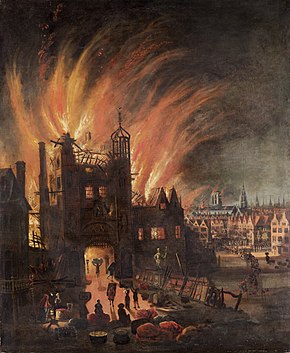
A fire broke out in Thomas Farriner’s bakery on Pudding Lane in the early hours of September 2 1666. The family managed to escape the blaze but by then the fire was spreading, and delays in obtaining the permission of the Lord Mayor of London to demolish the adjacent buildings to stop the growth of the fire meant that by the time he had arrived it was already too late. Most of London’s buildings were of wood at that time, and easily caught fire, aided by the dry spell the city had been experiencing that month. Add in the overcrowding, the use of thatch for roofs, towering, crumbling tenement buildings that often reached six or seven stories and warehouses filled with tar, pitch and other combustibles, to say nothing of the stocks of gunpowder left over from the Civil War, and the City was quite literally a powder keg just waiting for a spark.

And when that spark was lit, the entire thing went up with frightening speed.

There being no fire brigade to speak of, the blaze had to be tackled by local people, the militia and the Watch, none of whom had any real professional training in fire-fighting, and the narrow, crowded streets, further congested by the panicked populace trying to get away from the fire, complicated matters as well. Essentially, the efforts to combat the fire turned more into attempts to escape or outrun it than to extinguish it, leaving the flames to hungrily devour the city unchecked, ranging further and further, and razing the city to the ground. In the aftermath, Lord Mayor Sir Thomas Bloodworth, a man universally deemed unequal to his role and completely useless, was blamed for the fire’s development, refusing in the early stages of the fire to allow houses be pulled down as their owners could not be located, and growling of the fire that “a woman could piss it out.”

By sunrise on Sunday September 2 over 300 houses had been burned down and the fire had reached London Bridge, aided by a high wind. By mid-morning efforts to combat the fire had been abandoned, and everyone was running to escape it as the city burned. Charles himself intervened to have houses and buildings pulled down, after Bloodworth had made a half-hearted attempt at it, fainted and gone home to bed, leaving the city to the fire. But even demolition of buildings was insufficient to prevent the fire spreading, and it roared hungrily across the city, reaching the business district by Monday, devouring the Royal Exchange, the houses of bankers and exclusive shopping precincts.

Imagine the terror of a fire that raged on unchecked for four days! No emergency services to call, no way to put it out, and nothing to do but watch and wait, prepare and hope it didn’t get to your part of town, being ready to do what everyone else was, what everyone else had no option to, but flee as the flames advanced and claimed more of London. Those who could escaped via the boats on the river, those who couldn’t were hemmed in by the ancient Roman wall, which made a firetrap of the city. The king put his brother, James, Duke of York, in charge of combatting the fire - the Lord Mayor had fled the city - and he had some success, but he was fighting a losing battle. The fire raged on through Monday, and far from showing any signs of abating, was strengthening by the next day.

To the horror of all watching, the venerated Cathedral of St. Paul’s, surrounded by wooden scaffolding as it was in the midst of restoration work, went up like a torch and was completely gutted on Tuesday. As the flames headed for the Tower of London, with its gigantic store of gunpowder, the army took matters into their own hands and blew up buildings to halt the advance of the fire. The wind dropped near the end of the day, and with it the fire, which began to gutter out. In the end, over 13,500 houses as well as major buildings like the Royal Exchange, St. Paul’s Cathedral and The Custom House had been destroyed, the damage originally estimated at one hundred million pounds, later revised down to ten million.

In the immediate aftermath of the Great Fire (and even during it) speculation ran rife as to who might be responsible for such a tragedy, popular opinion excluding the possibility that this could have been, as it was, a tragic accident. Nebulous accusations against “foreigners” led to Dutch, French or any other non-English people in London running the risk of being lynched by mobs, and the army spent a good deal of its time rescuing innocent travellers from the hands of the angry crowds. And of course, as was ever the case in Protestant England, much of the blame fell, without a shred of evidence, upon the shoulders of the hated Catholics. The famous Gunpowder Plot had been, after all, only sixty years ago and was still fresh in the minds of most English people: the attempt to blow up parliament and assassinate the king (James I) and all of his ministers fuelled the hatred and widened the division between Catholics and Protestants.

Having dealt already with the Great Plague the year before, Charles was in no mood to fuck around with the Irish, and having a scapegoat to hand was useful for him, to divert attention from the fact that the streets which had been built during his father’s day, and his father’s, and so on, had been directly responsible for the spread of the fire. A monument to the Great Fire bore the inscription “Popish frenzy which wrought such horrors is not yet quenched.”
__________________
Trollheart: Signature-free since April 2018
Trollheart is offline   Reply With Quote
Old 11-19-2020, 04:29 AM   #6 (permalink)
Zum Henker Defätist!!
 
The Batlord's Avatar
 
Join Date: Jan 2011
Location: Beating GNR at DDR and keying Axl's new car
Posts: 48,199
Default

Boooooooo!!!!!!!!!!
__________________
Quote:
Originally Posted by J.R.R. Tolkien
There is only one bright spot and that is the growing habit of disgruntled men of dynamiting factories and power-stations; I hope that, encouraged now as ‘patriotism’, may remain a habit! But it won’t do any good, if it is not universal.
The Batlord is offline   Reply With Quote
Old 01-16-2021, 10:57 AM   #7 (permalink)
Born to be mild
 
Trollheart's Avatar
 
Join Date: Oct 2008
Location: 404 Not Found
Posts: 26,996
Default

When the Lie Becomes the Truth: The Popish Plot (1678 - 1681)

Although Charles II had been welcomed back after the rigours of life under The Lord Protector, his marriage to the Catholic Catherine of Portugal, his alliance with the old enemy France against Protestant Holland, and the embracing of his brother and heir James, Duke of York, of Catholicism, all led to there being much suspicion as to where the king’s loyalties lay, in terms of religion. His lenient attitude towards and treatment of Catholics had not gone down well with his people, and they worried that on his death they could be left with a Catholic King.

Sometimes, into such a cauldron of worry and paranoia the tiniest match has to be dropped to set the whole thing off, and two men who had many reasons to hate Catholics, one of which was believed to be actually insane, somehow gained the trust of the authorities, whipped up the public into a frenzy, and engineered the execution of innocent men, including priests, and one man who would later be canonised by the Church.

And it was all a lie.


Titus Oates (1649 - 1705)
One of the two instigators of the plot, Oates was an English priest, and a poor one. A terrible scholar, he only managed to be ordained due to a false claim to have a degree (oddly enough, its production was never demanded and its existence seems to have been taken on trust by the Bishop of London, who ordained him) and later got into trouble while serving aboard a naval ship and being accused of “buggery” in Tangiers. Only his status as a priest saved him, but he was dismissed from the Navy. Prior to this incident, he had, while serving as curate in All Saint’s, Hastings, accused a teacher of sodomy with one of his pupils, completely baselessly, in order to take his job, and when the allegations proved groundless was himself accused of perjury.

Having been ordained into the Church of England in 1670 Oates, after some misadventures and after making some powerful enemies, switched his allegiances and became a Catholic priest seven years later. He met and cultivated the friendship of Israel Tonge, and together they authored anti-Catholic pamphlets, Oates later confiding to Tonge that he had only pretended to convert in order to get close to Catholics and learn their secrets. Between them they concocted the Popish Plot in 1678.

Israel Tonge (1621 - 1680)

A Doctor of Theology, Tonge blamed Catholic Jesuits for the burning down of his church during the Great Fire of London, He became even more anti-Catholic, writing tracts and essays denouncing them, and fabricating wild conspiracy theories about Rome’s lust for power and the danger of the Pope. Another rabidly anti-Catholic doctor, Richard Barker, sponsored him (and later, Oates), providing him with food, lodgings and money, and securing for him a position as rector in the parish of Avon Dasset, in Warwickshire, a post Tonge did not however accept.

Together these two men would create a conspiracy to rival the best of Qanon or any in Trump’s time. Completely fabricated, with no evidence or provenance whatever, it would still be accepted as legitimate and lead to the further persecution and death of many blameless Catholics.

Writing the manuscript himself, Oates laid out a plot by the Pope to have the king assassinated, naming Jesuit priests who were to carry out the attempt, about a hundred in all. He then slipped the note into the house of Richard Barker, where his friend Tonge was living. Tonge then “discovered” the writing, passed it on to his friend Christopher Kirkby, who became alarmed and informed the king. Charles was sceptical, but agreed to see Tonge and Oates, then passing the matter on to his Treasurer, Thomas Osborne, Lord Danby. Danby seemed convinced, but the king brushed the whole thing off, believing Oates a liar. The Duke of York, however, fearful for his brother’s life and knowing (though he was himself a Catholic) how vehemently opposed to the Church of England English Catholics were, ordered an investigation into the threat.

Though Charles was still reluctant and did not believe a word of it, he probably worried that ignoring the threat might make him look overly sympathetic to Catholics, further cementing in the minds of his subjects his untrustworthiness, and recalling to their memory the fact that he was married to a Catholic princess. Therefore, he agreed to the investigation, and as it gathered steam and people were arrested on various spurious charges, Oates was given a complement of soldiers and allowed to begin rounding up Jesuits. The murder of a prominent anti-Catholic minister in suspicious circumstances set things in proper motion.

Sir Edmund Berry Godfrey, to whom Oates had made his first depositions about the alleged plot, was found murdered with his own sword. The slaying was never solved, and laid at the feet of unnamed Catholics. As a result, and with the supposedly genuine threat of an attempt on the king’s life by these heathens, Charles was prevailed upon to exile all Catholics to within twenty miles of London. Parliament issued the declaration that "This House is of opinion that there hath been and still is a damnable and hellish plot contrived and carried out by the popish recusants for assigning and murdering the King." Things began to move fast.

Oates seized upon his success and accused five Catholic lords: (William Herbert, 1st Marquess of Powis, William Howard, 1st Viscount Stafford, Henry Arundell, 3rd Baron Arundell of Wardour, William Petre, 4th Baron Petre and John Belasyse, 1st Baron Belasyse) and while the king scornfully maintained that at least one of them was so afflicted with gout that he could barely stand, and was unlikely to be plotting anything, the Earl of Shaftesbury had them all arrested and taken to the Tower. Shortly afterwards he demanded that the king’s brother, James, Duke of York, be excluded from succession to the throne, due to his Catholic allegiances. At the end of the year the second Test Act was passed, as anti-Catholic fervour swept through England, which forbade Catholics from sitting in either the House of Lords or the House of Commons, and so effectively banning them from holding any political office.

Two of the “Popish Lords” would die - Stafford beheaded while Petre simply died in the Tower - but the remaining three would be acquitted. However Catholic hysteria had descended on England long before this and as would happen in the Salem witch trials ten years later, accusations flew, unproven allegations were taken as evidence, and Catholics were persecuted, exiled and murdered.

Oliver Plunkett (1625 - 1681)

Last of Oates’ victims was a man who would go on to be canonised and therefore made a saint in the latter half of the twentieth century. Oliver Plunkett was Archbishop of Armagh, and Primate of All Ireland. The grandson of a Baron, he was well connected to powerful Irish families such as the Earls of Roscommon and the Lords of Louth. He travelled to Rome in 1647, his ambition to become a priest, but by the time he was ready to return Cromwell held sway over Ireland and it would have been death for him to set foot on his native land again, so he remained in Rome until 1670, when the Restoration returned Charles II to the throne and, for a time, a more tolerant attitude was observed by the Crown towards Catholics.

With the passing of the Test Act, however, his church was destroyed and he had to flee into hiding, refusing to be exiled. When the Archbishop of Dublin was arrested as part of Oates’ crazy conspiracy, Plunkett was accused of plotting a French invasion of England. He was arrested but Lord Shaftesbury, knowing he would never be convicted in Ireland, sent him to be held in Newgate Prison, where, despite the first trial collapsing on the grounds of the witnesses against Plunkett also being on the run, wanted men, and total lack of any evidence to convict, the second trial found him guilty and he was sentenced to be executed.

Much again like the Witch Trials would, the fervour for killing Catholics began to die down after this. This could be partly ascribed to the - mistaken - belief that all those who had plotted against the king (according to Oates and Tonge) had been dealt with, and that the danger to his royal person, and the kingdom, was passed, and partly, too, to accusation after accusation being made, each madder and more far-fetched than the last. Oates remained as zealous as ever, trying to extend the conspiracy he had created into Yorkshire, but the English were by now tired of his unfounded allegations, and many believed that some of those who had been accused and executed were in fact good and innocent men. It began to look more and more like one man’s evil quest for personal revenge, which was what it was, of course. As trials collapsed all over the place, and the king was finally able to step forward and pronounce the witch-hunt for what it was, Oates rather stupidly accused the king himself of plotting with Catholics, and was arrested and thrown into prison.

When Charles died and was succeeded by James, the new king - a Catholic, remember - had Oates tried for perjury, probably the best he could do. Found guilty, it was unfortunately impossible to sentence Oates to death for such a crime, so he was ordered to be whipped through the streets, pilloried every year and imprisoned for life. He was eventually released in 1689 when William of Orange became king, but by then everyone had forgotten about him and he faded out of history, from hero to zero.
__________________
Trollheart: Signature-free since April 2018
Trollheart is offline   Reply With Quote
Old 05-25-2021, 10:28 AM   #8 (permalink)
Born to be mild
 
Trollheart's Avatar
 
Join Date: Oct 2008
Location: 404 Not Found
Posts: 26,996
Default

Chapter IX: Under the English Heel, Part III:
Settling Old Scores - Catholics, Celts and the Crown


This Land is (no longer) your land: the Continuing Disenfranchisement of Ireland’s Catholics

Timeline: 1701-1741

Orwell once wrote, if you want a vision of the future, imagine a boot stamping on an upturned face forever, and in some ways this must have been how it felt to be Irish - or at least, native and Catholic Irish - for centuries. The over-arching title of this section has been “Under the English Heel”, and indeed that’s how it was. Apart from sporadic risings, rebellions and joining occasional forces with England’s enemies in the hope of kicking His or Her Majesty’s troops and settlers off our island, we remained under English, later British control, rule and law until well into the twentieth century, and like most occupiers, the English were not soft and pleasant masters. Burning enmity between the two schisms of the Christian Church - for which we cannot only blame Luther, as all his accusations were mostly based on truth, but a succession of power-hungry popes too, and a Vatican that seemed more interested in shoring up its power and filling up its coffers than tending to the needs of its flock - meant that whoever was in power would ensure to put down and repress the other, and for hundreds of years, even under the odd Catholic monarch, or at least those nominally tolerant of Catholicism, we Irish were seen as lower life forms, heretics and peasants, an underclass to be kept down almost in the same way a failed painter from Vienna would one day see the Jews.

Not that I’m attempting to equate Irish occupation with the Holocaust, of course. Many, many Irish may have died in the various uprisings, wars, and under the oppressive regimes that characterised successive occupants of the English throne, but at least there was no mass genocide practiced on the Irish people. Well, unless you count the famines, which we will come to in due course. The point though I’m trying to make here is that for the Irish, life under an English king or queen was never going to be easy, never going to be profitable and never going to be tolerant, which is why full independence was the only way Erin’s sons would ever get out from under the boot of the British. It would, however, take another two hundred years before this would finally be accomplished, and we could, in theory - in the South at least - wave a not-so-fond farewell to the agents of the Crown.

But at the beginning of the eighteenth century, as noted in the closing lines of the previous chapter, we were still well and truly all but slaves. The Plantation of Ulster had ensured that power lay in the hands of Protestants, and with the Flight of the Wild Geese in 1691, nobody was left to fight for the Catholic cause, nobody would raise the flag for Ireland, except vaguely in exile, most of which attempts would come to nothing.

The Art of (Reneging on) the Deal

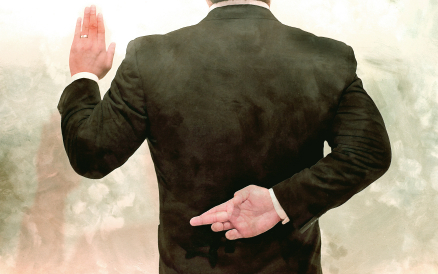
Nobody, least of all myself, would venture to suggest that all Irish - or even any Irish - were fine, upstanding citizens, to whom the mere suggestion of breaking their word was anathema. Nobody is a paragon. Everyone lies, everyone cheats, everyone breaks promises. This is doubly applicable to politics, and not unknown to kings either. However the duplicity of the English Crown after the Battle of Limerick was, to put it mildly, appalling. Having promised, in the Treaty of Limerick, certain concessions to the Irish Catholics, the Protestant-controlled Parliament threw almost all of these undertakings out, and set about making Irish Catholics the worst treated creatures in their native country, hoping, in the end, to destroy and eliminate once and for all the religion they saw as heretical, and opposed to the Crown.

With the ordination of bishops prohibited, no new priests could be installed to replace those killed or who had fled during the pogroms following the burst of anti-Catholic sentiment resulting from the Great Fire in 1666. No new clergy were allowed enter the country from abroad, and as Catholics were banned from attending school, either in Ireland or abroad, the future looked bleak for Irish Catholicism. More stringent and harsher Penal Laws passed in England led to the eventual direct rule from Westminster of Ireland, meaning the King and his Parliament could, if they wished and if it was expedient or profited them, overrule any laws passed by its counterpart in Ireland.

Meanwhile, the conquered island became the breadbasket of England, or perhaps it might be more accurate to say it became its supply depot, as the land was stripped of its lush forests to supply His Majesty’s Navy with timber, its food produce - pork, butter, cheese, beef etc - going to feed the sailors and also supply the rest of England as well as its colonies in the West Indies, all of which would inevitably lead to the first, but sadly not the last, Great Famine in Ireland. There would be, of course, little to no sympathy across the water for the starving millions in Ireland, as the Catholics were universally despised and reviled by the English, and no help would ever be forthcoming from those who had much (mostly due to the hard and badly-paid work of the poor Irish Catholics) for those who had little, or indeed nothing. To some degree, whether it’s true or not, you would have to wonder how many tears might have been shed had the entire Catholic population of Ireland starved to death? Not many, I would venture to suggest.

Of course, had the grinding, stamping boot been on the other foot, there’s no doubt that the result would have been the same. If somehow the positions had been reversed and it had been England suffering from starvation and want, I somehow doubt that my ancestors would have been piling food into boats to send to them. No, more as a matter of circumstance than anything else, these two factions hated and loathed each other, and the one would have been happy to have seen the other disappear from the face of the earth, enemies to the end of time it would appear. Talk about Arabs and Israelis! They ain’t got nothing on the hatred between the Irish and the English.

Some Catholic landowners did convert to Protestantism, if only to avoid losing their lands, but would always been looked on (and down) as mere “converts” and sneered at by the Ascendancy, who would never consider them part of its august assembly. Most though clung to their religion and thereby lost their lands, their rights to own property, their and their children’s right to an education, and the right to worship, though how strongly reprisals against masses and so forth were prosecuted I don’t know. In Cromwell’s time, yes; after him, not so sure they wanted to waste the energy, and anyway, they had a ready-made slave labour class here, so why try to change it?
__________________
Trollheart: Signature-free since April 2018
Trollheart is offline   Reply With Quote
Old 05-25-2021, 10:36 AM   #9 (permalink)
Born to be mild
 
Trollheart's Avatar
 
Join Date: Oct 2008
Location: 404 Not Found
Posts: 26,996
Default

Intermission: Catholic England? The Trouser Serpent Enters Eden

Here I’d like to diverge slightly away from the timeline, and look back to see how things could have been different, for Ireland and for England. What I’ll propose here will of course be simplistic and I’m sure there are plenty of valid reasons for the hatreds between our two countries, but it can’t be denied that the biggest bone of contention - even when England left a remnant of its eight-hundred-year occupation behind it to stagger through almost into the twenty-first century - between us has been religion.

So, the question becomes: what if England had remained Catholic?

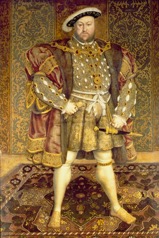
It’s not as crazy a question, I think, as it seems. England had been, after all, staunchly Catholic for thousands of years, if only because up to then there was only Catholicism in Christianity. It was the early fifteenth century that saw the rise of Martin Luther and what would become known as Protestantism, which slowly spread across Europe, but England resisted it, even to the point of its then king, Henry VIII, writing in vigorous defence of Catholicism and denouncing Luther, earning him the title Fidei Defensor, or Defender of the Faith, bestowed upon him by a grateful Pope Leo X. Remember, at this point England was a world power, and the pope would have been concerned had its king turned against him. Of course, later that’s exactly what he did (though not specifically against the Pope himself, but against his allies) but that’s history and here we’re considering an alternate timeline.

Henry’s problem with Catholicism - or more properly, the Pope - was that the Bishop of Rome refused to annul or make invalid his marriage to Catherine of Aragon in order to allow him marry Anne Boleyn. There were of course many reasons for this, not least among them being that Catherine was the aunt of Charles V of Spain, the Holy Roman Emperor and an important ally of the then pope, Clement VII, the sanctity of marriage (the moreso between a king and his wife) within the Catholic Church, and the possibility of disinheriting and effectively bastardising Catherine’s daughter Mary, who would be next in line to the throne.

So Henry decided, after trying to cajole, force or trick the pope into annulling the marriage, he didn’t need him. He would do it himself, and so, like a child annoyed at the rules of the game and making his own game, taking his ball and going home, Henry VIII of England set himself up as head of his own religion, his own breakaway faction from the Church, following (mostly, or as far as it benefited him to do so) the precepts of the fledgling Protestant movement being taught and disseminated by Martin Luther, thereby creating the Church of England and making England a Protestant country.

But consider: what if the pope had allowed the annulment? Yes, the historical ramifications would have been huge - Queen Mary, known to history as “Bloody Mary” for her persecution of Protestants when she came to power - would never have ruled, and her sister, Elizabeth, would have ascended the throne unopposed, rather than, as she was, seen throughout her reign by Catholics - the pope especially - as a bastard and a Protestant usurper. Plots to dethrone or assassinate her would not have been hatched, and in all likelihood, England might have been stronger against its enemies, being a cohesive, truly united kingdom.

Apart from the Scots, of course. Damn Scots! They ruined Scotland!

Meanwhile, Ireland might not have been such a prize, or, if it was, might have acceded more readily to a king who followed the same religion as them. Much of the opposition to England’s invasion and occupation and rule of Ireland was that it was performed under the banner of Protestantism, the Anglican Protestantism taught by and compulsorily required by the Church of England. Irish Catholics feared the erosion, even destruction of their faith, and so fought with everything they had against this foreign oppressor. But had Henry got what he wanted from the pope, it’s highly unlikely England would have changed religions. Up until the time of the “king’s great matter” as they referred to his pending demand for divorce or annulment of his marriage to Catherine, Protestants and Lutherans in England were seen as heretics, and imprisoned, tortured and burned with the full approval and knowledge of the king. It was only when Henry began to see - or be shown, by men like Thomas Cromwell and Thomas Cranmer, who had much to gain by swaying His Majesty’s allegiances their way - that allowing, even embracing and finally insisting on Luther’s new anti-Rome religion could help him to get what he needed that he broke with Rome.

Though there were plenty of Protestants in England at the time, and many at Henry’s court, before the “great matter” (or before the king met Anne Boleyn) none of them would have admitted it, for to be branded a follower of Luther was to repudiate the Catholic Church, seen at the time as the only Church, and Luther’s ideas as heretical and nothing more than the ramblings of a sect or cult leader, and that was punishable by death, usually very painful death. Henry’s about-turn in accepting Protestantism was motivated purely by his own lust and his desire to get his own way, and set in motion by the refusal of the pope to grant this.

So had Henry either been able to keep it in his pants, or convince the pope that kicking Catherine to the kerb was the best policy, England might now still be a Catholic country, and everything from the Famine to the Rising and right up to the Troubles need never have happened.

The first and only time I have heard of in history where a man set up an entire religion and his people were later persecuted, imprisoned, burned and hanged because the king wanted to get his end away. Well, technically he could do that anyway, but since Durex would not be invented for about another four hundred years, he wanted to make sure any sprogs his new bit of totty dropped were legitimate heirs, especially if he hit the jackpot and got a son.
__________________
Trollheart: Signature-free since April 2018
Trollheart is offline   Reply With Quote
Old 05-25-2021, 01:39 PM   #10 (permalink)
Born to be mild
 
Trollheart's Avatar
 
Join Date: Oct 2008
Location: 404 Not Found
Posts: 26,996
Default


Fragmentation of Faith: Schisms within the Schism

However, he did and so we end up with the situation we now have, which makes it necessary, even important that we look into the basics of Luther’s rebellion against Rome, which we have already detailed, but more importantly, how the divisions and cracks appeared in the alternative to Catholicism, and how, obviously, they affected Ireland.

See, this is what I find so stupid about religion. Invent a new one and you can be guaranteed that of those who join up, some at least will have an issue with something within your religion. It might be a minor sticking point, or it might be a fundamental basic tenet, but nobody is going to agree with everything your religion stands for. And as invariably happens in such cases, the chances are they’ll start their own version, probably taking what they like from yours and leaving behind the things they don’t agree with.

Thus it was with Protestantism, originally called Lutheranism. It quickly split into… right. Hmmm.

It is indeed like a minefield out there. Ask about the divisions in Protestantism and you can get everything from Baptists and Quakers to Wesleyans and Methodists. But a lot of them are American-based, and as we’re only concerned here with Ireland and England - and to some lesser extent, Scotland, I’m going to try to concentrate on the branches that refer to or impact on them.

Lutheranism, is of course the granddaddy of them all, named for the man who started it, Martin Luther. Now the word Protestant of course refers to someone who protests against something, in this case the Church of Rome and the Pope, so I think it’s possible (though I’m open to being corrected) that you can equate the two. When Henry VIII decided to embrace Protestantism (Lutheran teachings) for his own political and personal benefits, and made himself head of the Church of England, the state religion was Anglican Protestantism (I assume that refers to its being English). From what I read - and my recent watching of the series The Tudors, which of course may be rife with historical inaccuracies but I think gets the religion part right - Anglicanism was basically a sort of “poor man’s Catholicism”, retaining many of the trappings, including mass, hymns, statues and recognition of the sacraments, while flatly and outright denying any authority from Rome over its church (the whole point, after all, of setting the damn thing up in the first place).
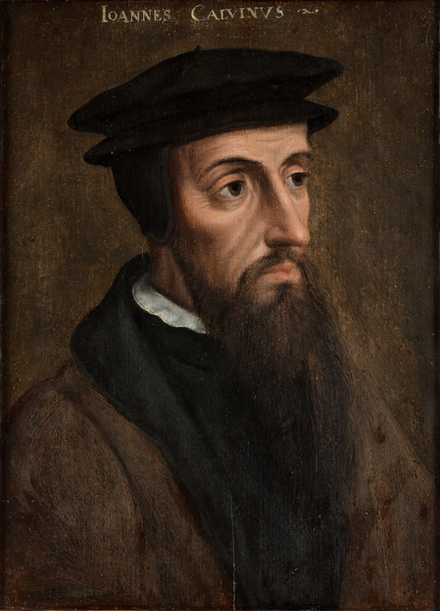

John Calvin, father of Calvinism

In Scotland you had Presbyterianism, from presbyter, or elder, which was and is the state church of the country. I’m unsure about the differences between it and Anglicanism, so I’m just going to drop this direct quote from Wiki in here, which may or may not clarify it. Presbyterian theology typically emphasizes the sovereignty of God, the authority of the Scriptures, and the necessity of grace through faith in Christ. Right. All nice and clear then. What about other offshoots from, as it were, the main tree? Well there’s also Calvinism, named for John Calvin, who started the whole thing off north of the border. Calvinism appears to be… the wellspring of Presbyterianism. D’oh! Now I’m totally confused.

Let’s see if we can sort this out. Basically Anglican Protestants - the Church of England - had (and presumably still have) fundamental differences of belief with the Church of Scotland, the Presbyterian Protestants, founded and based on Calvinism. Maybe it would be easier - if entirely simplistic, but I’m drownin’ here - to say that English Protestants (Anglicans) didn’t like and certainly did not concur with the beliefs of Scottish Protestants (Presbyterians). To return to our dilemma in Ulster then, the Scottish settlers there, all or mostly Presbyterians, would have been shunned and ridiculed by the ruling English Anglicans, and while not censured as harshly as the Catholics, would still have had their share of oppression from the English.

Something that does seem to have been a major sticking point between the two - Anglican Protestantism and Presbyterian Protestantism (try saying that after six pints!) - is fealty to the King of England. As Henry had established himself as the head of the Church of England, he demanded all "proper" Protestants recognise that. Scotland did not do this, of course, being a separate kingdom, and probably also disputing that any mortal could speak for God, be he King or Pope. I'm not entirely sure what or who Presbyterians saw as the supreme head of their church, but I think it may have been nobody less than God.

This refusal to accept Henry led to Calvinists, Presbyterians and others being labelled "dissenters", for obvious reasons, and while they weren't as persecuted or hated as Catholics, they were no friend to the Anglican Church, and no friend to Henry. So far as I know, even Lutherans - the original Protestants - were not welcome in England, and may even have been burned even after the establishment of the Church of England. With Henry VIII, as with English kings down through history, it was his way or no way.

Okay, well that as I say is putting it in puppets and diagrams style, simplifying it to the nth degree, and probably also wildly inaccurate, but it does at least explain why this happened.

Ulster Says No: Presbyterianism in the North

One fact was not in dispute, and that was that Presbyterians were descended mostly from Scottish settlers who came to Ulster, and to be honest, if there’s one thing an Englishman hates almost as much as an Irishman or a Frenchman it’s a Scot. So the descendants of Scots in Ulster were also hit by the draconian Penal Laws passed in the early seventeenth century. Not as hard as the Catholics, mind - they could sit in Parliament but could not hold office - but they too were banned from occupations such as the legal profession, the judiciary and the army, and while Ulster, once the holdout kingdom, would remain more or less fiercely loyal to the Crown following the Plantation, its inhabitants were nevertheless looked upon by the ruling Ascendancy as inferior.

Catholic as Charged: The Penal Laws (1607-1678/93 (technically 1829)

Penal of course means of the penis… no really, it refers to punishment and that is exactly what the Penal Laws passed over (some might say, and with good cause, pissed over) Ireland during the eighteenth century were supposed to be. They specifically set out to disenfranchise, punish and impoverish, both financially and intellectually as well as spiritually and morally, the hated Catholics of Ireland who had so long resisted English rule, and who were seen by the Crown as heretics and heathens. More to the point though, they were couched in such a way as to afford the best deals possible for the Protestant Ascendancy, the settlers from England and Scotland who had come over at the invitation of the English government to take lands from Irish chieftains and lords and colonise the country.

Although initially reluctant to damage their support base among English Catholics, particularly the old English landowners, the ascension to the throne of the fiercely Protestant James I and final victory over the Irish in the Nine Years War in 1603, and the events such as the Gunpowder Plot two years later, coupled with the Flight of the Earls in 1607 provided impetus for harsher treatment of Catholics, and Irish in general, and the first of the Penal Laws was passed in 1607, banning Catholics from holding public office or joining the army. Much worse was of course to come, and some of the laws have been discussed in the previous chapter, but other, tougher ones had yet to be passed.

After ruling that Catholics could not educate themselves or their children (or send the latter abroad to be educated), priests and bishops to be exiled and land confiscated from Irish Catholics in favour of Protestant settlers, the Popery Act of 1703 sought to change how Catholics could inherit land on the death of their father. Unlike English (Protestant) law, this Act ruled that the land must be divided up amongst all the sons of the late landowner. However, if the eldest son was to convert to the “true religion” he could then inherit the land for himself. Daughters, of course, had no rights either way, so if a man died with only female offspring, well, I don’t know what happened in those cases.

The Popery Act also forbade Catholics to hold public office, as mentioned above, and anyone holding public or military office other than Catholics had to swear an oath of denying transubstantiation, which as already mentioned is the process by which, according to Catholic belief, the wine and the host are changed into the literal body and blood of Our Lord at the mass. No Catholic was likely to deny the most sacred tenet of his religion, which effectively excluded him then from public office. Under the Popery Act, Catholic landholding, already at a minimal level of 25%, shrunk by a further 20% over the next seventy-five years.

This Act also attacked Presbyterians and other “nonconformist” Protestants, who were similarly commanded to make the declaration and, if they could not, had to step down from the post they held. This resulted in the resignation of hundreds of Presbyterians and Calvinists from their positions, thus leaving the jobs for loyal Anglicans to fill.

Note: this should not be confused with an earlier, identically-named Act passed in 1698 (that one by the English Parliament, the above by the Irish) in which a bounty was placed on the head of all priests in England, people encouraged to spy on and betray, hunt and turn in any priest seen or suspected of “popish behaviour”, such as saying mass (or trying to), offering the sacrament or praying publicly, contrary to English law. Similar to the later Act passed in Ireland, Catholics were prohibited from being educated and owning land or holding public office.

Further note: Neither of the above should be confused with the Papist Act, passed in 1778, which we will come to in due course, and which was in fact a relaxing and relenting of the harsh and draconian laws levied on Catholics, seen as one of the first of what were known as Roman Catholic Relief Laws. Ironically, perhaps, this single Act would lead to unrest and riot in England, as the Catholics were seen to be getting treated with too much lenience. Oh, you English, you!


The other big one was the Disenfranchisement Act, passed in 1728, which did exactly what it said on the tin, disenfranchised Catholics by making it illegal for them to vote. In a chilling foreshadowing perhaps of the Third Reich two hundred years later, an Act was also passed forbidding the intermarriage of Catholics and Protestants, while Presbyterian marriages were not recognised by the state. Some of the laws were all but inhuman, such as the one which forbade Catholic families adopting orphans (I’m not sure if that only applied to Catholic orphans, though I would doubt it, because why would the English care?) and a particularly cruel one ruling that, should priests or other illegal persons be discovered in a village or town, and not reported by the inhabitants of that town, the reward given for capturing the fugitive would be levied on the people there. It sounds a little confusing, doesn’t it, so here’s the transcript from the Big W.

Any and all rewards not paid by the crown for alerting authorities of offences to be levied upon the Catholic populace within parish and county.
Teaching even in private homes of Catholics was also forbidden, leading to the famous idea of the “hedge school”, where usually priests and nuns would undertake to attempt to educate children out in the fields, perhaps as a way to defeat the spirit of the law by sticking to the letter of the law.


As for the king’s subjects, they had better not even think of converting (can’t imagine why any would of course) as there were very stiff penalties for such, including losing the king’s protection - essentially I guess leaving you in a “Purge”-like situation where anyone could do anything to you and the king’s law would not punish them, forfeiture of all lands and inheritance and imprisonment for a period of time to be decided by the king.

You can surely see the metaphor here of someone (English Crown and Parliament) using a long stick to push and hit the Irish Catholics, shoving them further and further back across an imaginary line marked “extinction”. The problem with that is the very stick you’re beating and pushing your opponent with can become your own undoing, when they grab it and hit you with it. After eight centuries of this treatment, while the Penal Laws would not prove the final straw that broke His Majesty’s back, he would find that stick turned on him, though it would be another two hundred years before he would have to take his lumps.
Outlaws, Robbers and Politicians: The Rise of the Tories

Anyone who hates the Conservatives will be grinning when I tell you that the word does indeed come from the old Irish for robber or outlaw, the word, tóraí, coming from the slightly shorter word tóir, meaning “pursuit”, as outlaws and robbers were chased or pursued men. Having its origins in the English Civil War, the Tory Party supported the then king Charles I, and opposed the attempts by Parliament to reduce him to a figurehead without any real power. Their efforts were thwarted however by the coup by Oliver Cromwell and the New Model Army, and they had to wait for the Restoration of 1660 when Charles II returned from exile in triumph to re-establish the monarchy. Ranged against them were the Whigs, Protestant agitators (many of whom had been part of Cromwell’s army) who began to accuse the king of endeavouring to undo the work of Henry VIII and return England to the Catholic faith. In this they were helped by the fact that the king’s brother, James Duke of York (who would succeed to the throne as James II on the death of his brother in 1685, though only for three years before being deposed and replaced by the Protestant William of Orange) was a Catholic.

Unable to politically attack the king directly, as to do so was an act of treason, The Whigs tried to implicate the top Tory, Count Redmond O’Hanlon in a supposed plot with the Earl of Ormonde, James FitzThomas Butler, Lord Lieutenant of Ireland, to murder famous liar and forger Titus Oates (remember him?) but to no avail. Used as a derogatory term from 1681, the opponents to the Whigs were called Tories, and a leading nonconformist minister called Oliver Heywood likened the two factions to the old Roundheads (supporters of Cromwell and Parliament) and Cavaliers (those who took the side of the king) prevalent leading up to and during the English Civil War. It should not however be misconstrued that the Tories were any friend to the Catholics, as they supported the Church of England and approved of and advocated the continued suppression of both Catholics and nonconformist Protestants. Well, of course they did.

__________________
Trollheart: Signature-free since April 2018
Trollheart is offline   Reply With Quote
Reply


Similar Threads


© 2003-2025 Advameg, Inc.