 Title:
“A Stop at Willoughby”
Original transmission date: May 6 1960
Written by: Rod Serling
Directed by: Robert Parrish
Starring: James Daly as Gart Williams
Howard Smith as Oliver Misrell
Patricia Donahue as Jane Williams
Jason Wingreen as Train conductor
Mavis Neal Palmer as Helen
James Maloney as 1888 Conductor
Billy Booth as Short Boy
Ryan Hayes as Engineer
Butch Hengen as Tall Boy
Max Slaten as Man on Wagon
Setting: Earth
Timeframe: Present (at the time)
Theme(s): Pressure, modern life, desperation, time travel, suicide
Parodied? Not to my knowledge, no
Rating: A++
Serling's opening monologue
This is Gart Williams, age thirty-eight, a man protected by a suit of armor all held together by one bolt. Just a moment ago, someone removed the bolt, and Mr. Williams' protection fell away from him, and left him a naked target. He's been cannonaded this afternoon by all the enemies of his life. His insecurity has shelled him, his sensitivity has straddled him with humiliation, his deep-rooted disquiet about his own worth has zeroed in on him, landed on target, and blown him apart. Mr. Gart Williams, ad agency exec, who in just a moment, will move into the Twilight Zone—in a desperate search for survival.
Driven to distraction when his protege absconds with an important account, Gart Williams tells his boss to shove it and seems on the verge of a nervous breakdown. Heading home, he is tormented by the sound of his boss’s voice haranguing him, and falling asleep he wakes up to see the train stopped at a town called Willoughby, a town he has never heard of before and knows is not on this line. More than that, it seems to be summer out there and when he left the office it was November and snowing. Everyone looks so peaceful and friendly though, and the conductor assures him this is a place where a man can slow down and take it easy, take a break from the pressures of modern life. He also mentions that it’s 1888, a detail which seems to elude Williams: maybe he thinks he didn’t hear properly. How could he have?
Before he can leave the train however there is a jerking shunt, and he wakes up. The conductor on his train - not the same, old and white-haired one who had spoken to him about Willoughby - does not recognise the name of the town, and it’s snowing again, and dark outside. At home, his wife is a harsh, grasping drunk, who obvously has nothing but contempt for her husband and does not mind showing it. She makes it very clear she believes she hitched her star to the wrong wagon, and regrets it very much. She tells him he was born too late, into the wrong century. He’s the kind of man who would be happy with the simple things, and he agrees, but knows there is no such chance.
Though the conductor confirms he has checked through all the old timetables and there never was a stop called Willoughby, he falls asleep again and ends up outside the town. Again, thinking he is dreaming again, he stays on the train, though he does make a move, but too late and Willoughby vanishes again. “Next time,” he tells himself. “Next time I’m going to get off.” Back at the office, things are not going well, and he decides that’s it: he’s walking out. He phones his wife to let her know but she hangs up on him. On the train, he waits, waits in hope, in anticipation, in desperation to hear the words.
“The stop is Willoughby.” Finally! This time he gets off, and everyone seems to know him, everyone is friendly. He can breathe again. Next scene shows his dead body in the snow, and the younger conductor claiming he just said something about Willoughby and jumped out. As the hearse moves off, we see inscribed on the doors WILLOUGHBY AND SON, FUNERAL DIRECTORS.
Serling's closing monologue
Willoughby? Maybe it's wishful thinking nestled in a hidden part of a man's mind, or maybe it's the last stop in the vast design of things—or perhaps, for a man like Mr. Gart Williams, who climbed on a world that went by too fast, it's a place around the bend where he could jump off. Willoughby? Whatever it is, it comes with sunlight and serenity, and is a part of The Twilight Zone.
The Resolution
Absolutely first class. At first it’s a little so-so; you know how it’s going to end. Life slows down at Willoughby, and maybe it exists and maybe it doesn’t. But the final scene, where Williams is dead and the hearse - pure genius.
The Moral
Modern life can be challenging, and sometimes you need to escape, leave it all behind, take a chance.
Themes
The pressures of modern life is the main theme here. Williams works in the high-flying, high-intensity world of advertising, for a boss who is a slavedriver and who does not like him, as he has lost the company a major contract, but fears to fire him in case Williams takes business with him. So the ad man is forced to work at a job he is getting increasingly less fond of, and which is slowly killing him. The nineteenth-century Willoughby, with its much slower pace of life and friendlier atmosphere is just what he needs. In many of the Twilight Zone episodes, the perils of working at a high pressure job would be addressed, as from the early 1950s on is when the rise of the business executive really began to take place, with people not just working for a wage but for a career, and competition for jobs fierce.
Desperation figures here too. Williams feels that if he doesn’t get out of his job he will be seriously ill, and at one point contemplates (though jokingly, we assume) suicide. He is, however, shown to be suffering bouts of pain in his stomach, no doubt an emerging ulcer.
And isn't that...?
 James Daly (1918 - 1978)
Most famous, apparently, for his role in the TV drama
Medical Center, Daly also played Flint in
Star Trek’s “Requiem for Methuselah”, and guested in shows like
The Invaders, Mission: Impossible, Ironside and
The Fugitive.
 Howard Irving Smith (1893 - 1968)
Starred in, among others, series such as
Green Acres, Hazel and
Bewitched, and was part of the famous radio broadcast by Orson Welles of
The War of the Worlds.
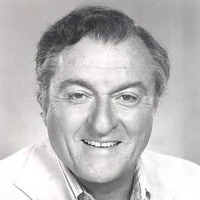 Jason Wingreen (1920 -2015)
Claims to fame include his role in
All In the Family and its spin-off
Archie Bunker’s Place, as Dr. Brody in
Airplane! Another doctor in the
Star Trek banned-for-years episode “The Empath”, but we’ll know him best as the voice of Boba Fett in
The Empire Strikes Back.
Parallels
There are so many similarities between the two episodes that this seems basically a rewrite of “Walking Distance”, but handled far better.






 Threaded Mode