|
|||||||
| Register | Blogging | Today's Posts | Search |
![]() |
|
|
Thread Tools | Display Modes |
|
|
|
|
#2 (permalink) |
|
Shoo Thoughts
Join Date: Oct 2013
Location: These Mountains
Posts: 2,308
|
I often wonder if these astronomical correlations found in places like the Serpent Mound and Stone Henge are coincidence. Not saying I believe they are coincidence. Just that we don't know either way.
|
|
|
|
|
|
#3 (permalink) |
|
Guest
Posts: n/a
|
Probably coincidence. If I had the choice of expending a great deal of time and energy building a 1300+ foot-long serpent mound in order to calculate astronomical occurrences that might be important to my people or just build one for the sheer hell of it, I'd definitely choose the latter.
|
|
|
|
#4 (permalink) |
|
Guest
Posts: n/a
|
I was reading up about an early composer a few weeks back and something struck me. The composer was Hildegard von Bingen (1098-1179). She was the daughter of a knight and a tenth child and so was tithed to the Church. She became a nun at age 18. Her teacher was a woman named Jutta who taught her to read and write but Hildegard had a major intellect and began to study everything from art to music to science to philosophy. She is, in fact, the West's first known composer who also wrote the West's first known morality play. She was a physician and had the reputation of being a great healer. She knew a great deal about herbalism and was an early botanist.
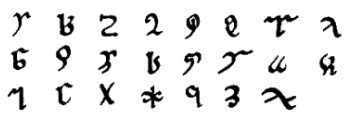
She founded two convents, both with running water--something unheard of in Europe for several centuries afterward. She encouraged her nuns to bathe in warm water every day at a time when most Europeans bathed only a few times a year. While the water was fine for bathing, she worried it might be unsafe for drinking and so had her nuns make beer instead (the pilgrims of New England wisely did the same thing). Hildegard was so highly regarded that she shared correspondences with popes, archbishops, kings and emperors. She also corresponded with low ranking members of the Church because she didn't discriminate over social standing. She also spoke out against executions for heresy or witchcraft. Hildegard suffered from migraines throughout her long life and had visions which she described often in song. This gained her the reputation of seer and prophet although she claimed to be neither. Even in her day, Hildegard was regarded as a polymath and intellectual giant and because popes often read her writings in public she had papal favoritism making it hard for critics and detractors to censure her. I bring this up because while I was looking at the Voynich Manuscript pages that wrote about on the previous page, it occurred to me that the original author of the work might be, in fact, Hildegard. For example, I've never seen a full manuscript but I have seen a great many pages. I don't recall any that depicted a male figure. If there are any, they are certainly outnumbered greatly by depictions of women (oftimes nude). This would make sense if we entertain that the author is, in fact, a woman. One illustration shows women bathing and that was one of Hildegard's rules. There are a great many illustrations of plants and flowers which would indicate that the author is well-versed on this topic. So if we deduce the author to be a woman who knows a lot about botany, the only person who fits that description in our histories is Hildegard von Bingen. I read some bios on her and Wiki has encapsulated the main points I wish to bring up: "The definition of viriditas or ‘greenness’ is an earthly expression of the heavenly in an integrity that overcomes dualisms. This ‘greenness’ or power of life appears frequently in Hildegard’s works.[47]" Green seems to be the predominant color in the illustrations of the Voynich Manuscript as well. "Recent scholars have asserted that Hildegard made a close association between music and the female body in her musical compositions.[48] The poetry and music of Hildegard’s Symphonia is concerned with the anatomy of female desire thus described as Sapphonic, or pertaining to Sappho, connecting her to a history of female rhetoricians.[49]" The illustrations in the manuscript that depict the human body are overwhelmingly, if not entirely, female. Many of those depictions depict nude women. Since Hildegard spent her life since age 8 within the Church living only with women, it would not be a stretch to suppose she had Sapphic desires. In fact, we should be surprised if this were not the case. "Hildegard also wrote Physica, a text on the natural sciences, as well as Causae et Curae. Hildegard of Bingen was well known for her healing powers involving practical application of tinctures, herbs, and precious stones.[50] In both texts Hildegard describes the natural world around her, including the cosmos, animals, plants, stones, and minerals. She combined these elements with a theological notion ultimately derived from Genesis: all things put on earth are for the use of humans.[51] She is particularly interested in the healing properties of plants, animals, and stones, though she also questions God's effect on man's health.[52] One example of her healing powers was curing the blind with the use of Rhine water.[53]" This appears to be largely the subject matter covered in the Voynich Manuscript. Other illustrations are completely baffling and we don't know what they depict. Let us remember that Hildegard suffered from migraines that caused her to have visions which she talked about a good deal and wrote compositions about them. One source even states that her descriptions of said visions are "enigmatic" and that certainly describes many of the illustrations in the manuscript as well. "Hildegard also invented an alternative alphabet. The text of her writing and compositions reveals Hildegard's use of this form of modified medieval Latin, encompassing many invented, conflated and abridged words.[6] Due to her inventions of words for her lyrics and use of a constructed script, many conlangers look upon her as a medieval precursor. Scholars believe that Hildegard used her Lingua Ignota to increase solidarity among her nuns.[54]" Finally, the Voynich Manuscript is written in a code that no one has yet broken. ![]() An example of Hildegard's Lingua Ignota. while it looks nothing like the code in the Voynich Manuscript, who is to say that Hildegard only had one such alphabet? A person of her intellect would likely invent several. I may, for example, invent an alphabet to communicate to persons 1-12 but suppose that I then only want to communicate certain matters to persons 1-4 without 5-12 knowing what said communication was; then, I invent another alphabet that only 1-4 know how to read. Now some may point out that the paper of the manuscript was analyzed and found to be from the early 1400s, long after Hildegard's death. That only means that the manuscript could be a copy or a copy of a copy. After all, Hildegard was an accomplished artist while the illustrations are somewhat amateurish so the original work may have been copied by someone with modest artistic talent. Some of the plants do not appear to have been copied faithfully depicting plants with leaves too far down the stem and so on. But that would be better than losing the work altogether. I'm sure I'm not the only person to suspect Hildegard as the ultimate author of the Voynich Manuscript but even if I hit on the idea independently of others, it only adds weight to the idea that she is, in fact, the author. |

|
|
|
#5 (permalink) |
|
Shoo Thoughts
Join Date: Oct 2013
Location: These Mountains
Posts: 2,308
|
^^ Interesting.
Maybe Ramses II wanted to be remembered a certain way and so ordered that his image be portrayed as that depicted in the statues and paintings? It's not unusual for those in power to comission artists to portray them romantically (or in a bulls**t way) rather than realistically. Regardless, everyone who gets the chance to visit Egypt should do so. Seeing the pyramids, the sphynx, the temples at Luxor, the treasures in the Egyptian national museum with your own eyes. It's really something. |
|
|
|
|
|
#7 (permalink) |
|
Guest
Posts: n/a
|
And is it possible the Clovis people came to America far earlier than Columbus or the Vikings? Sure it is! And that's my point: if we knew all the different peoples who came here and when, it would render the official history meaningless.
We can't know the extent of this tapestry of visitors--many of whom stayed. If we look at modern parallels, we can see why. Do you know who is the first Japanese documented as setting foot on US soil? It was a guy named Manjiro. Where did this happen? Must have been the West Coast, right? Seattle or San Francisco or some place like that. Wrong! It was New Bedford, Massachusetts around 1843. He was part of a fishing party from Japan blown off course by a storm. They lived on an island for a few months until they were picked up by a whaling ship called the John Howland out of New Bedford. They stayed onboard and worked as crewman (the desertion rate was high in the Yankee whaling fleet so they took anybody aboard who was interested including whalermen who had deserted from other ships--no questions asked--Melville deserted his first ship). When they put into Honolulu at the end of the whaling season, four of the fishermen disembarked but Manjiro begged the captain, William Whitfield, to keep him on and teach him to be a navigator. Manjiro was 14 and Whitfield told him he should go home to his family who would be worried. Manjiro told him that this was impossible because Japan was so isolationist that contact with foreigners was forbidden upon pain of death. He could never go home again. Whitfield was saddened to hear this and so agreed to grant Manjiro his wish and took him back to Massachusetts. And that's how the first documented Japanese came to America. It flies in the face of logic but it really happened--you can check it out for yourself if you doubt. Moreover, Manjiro did become a very capable navigator and rose to first mate on a voyage that circumnavigated the globe. It was believed that he would captain his own ship one day but instead Manjiro left New Bedford and sailed to Nantucket. From there he caught a ship to San Francisco and mined for gold for a few months. Then he signed onto a whaling ship heading to the Pacific. From there, he left the ship amd disembarked on an island near Japan. He had his books and charts with him. He went back to Japan and was arrested but he knew they wouldn't execute him--he had knowledge that made him far too valuable. The authorities questioned him intensely and he answered everything truthfully. He told them he know all about the barbarians and could teach others and could also teach them how to build ships like the barbarian countries and how to sail them. He was made a teacher and he taught as he promised. He was allowed to see his mother again--the reason he went home in the first place. When Admiral Perry's ships arrived in Tokyo Bay on 1853, he stepped onto Japan and was greeted in perfect English by none other than Manjiro. How many times over the centuries did similar stories happen that changed the course of history that we will never know about? By the way, Manjiro did return to the US by navigating a Japanese crew to the West Coast in the 1890s. He met William Whitfield again and each man had a family by then. To this day, the descendants of each man still meet every few years--sometimes in Japan and sometimes in Massachusetts. I learned this story when I vacationed in New Bedford and visited the Millicent Library in nearby Fairhaven where this story was posted on the wall. The library is the location where the two families meet in America. I named my eldest daughter Millicent for that reason. We just call her Mill. Believe it or not. |
|
|
|
#8 (permalink) |
|
Registered Jimmy Rustler
Join Date: Sep 2007
Location: USA
Posts: 5,370
|
It was aliens or the jews.
__________________
*Best chance of losing virginity is in prison crew* *Always Checks Credentials Crew* *nba > nfl crew* *Shave one of my legs to pretend its a girl in my bed crew* |
|
|
|
|
|
#9 (permalink) |
|
AllTheWhileYouChargeAFee
Join Date: Mar 2013
Location: Kansas City
Posts: 1,203
|
1. I am a cartographer (these days known a a G.I.S. dude).
2. As important in studying cartography is studying the history of surveying. They actually had surveyors survey barely inhabited portions of the west in the mid-1800's, placing stakes in trees in the wilderness, taking measurements with chains and doing a pretty darn good job of it given the crude tools they were using. Regarding the Americans Indians, recent genetic research has determined that about 1/3 of the genes of American Indians come from from West Siberians, not East Siberians as is usually believed, which would put them closer to modern Europeans in lineage than modern East Asians. That might explain the apparent closeness of some tribes to customs and craftsmanship of some Europeans. But bear in mind this lineage goes back farther than what we now consider modern Europeans to look like. This was all before blond hair and the like evolved.
__________________
Stop and find a pretty shell for her Beach Boys vs Beatles comparisons begin here |
|
|
|
|
|
#10 (permalink) | ||
|
Guest
Posts: n/a
|
Quote:
Quote:
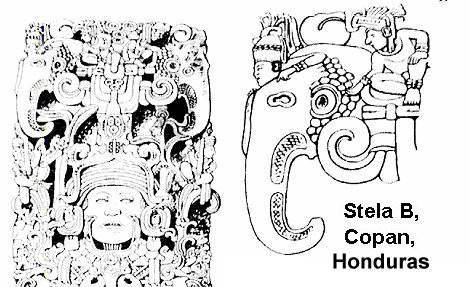
The belief that the Clovis were here first does not appear to be true. The evidence says there were already people here when the Clovis showed up. This was thought not possible because of the presence of ice shelves over the land making it uninhabitable but this is no longer tenable. And people likely migrated here a variety of ways with the land bridge being only one way. In upper Michigan, there are ancient copper pits still in existence that were mined by somebody. Whoever they were, they mined a huge amount of the what is called Lake Superior copper--about 1.5 billion pounds. It turns up all over the ancient world in faraway areas. How did it get there? Trade obviously but trade with whom? We don't know anything about the copper miners despite the fact that they were here for quite some time. They left behind so few clues. They are largely mysterious. Nor do we know why they stopped. It's as though they set down their tools and just walked away one day never to return. Then why do elephants appear in New World art?
|
||
|
![]() |
|
|