|
|||||||
| Register | Blogging | Today's Posts | Search |
![]() |
|
|
Thread Tools | Display Modes |
|
|
|
|
#2 (permalink) | ||
|
Certified H00d Classic
Join Date: Oct 2008
Location: Bernie Sanders's yacht
Posts: 6,129
|
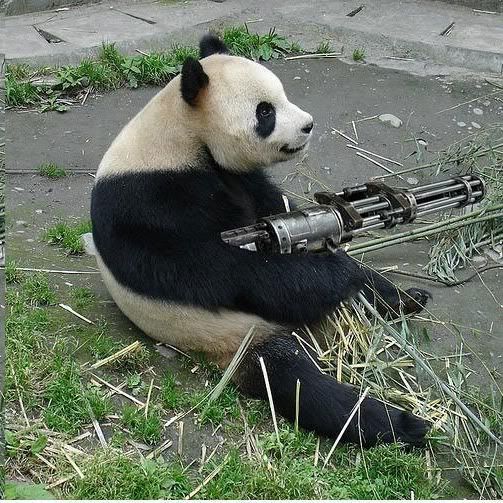
It's time to revive this thread with moar animalz!!
![]() THIS IS....NOT SPARTA!!!!
__________________
Anteater's 21 Fav Albums Of 2020 Anteater's Daily Tune Roulette Quote:
Quote:
|
||
|
|
|
|
|
#5 (permalink) | |
|
gun whales
Join Date: May 2008
Location: Knoxville/Nashville, TN, USA, NA, E, S, LC, MW, Known Universe
Posts: 1,713
|
__________________
Quote:
|
|
|
|
|
|
|
#6 (permalink) |
|
Juicious Maximus III
Join Date: Nov 2008
Location: Scabb Island
Posts: 6,525
|
Those hornets (or hornet) did pretty good in the Japanese Bug Fights (arthropod snuff, not for the feint of heart).
__________________
Something Completely Different |
|
|
|
|
|
#7 (permalink) |
|
Partying on the inside
Join Date: Mar 2009
Posts: 5,584
|
I take a pretty good interest in animals/insects that are part of a large... I don't really remember the word for it... insect civilization? It's not the proper term, but you know what I mean.
Bees, ants, and birds that flock together... The patterns they live by and how each of them has a role that's influenced by nature and results in the success of the whole. It's interesting to observe the mechanics of how it all works, and how loyal those instincts are. It's as though these types of colonies aren't really about the individual insect itself, but was constructed by nature with the concept, as a whole, in mind. In any case, the whole thing is fascinating. I'm not too big on lone creatures. There isn't much of a dynamic that keeps my attention with solitary creatures, although I do find semi-solitary adaptable creatures to be interesting. Every night when I'm smoking I take stock of the 20 + Mediterranean House geckos that live on the inner eaves of my porch. (I keep the porch light on for them, as it attracts their food). I haven't actually researched the family tendencies of Geckos, because I wanted to try and figure it out on my own first, but I've noticed that they're not as territorial as Anoles, and they most likely give up their young at a very early age, as I frequently see baby Geckos alone, close to the ground, and typically during daylight hours scavenging for food in the grass until they acquire the instinct to move upwards. I love the adaptability MHG's have though. They don't really have any natural predators out here, so it's interesting to see how they restructure their tendencies to apply to the environmental situation.
__________________
|
|
|
|
|
|
#8 (permalink) | ||
|
gun whales
Join Date: May 2008
Location: Knoxville/Nashville, TN, USA, NA, E, S, LC, MW, Known Universe
Posts: 1,713
|
Quote:
__________________
Quote:
|
||
|
|
|
|
|
#10 (permalink) |
|
Juicious Maximus III
Join Date: Nov 2008
Location: Scabb Island
Posts: 6,525
|
Insect colonies such as ant and bee colonies was a biological puzzle for quite a while because of what looked like altruism which is not adaptive. If you take honey bees as an example, typically there's only two individuals who reproduce, the queen and her male sperm donor. From that perspective only, the worker bees seem very altruistic, working hard to keep the queen satisfied while not reproducing themselves .. doesn't sound like it could evolve.
It wasn't until one understood and took into account inclusive fitness and the genetic relationship between the bees that it finally made sense. Traditionally, kids learn that having a high fitness is adaptive and that you gain that by reproducing, but it's not entirely correct. You gain a higher fitness when your genes are replicated, but not necessarily from your own reproduction. In a beehive, the bees are so genetically related that each worker bee gains a benefit to her own fitness from servicing the queen, helping her make them more sisters. The reason they're so related is bee males are haploid and have only one set of genes which is always passed on. All his sperm contain the same genetics. When the male fertilizes the queen's eggs, she gets diploid female offspring which becomes worker bees. Because the only genetic variability between sisters comes from the queen, worker bees are so closely related that they share ~75% of their genes on average. Sisters themselves are more related to eachother than they would be to their own offspring would they have them (~50%). Because of that, it becomes adaptive for any worker bee to help the queen make her more sisters rather than getting her own offspring. .. I think it's quite interesting
__________________
Something Completely Different |
|
|
|
![]() |
|
|