|
|||||||
| Register | Blogging | Today's Posts | Search |
![]() |
|
|
Thread Tools | Display Modes |
|
|
|
|
#4 (permalink) |
|
Born to be mild
Join Date: Oct 2008
Location: 404 Not Found
Posts: 26,996
|
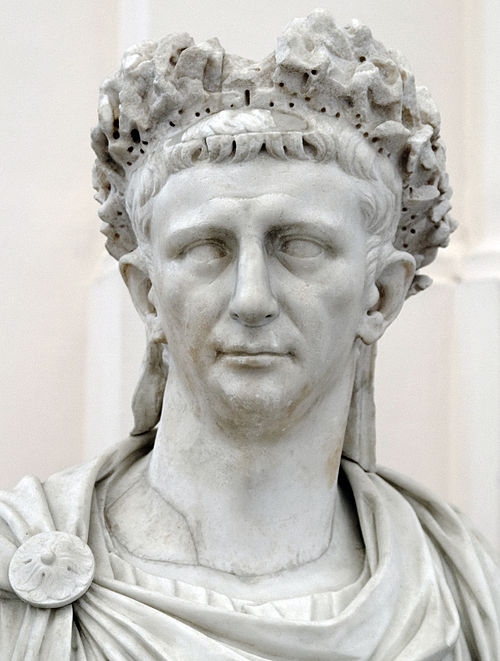
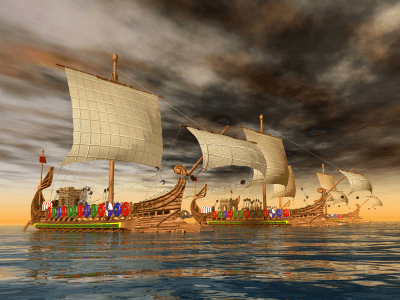
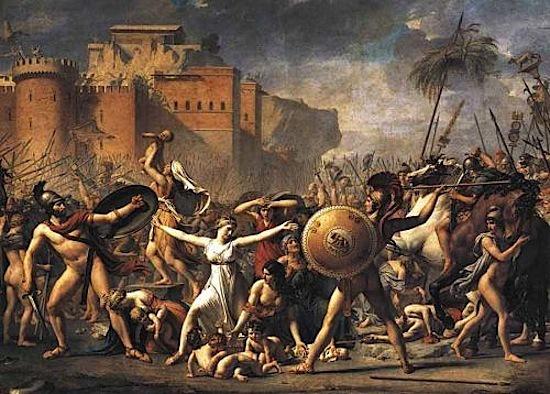
The next, proper invasion would be prosecuted by, again, one of the greatest Roman emperors ever known, and here’s a clue as to its success or failure: it’s gone down in history as the Claudian conquest of Britain. It’s one thing to set up client - which is to say, puppet - rulers in another country, but unless you have a way of reinforcing your wishes (in other words, unless you have an actual force that will ensure they’re carried out) there’s nothing to stop your new king being deposed by another who seizes power. And that’s exactly what happened once Julius Caesar left Britain. Wars broke out - or, I should probably say, resumed, as the Britons had been at war with each other for yonks, only ostensibly joining forces to oppose the invader - and our man Mandy Brunches sorry Mandubracius was unceremoniously (or perhaps with great ceremony; it amounted to the same thing) kicked off the throne of Britain, the throne basically given to him by Rome, and another chieftain, Cataractus sorry Caracatus had taken his place. The problem here for Rome was not the deposing of Mandubracius; his tribe had already fallen out of favour with the empire for the heinous sin of allowing a stronger enemy to defeat and supplant him, and they left him to his fate. What they did not take kindly to was that chieftain ignoring the edict of Rome, which held that Verica, of the Mastur - sorry Atrebates clan was the officially sanctioned ruler of Britain, and taking the throne for himself, in the process exiling poor old Verica. Who, as had his predecessor, went crying to the emperor, demanding his throne back. ![]() With the supposed intention of reasserting the claim to the throne of Verica, Claudius set sail in 43 AD for the shores of merry old England, to have a frank exchange of views and see if they couldn’t sort this out over tea and crumpets. Possibly. Now it wasn’t just a case of taking their lands and resources due to the Hillary principle, ie because it was there. No, now it was personal. Caratacus had given the finger to the world’s mightiest empire, and the world’s mightiest empire did not take that sort of insult lying down. Caratacus Probably one of the first great leaders of the Britons, and given how he stood up to Claudius, possibly one of their first real heroes. Caratacus was a member, and later leader of the Catavellauni, one of the two most powerful and respected tribes in Britain at that time. He was a prince, son of the king Cunobelinus, taken under the wing of his uncle Epaticcus, who was responsible for expanding the territory of the Catavellauni as far as that of their rivals, the Atebates, whose leader, Verica, as already explained, had been chosen by Rome as king. That didn’t matter a red deer’s jawbone to Epaticcus though, and after his death in 35 AD his protege carried on his work, eventually defeating the Atebates, exiling their king and setting himself up as ruler of Britain. After Claudius invaded Caratacus had enough sense to see that the only way to deal with the Roman legions was with guerilla warfare, and in this he was quite successful. For a time. But unlike Julius Caesar ninety years ago, Claudius had come to Britain with the very definite intention of conquering it, and to that end brought with him three legions, as well as other allies, so Caratacus would have been well outnumbered and would not have stood a chance in open, direct combat with the battle-hardened and well-armed and armoured Roman legionnaires. Not surprisingly, Caratacus’s stronghold at Camulodunon - where the city of Colchester now stands - became the focus of the Roman efforts, and he and his brother fought but lost two major battles, the Battle of the River Medway (no I said MEDway) and the Battle of the River Thames, where his brother was killed. Caratacus could only hold out so long, and eventually he was defeated and fled to Wales, where he took up the fight again, but when his wife and daughter were captured by the Romans and his other brothers surrendered, Caratacus legged it to Yorkshire (then called Brigantes) seeking sanctuary there with its ruler, Queen Cartman I mean Cartimandua. She, however, betrayed and sold him out and he went back to Rome in chains. Sentenced to death, he earned himself an unlikely reprieve due to the eloquence of his speech, which he made before the Senate, proving, perhaps surprisingly to them, that he, and indeed all Britons, might not be the unprincipled, ignorant barbarians they had been told they were. Caratacus was allowed to live in peace in Rome, and marvelling at its wealth and opulence, wondered why such people would covet a crappy land like Britain? Not on your nelly! Living engines of war If, when Julius Caesar had first visited Britain, Romans had never before seen chariots being used in war, they were able to repay the compliment by bringing as part of their invasion force something no Briton had ever laid eyes on: elephants. And not just any elephants (though the mere sight of the beasts was enough to send the Britons into a panicked rout) - war elephants. Elephants armoured for war, carrying men on their backs who fired spears down from their great height advantage. This was enough to force the surrender of most of the tribes of southeast Britain, and the conquest continued apace. By 47 AD there was a Roman governor of Britain, Publius Ostorius Scapula, and he launched an invasion of Wales. The Welsh, however, proved harder to conquer than the English, and Claudius decided to leave them to it. What, after all, was there of worth in Wales? Nero, when he came to the throne, thought differently, and consequently many Welsh druids were killed when he had the new governor, Quintus Veranius, invade Anglesey. He was almost directly responsible for the creation and rise of one of Britain’s first true legendary figures, and as you might expect, she was a woman.
__________________
Trollheart: Signature-free since April 2018 |
|
|
|
|
|
#5 (permalink) |
|
Music Addict
Join Date: Apr 2021
Posts: 1,161
|
Thanks Trolleybookends....
I was not chasing you. ok I was....Hope all is going as smooth as it can for you two. I cannot seem to get to grips with the private messages..Cant see what I've sent and what I have not sent. yes that post was a tad confusing, guessing just too tired, get a tad mixed up then...Cheers Di Last edited by DianneW; 07-06-2021 at 03:03 PM. |
|
|
|
|
|
#6 (permalink) |
|
Born to be mild
Join Date: Oct 2008
Location: 404 Not Found
Posts: 26,996
|
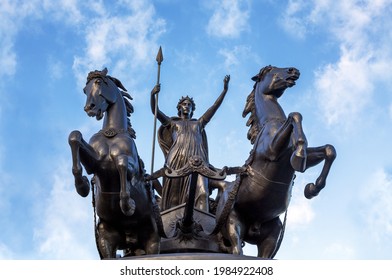
![]() Boudica (died c. 60/61 AD) Boudica’s story is that of one woman being pushed way, way too far, and an arrogant, overbearing occupier who believed he was invincible, had no reason to fear a mere female, and acted accordingly. It is surely also one of regret for Rome, partial triumph for Britain and a legend for the ages. Boudica did not start out as a rebel, far from it. She and her husband had signed treaties with Claudius during the conquest of Britain in 43 AD and had remained loyal to his successor, Nero. In fact, her husband, Prasutagus, was such an arselick that when he died he left half of his kingdom to his two daughters, and the other half to Nero. I suppose it’s expensive running an empire, and every little sesterce helps. Nero however didn’t see it this way, and sent his emissary to take the lot. When Boudica protested that these were not the terms of her late husband’s will, said functionary is reported probably not to have said, “are you calling the emperor a liar? That’s treason, that is!” and proceeded to have her whipped. Humiliating enough, you would think, for a woman who was now queen of the Iceni tribe, and for someone who had thrown in her lot with the very people who were now abusing her. But no, apparently it was not enough. Spotting Boudica’s two daughters, the unnamed centurion directed his men to rape them, which they did. In the final analysis, and understandably, this would have been the last straw. It would lead to the first proper revolt in Britain under Roman rule. Waking the Lion: the Revolt of Boudica "'But now, it is not as a woman descended from noble ancestry, but as one of the people that I am avenging lost freedom, my scourged body, the outraged chastity of my daughters. Roman lust has gone so far that not our very persons, nor even age or virginity, are left unpolluted. But heaven is on the side of a righteous vengeance; a legion which dared to fight has perished; the rest are hiding themselves in their camp, or are thinking anxiously of flight. They will not sustain even the din and the shout of so many thousands, much less our charge and our blows. If you weigh well the strength of the armies, and the causes of the war, you will see that in this battle you must conquer or die. This is a woman's resolve; as for men, they may live and be slaves." I’ve said it in the History of Ireland journal, and it holds true for most peoples: you can only push them so far, and if you think a populace is so beaten into submission that you can ride roughshod (perhaps literally) over them, then all I can say is you have not been reading your history, my son, and you had better sleep lightly, because when you least expect it, when you feel at your most secure and are at your most arrogant, that’s when they’ll come for you. Believing the Britons no threat (he had, after all, subdued their entire island) Nero was surely taken by surprise by the uprising that broke out, and cost so many Roman lives. Gathering all the disaffected tribes to her - for she was not the only one with whom the empire had broken faith - she marched on Camulodunum, the Roman capital as already noted, modern-day Colchester. Here many Roman veterans had retired, and the people there had been mistreated by them, forced to build a temple to Claudius at their own expense, so they were just in the mood to kick some Roman butt. All they needed was an impetus, which arrived in the form of Boudica and her allies. Laying siege to the town they took it easily, destroying a large bronze statue of Nero and knocking its head off, which Boudica took as a trophy. The rebels scored another huge victory when a Roman legion, coming to relieve the town, was met by them and roundly defeated, leaving its few survivors to fly for their lives. On hearing of the comprehensive defeat, and of the fall of Camulodunum, Catus Deciamus, the Roman procurator decided Gaul was a much safer place to be, and departed English shores. With the rebels on the way, the governor, Gaiuis Seutonius Paulinus, decided to abandon Londinium (anyone?) and evacuated all his people from the city, everyone left behind tortured and slaughtered by the rebels when they arrived. Whether they discriminated between their own people and the Romans is not made clear. What is made clear, apparently, is that being a woman did not imbue in Boudica any pity or sympathy, or indeed weakness shown towards others of her sex. The Roman historian Dio - that's Cassius, not Ronnie James! - tells us that the Britons were not taking prisoners, slaughtering, hanging, burning as they came, and that the noblest of the Roman women were impaled on spikes (that’s a real pain in the arse. Sorry) and as if this wasn’t enough, also had their breasts cut off and sewn to their mouths. Must have felt like right tits. And left tits. Okay, I’ll stop now. As, eventually, did Boudica, whose revolt was of course doomed to failure, if a glorious one. Once the Romans regrouped, there was no way a ragtag band of pretty much untrained and undisciplined barbarian warriors were going to get one over on the cream of the empire, and this was only going to end one way. As ever in such battles, he who controls the terrain controls the battle, and from Scotland to Agincourt we’ve seen that strength in numbers can mean nothing if the territory is used to best advantage. Despite being outnumbered by Boudica’s forces by a factor of, say some historians, twenty to one, others claim thirty to one, Suetonius had fought many a campaign whereas this was Boudica’s first. Not a good time to be learning! A seasoned soldier, though not of course a native of Britain, Suetonius selected a narrow gorge with a forest behind him opening out into a wide plain. The forest protected him from an attack from the rear while the gorge of course meant his forces could not be outflanked. In contrast to the well-armed and drilled legionnaires, Boudica’s people were poorly armed, their tribes having been disarmed previously by Suetonius prior to their revolt. The Roman governor disdainfully told his men "Ignore the racket made by these savages. There are more women than men in their ranks. They are not soldiers—they're not even properly equipped. We've beaten them before and when they see our weapons and feel our spirit, they'll crack. Stick together. Throw the javelins, then push forward: knock them down with your shields and finish them off with your swords. Forget about plunder. Just win and you'll have everything." It was a good speech, and in truth it seems that overconfidence was Boudica’s undoing. The tribes even brought their families along and set them in wagons behind the battle lines, promising them a mighty victory they could enjoy. A real day out, huh? Except of course, it didn’t quite turn out that way. Perhaps naively, perhaps desperately, perhaps arrogantly, the warrior queen led her army in a frontal attack, playing right into Suetonius’s hands. Javelins launched by the Romans at the Britons killed many and damaged the shields of others, forcing them to discard them and thereby leave themselves defenceless. The legions attacked, and once their cavalry joined the melee it was all over for the Britons, who tried to flee but found their exit blocked by their own wagons. A mass slaughter ensued, as even the women, children and animals were butchered by the victorious Romans. Boudica herself is said to have taken poison rather than be captured. A rather amusing side-note concerns a Roman centurion who was believed to have robbed his legion of a share in the triumph by not turning up for the battle and who fell on his own sword in disgrace. His name? Poenius Posthumus. ![]() Despite her defeat, Boudica is recognised as a true hero of Britain, an example of the fighting spirit and a role model for women in a time when they did little but support their men. Indeed, her revolt shocked Nero so deeply that he seriously considered pulling his forces out of Britain, but decided to let them remain, not wishing to lose face in front of the Senate. It would be another nine years before Britain would rise again in revolt, and this time it would be in the north.
__________________
Trollheart: Signature-free since April 2018 |
|
|
|
|
|
#7 (permalink) |
|
Born to be mild
Join Date: Oct 2008
Location: 404 Not Found
Posts: 26,996
|
Having defeated Boudica comprehensively and shown Britain that it was unwise to awaken the wrath of Rome, Suetonius pillaged the land around, carrying out reprisals against anyone suspected of having supported, agreed with or perhaps even heard of the warrior queen, or who he just didn’t like the look of. His blood was up, and Nero decided so too was his time in Britain, the emperor removing him before he could do more harm than good, and provoke further rebellions. It was, however, a little late for that.
![]() Rumblings in the North: the revolt of Venutius and Cartimandua You’ll remember the second name; she was the queen of the Brigantes who delivered up poor old Caratacus to his hated enemies when he went seeking shelter from her. So why did she and her husband turn against Rome? Well, apparently it was all down to marital strife. No, I said marital, not martial, though of course that figured in the deal too. See, apparently Cartimandua had lost interest in her husband and had abandoned Venutius to go with, of all people, his armour bearer, a guy called John. well no actually he was called Vellocatus (didn’t anyone in this age have a name without ten or twelve letters? Sounds like a very soft kitten, doesn’t it?) Hey, at least she chose someone whose name began with the same letter, so that if she and Venutius had ever carved their names on the bark of a tree (or more likely, in the skull of some enemy) the sentiment would still stand. Anyway Venutius initially went to war against the old lady because she had set Vellocatus up on the throne that was his, you know, by right. The little woman was, however, well protected by her Roman masters, but Venutius wasn’t having any of that. History does not record their conversation but it's entirely unlikely he said "I'm not having any of that!" while she smiled sweetly and invited him "Come at me, hubby dear. I'll wipe you out," and that he responded "Oh yeah? You and what army?" and that she grinned and said "This one." Even if she had, this guy was no coward, or alternatively, thought only with his sword, and so might have snapped back “Think you can hide behind them? I’ll do you, and your bloody Roman lapdogs!” And so he did. Or tried to. To nobody’s surprise - and no doubt his wife’s delight - he was quickly beaten, but that was in the AD 50s, and by almost the time of the 70s he was ready again. This time the Romans weren’t so quick to come to Cartimandua’s rescue, being a trifle more concerned with matters at home. Nero had finally pissed off and died, having burned Rome almost to the ground before he went, and in that year, 69 AD, no less than four emperors came to the throne in quick succession, each gone almost before he could warm his arse on the seat. This, as you can imagine, caused great unrest and political turmoil in the empire, and Britain was not seen as a priority. Thus, when Venutius attacked his ex again, they really weren’t that interested and thought best to leave them to it, no point getting involved in petty family squabbles. In the end, all they could do was get Cartimandua out of England, and this left Venutius possibly beating his chest and standing on some high mountain roaring “YES! I am the BEST!” and according to some sources (all right: according to me) giving Rome what was traditionally referred to in Britain as the Finger. They weren’t going to stand for that. And they didn’t. Now, you see, the problem here is that the only written accounts that we have left are those made by Roman historians such as Tacitus and Dio, and invariably, and unsurprisingly, these are written with a strong Roman bias. So mostly you get a version of “the brave Roman army pushed the barbarians back” and so forth, leaving us with little hard detail - indeed, any detail - about the nuts and bolts of the battles. But from these sources and archaeological finds it appears that Venutius was relatively easily beaten, though his people, the Brigantes, made life tough for the occupiers for the next few decades. The Scots, too, rose in revolt but that’s another story, and one we’re not concerned with here, though it does deserve a short mention. So here it is. Suffice to say, by around 87 AD Britain was more or less completely under Roman control, and for the first time the people of Britain felt what it was like to be under the heel of an oppressor. It wouldn’t be the last time. Mother Should I Build a Wall? Scotland Attacks Although Britain as an island had been subdued by Rome, they certainly did not have it their own way, and rebellions and uprisings continued to break out for another eighty or so years. Much of this resistance to Roman rule came from the far north, the area they called Caledonia but which we know as Scotland. While the Scots - Picts, mostly, at the time - had no love for Britons (Englishmen) and there would be strife between the two for centuries (and even still is, to some extent) they weren’t going to sit back and let this foreign power invade their homeland, and they fought fiercely, more savage and with more abandon than Romans had ever seen, even with the English. Although this journal isn’t concerned with the history of Scotland, as such, it is impossible to imagine the eventual forced withdrawal of the Roman Empire from Britain without the constant attacks on them from there taking place. This so concerned Rome that in 122 the new emperor, Hadrian, commissioned the building of a wall at the northern border, which would effectively provide a barrier between the “barbarians” and his people. Hadrian’s Wall, as it came to be rather unoriginally known, is still there today, stretching from Wallsend on the river Tyne to Bowness-on-Solway, more or less bisecting the island from west to east and cutting off Scotland from what is now England. Of course it’s a ruin now, and a tourist attraction, but that any of it at all survived is testament to the prowess of Roman engineering and construction. The wall was, and remains, seventy-three miles long, and originally was said to have reached to twelve feet in height, though of course most of that has now fallen and it’s much lower. Hadrian’s Wall marked the “boundary of the civilised part of Britannia” (as they came to call England) and the unconquered, barbarian, mostly unknown land of Caledonia, Scotland, though it is built entirely in England and does not form a true border between the two countries. Of course, the wall was also a physical representation and reminder of the might of the Roman Empire in Britain. Its construction provided employment for thousands of soldiers who might otherwise have been idle and restless, and helped to control the flow of commerce, and people, through that part of the empire. It wasn’t just a wall though, being supplemented by a number of forts and milehouses along its length, staffed by Roman soldiers. It took six years and three legions - approximately 15,000 soldiers - to build. After three more emperors had unsuccessfully attempted to subdue the Scots, the last of them, Septimius Severus, withdrew to Hadrian’s Wall around 211 and it became the northernmost border of the Roman Empire in Britain. Even so, Picts breached it in 180, killing the commanding officer. Roman soldiers and officers were beginning to resent being in Britain, and a withdrawal was on the cards as events further afield began to occupy the empire’s attention.
__________________
Trollheart: Signature-free since April 2018 |
|
|
|
|
|
#8 (permalink) |
|
Born to be mild
Join Date: Oct 2008
Location: 404 Not Found
Posts: 26,996
|
But first...
![]() (Note: I have no idea if this is a real flag that was used or not, but it's pretty damn cool, isn't it?) The Britannic Empire (286 - 296) There were two things every man needed to possess in order to progress, even survive, in the Roman Empire, and those were ambition and a sense of ruthlessness. If you were squeamish, if you were weak, if you were idle or just not prepared to do what needed to be done, you didn’t last long. Most of the emperors had risen to power by one of two means: bribery or murder, often both. Even when there was a clear line of succession to the throne, a prospective claimant could be unseated or even prevented ascending if his enemies - often from within his own family - were powerful or rich enough, or had enough support to oppose him. Thus, while Greece was the world’s first democracy, Rome was anything but, and the men who sat on the throne were forever restive, anticipating - sometimes with cause, sometimes without - a challenge to their reign. It was enough to drive you mad. And some emperors did indeed descend into madness, such as Nero and Caligula, and surely others too. But then again, it could be seen perhaps as a good thing that, unlike the line of royal succession a millennium later in England, in effect any Roman could rise to be emperor, somewhat like the American presidency. Of course, he usually had to be from the right background, but theoretically, once enough money had crossed enough palms or enough knives had been sunk into enough backs, the way was often clear for a man to take power who should, and often did, have no such claim to the throne. Thus it was with Marcus Aurelius Mausaeus Carausius, who was a commoner who had clawed his way up the ranks of the Roman military and was given command of keeping the seas around France clear of Saxon and Frankish raiders. However accusations that he was in fact in league with the pirates, that he allowed them to loot and then they paid him a percentage, in a sort of perhaps ancient foreshadowing of the Mafia, led to the order being given for his execution by the then-emperor, Maximian. In response, Carausius declared himself “Emperor in the North” (shades of Game of Thrones, huh?) and with the fleet at his command he was able to back this up. Maximian sent a force to take back Britain from him in 288 or 289 but suffered a defeat, and Carausius remained emperor of that part of the world. He also made alliances with the natives, who were at this point weary of Roman rule, and set himself up as Restitutor Britanniae (Restorer of Britain) and Genius Britanniae (Spirit of Britain). In this way he presumably hoped to show or prove that he was the great liberator who would release Britain from the yoke of its longtime oppressor, and allow them some form of autonomy. Whether he had any intention of doing this or not is unknown, but he needed the support of the Britons and, like most Romans, was ready to say what was needed. He could always go back on his word later. He therefore set up what became known as the Britannic Empire, which was not to last long, with the end beginning in 293, when the emperor Constantius Chlorus cut Carausius off from his Gaul allies by besieging the port of Gesoriacum, modern Boulougne-sur-Mer, and invading Batavia. After seven years in power, Carausius fell victim to the favourite Roman pastime, assassinate-my-leader, when his treasurer, Allectus, did just that, taking the title of emperor for himself. He was not to hold it long, as an invasion fleet arrived in 296, quickly routing his army and once again Londinium was the scene of a massacre. The Britannic Empire had lasted ten short years, and direct Roman rule was once again established over the island. ![]() Barbarians at the Gates: The End of Roman Rule in Britain, and the Beginning of the Fall of the Roman Empire I’m sure that, to someone living at the time, especially those living under Roman rule, it must have seemed completely inconceivable that this might empire could ever fall, but as history tells us, nothing lasts forever, and while Rome may not have been built in a day, for an empire that had lasted a thousand years she certainly fell within a couple of hundred. Incursions by German (Teutonic) tribes such as the Goths and the Visigoths and the Franks proved too strong for the empire to resist, perhaps as a result of being spread too thin, or perhaps due to internal politics or bad management, or arrogance and overconfidence, or bad strategy. I’m sure scholars have many reasons why Rome fell, but the barbarians didn’t care why, they just intended it should. And it would. Certainly, internal power struggles which often erupted into civil war did not help the cause of the Romans, and to some degree the Visigoths and their allies had only to sit back and watch the greatest empire the world had ever known tear itself apart, though of course they made sure they did some of the tearing themselves. As the situation became increasingly desperate for Rome, they began to consolidate their forces to defend the empire against the encroaching hordes, and this meant that Britain became less a priority, as troops were shipped back home to assist in the defence of the motherland. By about 383 the north and west of Britain had been cleared of any Roman presence, and around 407 Constantine III took what troops remained from Britain to aid in the defence of Rome (or actually, to try to set himself up as emperor), but neither he nor the currently-serving emperor, Honarius, could prevent the Visigoths breaking through and Rome was sacked in 410, effectively bringing to an end the mighty Roman Empire.
__________________
Trollheart: Signature-free since April 2018 |
|
|
|
|
|
#9 (permalink) |
|
Born to be mild
Join Date: Oct 2008
Location: 404 Not Found
Posts: 26,996
|
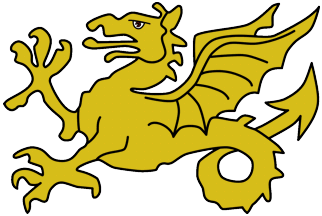
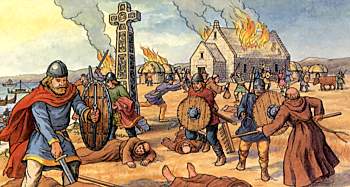
![]() Chapter III: A Game of One Throne: The Rise and Fall of the House of Wessex The last time we left England, the previous inhabitants, the Britons, had been more or less completely wiped out or subdued by the Saxons, now the Anglo-Saxons, who had divided the country up into seven separate kingdoms, most of which survive today in the names of English counties: Sussex, Wessex, Essex and so on. But the first millennium of England’s history was one filled with conflict, invasion and conquest. Whereas the Saxons had come from relatively nearby Germany to settle in England, the next invaders would come from far north, and would certainly leave their indelible mark on the country. In their case, England would not be their only target, as they ranged south in search of lands and plunder, glory and battle. Indeed, by the middle of the tenth century there would not be a country in Europe which had not heard of, feared or been attacked by the mighty northmen from Scandinavia. The third invasion of England was strange in comparison to the previous two. The Romans had basically come there as a matter of westward expansion of their empire, on tour as it were, conquering all before them, ready to literally take on the world. They installed governors and praetors, left garrisons and laid down Roman law. They administered and oversaw the people they had conquered, and considered them now part of the Roman Empire. In an effort to get rid of them, as has already been noted, the Britons as they were pretty much shot themselves in the foot, inviting the Saxons, who, on seeing how weak they were, emulated a later businessman and decided they liked the country so much they’d buy it. Or, actually, steal it, take it by force of arms. The third invasion though, was nothing to do with empires, and came out of nowhere. Vikings were not particularly interested in building communities, taking territory or passing laws. They were more of your smash-and-grab merchants, not that interested in the land, but they’d take your gold, your coinage, and if women were going, well they’d take them too, much obliged. Livestock? Nah, not so much. It’s this old Mark II Longship you see. Now, had we the Mark III with all the bells and whistles and all the latest gadgets, a roomy and practical ship for the discerning raider of today, then sure, but only your earls and your kings owned them. Expensive to build, a bitch to maintain, just not worth it. Not even for the fluffy dice. Had we one of those babies, then yeah, maybe we’d take your horses and oxen and sheep, though to be honest the smell might be a bit much. Forty or fifty unwashed Viking warriors crowded together over the course of a sea voyage of many months might offend the animals. And then of course we might have to sacrifice them. To our gods, you know? Just not worth it, pal. Must say, your wife looks pretty tasty though, What? CLONK! Sorry, my mistake: your widow there looks pretty tasty. Probably the hardest foe to fight is a man who wants to die, and while probably few if any Vikings wanted to actually die, they weren’t completely against the idea. As is widely known of their culture, to die in battle was the greatest honour any Viking could achieve, and Vikings were all about honour. From a very young age they were taught to fight, and how important reputation was. No young man worth his salt would want to hang back in the village or settlement while his bros went off pillaging and raping. The chance to make your name in battle was something every Viking craved, and certainly affected his standing in society. Men were measured by how many people they had killed, what battles they had won, what scars they had picked up. A Viking wasn’t really expected to have enemies, at least, living ones. Not if he was doing this Viking thing right anyway. So when a chance came for glory every Viking of qualifying age wanted to pile into the ship and strap on his axe or hammer and head off for adventure and violence. He knew he might get killed, but if he did, well, that was just a bonus wasn’t it? Free entry into Valhalla and the honour left behind for his family of a true, fallen warrior. In many ways I think Vikings could be almost likened to unpaid mercenaries. They would fight for king and country, sure, and for family and friends, but they were always up for a fight and if some local earl or king had trouble and wanted a few likely lads to crack (or maybe hack) some heads, they were your men. They were even known to team up with rival lords as long as they got a share in the booty. There was no standard going rate for a Viking warrior, no flat fee for his services paid by the leader of the expedition, but they could certainly help themselves to whatever they found during the raid and thus enrich themselves that way. Apart from material wealth though, taking part in daring battles and raids helped Vikings store up stock in the Bank of Odin, where valorous deeds and mighty victories would all be chalked up to their account, checked when they finally popped their clogs and, assuming their quota was met, they would be welcomed into the halls of the heroes. Or so they believed, and belief is a powerful thing. If you think that by fighting and dying you can attain for yourself immortal fame and glory, well, it’s a lot easier to throw yourself into the fray, isn’t it. And harder for your enemies to cow you. The first time a Viking ship is said to have docked at the English coast was the year 787, less than fifty years after the Saxon Heptarchy had been established, setting the seal on Anglo-Saxon rule of England. When the king’s envoy, however, rode out to treat with these new arrivals, they killed him (and presumably anyone with him) - not, one would have thought, the most diplomatic opening of negotiations with a foreign power! But then, Vikings were never about talking. Well, they were, but on their terms. They generally preferred conquest over conversation, might over mediation and brute force over a nice cup of tea and a scone. That Elvis song could have been written for them, as they definitely preferred a little more action, as they showed when, only six years later (barely time to catch your breath, in terms of history) they launched an all-out attack on the peaceful monastery of Lindisfarne. ![]() Meet Me on the Corner - and I’ll Kill You: the Lindisfarne Raid (793) It must have come as something of a shock to the quiet, pious monks on the island of Lindisfarne, on the northeast coast of England, also known as the Holy Island, and with good reason. No less than four saints were said to have resided there - including the one who set up the monastery, Saint Aidan - and it was one of the most important centres of early Celtic Christianity. Although this was not the very first Viking raid, it shocked the English because of not only its ferocity, but its sacrilegious nature. One just did not attack holy men, to say nothing of defenceless holy men. But the Vikings were a breed apart. They were not Christians, and did not believe in one god, but a whole pantheon of them. Not only that, their gods were warlike and vicious, and viewed such things as mercy and compassion as weakness. Well not really, but they would have kicked the Christian God’s arse in a fight, that’s for sure. The Anglo-Saxon Chronicle puts in words the outage such an attack engendered: “In this year fierce, foreboding omens came over the land of the Northumbrians, and the wretched people shook; there were excessive whirlwinds, lightning, and fiery dragons were seen flying in the sky. These signs were followed by great famine, and a little after those, that same year on 6th ides of January, the ravaging of wretched heathen men destroyed God's church at Lindisfarne.” Alciun of York, a scholar from Northumbria, gives us a more PG-rated account: “Never before has such terror appeared in Britain as we have now suffered from a pagan race ... The heathens poured out the blood of saints around the altar, and trampled on the bodies of saints in the temple of God, like dung in the streets.” So Vikings probably saw no reason to exempt, or exclude monasteries from their raids. In fact, they would have been drawn to them due to the riches to be found there. As related in the History of Ireland journal, monks were poor and took a vow of poverty, but the works they created were some of the most beautiful and used the richest materials that could be obtained. Gold, silver, precious stones, expensive cloth, inks, all of these went into their illuminations and books, and the statues and ornaments that decorated the chapels were richly furnished of gold and other precious metals. The Vikings wanted these, and the fact that the monks put up very little or no resistance (not that they could) surely enraged and disgusted them. They were used to fighting enemies who fought back, who could be killed and who might kill them - a fair fight, well matched. But these men! It must have been like skinning rabbits, or whatever equivalent they had up there in the frozen north. Not a lot of fun then, and certainly not many opportunities for glory, but plenty for plunder. Rape was probably off the menu (unless, you know, some of them had particular preferences) as to my knowledge there were no convents on the island, but the raiders would have been able to slaughter at will, collect up all they could hold in their brawny arms, fire up the monasteries (Vikings liked a good blaze) and then fuck off back across the sea, hoping their Mark II’s didn’t sink under the weight, and considering perhaps checking out the new issue of What Longship? to see if those Mark III’s were worth looking into. Yes, Vikings were almost the epitome of guerilla warfare. They struck hard and fast, and then disappeared as quickly. They would have pitched battles, especially as the Anglo-Saxons got their shit together and began defending themselves, but they did not hang around. They might make a base camp for a short while, but once the battle was over they would head off back home. They weren’t about settling in England, and they certainly were not about ruling it. Plunder, rape, burning, pillage, booty, no problem, do that all day. Passing laws though? Keeping order? Balancing budgets? Ah, no thanks. Feeling a little homesick as it goes. Catch you next time. Probably with the blade of my axe. Mind you, the Vikings didn’t have it all their own way. I’m sure it wasn’t the monks themselves who resisted, but the year after Lindisfarne was done over another band of the raiders headed up north, across the Tyne to take out the monastery at Jarrow. Here they met with stiff opposition, and their leader was even killed. It seems they were ambushed on their way home, carrying their ill-gotten gains, as related here in, again, the Anglo-Saxon Chronicle: 'And the heathens ravaged in Northumbria, and plundered Ecgfrith's monastery at Donemuthan , and one of their leaders was killed there, and also some of their ships were broken to bits by stormy weather, and many of the men were drowned there. Some reached the shore alive and were immediately killed at the mouth of the river.' So they not only lost their leader - what effect that had on morale I don’t know but it surely could not have been expected, given the easy time the other group had had on the island the previous year - but also their ships, which would have been of greater concern. After all, without their longboats they couldn’t get back home, and I imagine, as sea raiders, the loss of their ship might have been viewed as more of a dishonourable event than that of losing their leader, who they surely believed was living it up in Valhalla with a maiden on each side. Due to this, perhaps humiliation, Viking raids on England stopped for a while as they concentrated on the “softer” targets of Ireland and Scotland. It would be decades before a proper Viking raiding party would attack England, and when they did, well, it would be an army, and in the words of the Venerable Bede maybe, they were not fucking around.
__________________
Trollheart: Signature-free since April 2018 |
|
|
|
|
|
#10 (permalink) |
|
Born to be mild
Join Date: Oct 2008
Location: 404 Not Found
Posts: 26,996
|
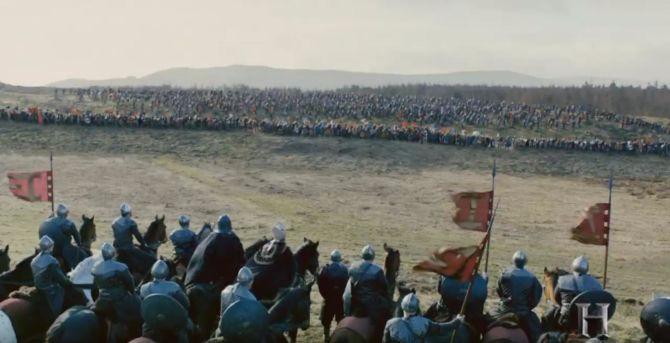
![]() The Great Heathen Army Goes to War: This Time it’s Personal! Maybe. In 865 a huge army of Vikings, known to history (and from the Anglo-Saxon Chronicle) as “the great heathen army” arrived in England. Ostensibly, they were there to avenge the death of the legendary Viking king, Ragnar Lothbrok, portrayed with varying degrees of historic licence in the series Vikings, he having been killed by King Aella when he attempted himself to extract revenge for the slaying of his own countrymen in Ireland, according to some accounts. In the army, the Chronicle faithfully reports, were Ivar the Boneless, Hvitserk, Sigurd Snake-in-the-trousers, sorry eye, Sigurd Snake-in-the-eye and Bjorn Ironside. This account has been disputed however, and as with most events so far in the past, it’s impossible to be sure, as often these sagas and chronicles exaggerated or were biased on one side or the other. It’s possible Ragnar’s sons were not in the army at all. If that’s the case, and the assault was not retaliation for his death, then the main thrust of the force may have come from Francia (the Kingdom of the Franks, which seems, so far as I can see, to cover most of near Western Europe - France, Germany, Netherlands, Austria and so on, almost as far as, but obviously not including, Italy) where a power struggle between the emperor and his son had resulted in the assistance of the Vikings. During the war, they discovered what easy pickings monasteries on the coast were and started harassing the Franks, but improved fortifications along the Frankish coast made this a non starter, so they turned their eyes further west. It’s probably more than likely then, given the Vikings’ way of life, that rather than a concerted effort to avenge the king Ragnar this was a pure for-profit mission, opportunism which spoke to all the various Viking chieftains, who banded together not out of love for or outrage over the slaying of Ragnar Lothbrok, but for pure, hard cash. And women. And anything else they could carry away. Wary of landing in Sussex, where King Aethelbert had been successful against a large fleet in 851, the Great Heathen Army turned its attention to East Anglia, and landed there in 865. Once again the Isle of Thanet featured (you may remember when hopeful Christian missionaries arrived in the sixth century the Briton king let them stay there) as the Vikings were given the island in return for Danegeld (protection money, basically) but decided they had not come all this way without slaughtering - Odin, you gotta slaughter something! - and so went on a binge of murder, burning, looting and, one would comfortably assume, an ample amount of rape. A Heptarchy there may have been, but nobody could show the East Anglians anything in writing that said they were part of any Saxon version of NATO, so they looked after themselves and bought the fierce northmen off with some horses. The Vikings said ta muchly and set up their invasion base. They spent the winter there (a warmer winter than back home, I’ll wager, Olaf! You’re not wrong there, Thor me old buddy!) and then set their sights on Northumbria, which was basically part of the kingdom of Wessex by now, as we’ve seen. They headed for the capital, York, which was a really good idea, because even if they didn’t know it (and they may not have; there’s no real information on the sort of intelligence Vikings in general or the Great Heathen Army had on its enemies at that time, though Clare Downham in her book Viking Kings of Britain and Ireland: The Dynasty of Ivarr to AD 1014 seems to believe there was information, noting that it was “likely the Vikings had been tipped off concerning events in the north”) King Aella was in the middle of a civil war, and his army was basically knackered. The city walls had been built by the Romans but not maintained, and so were crumbling by the time the GHA arrived. Aella probably dropped his head into his hands and groaned “Oh guys! You could not have picked a worse time!” and rode to meet the new invaders. Aella decided the enemy of my enemy and all that, and he and the rival king he had driven out, Osberht joined forces. It didn’t matter. There are no sources which confirm the size of the GHA, but various scholars talk of it being from about 1,000 to being in the “low thousands”. Either way, it was pretty big and considered the largest invasion army to set foot in England. The Battle of York didn’t last long, and both kings were killed. There’s no real historical evidence to back this next bit up, but it’s fun and gruesome so let’s consider that it may have happened. Those of you who have seen the series know what the “blood eagle” is, and for those of you who have not, no, it is not a nosebleed you get from listening to Hotel California at full volume. This is the punishment supposedly meted out to Aella, who is said to have been the one to have thrown Ragnar into the pit of snakes (though again, this may not have happened), by his sons (who may also not have been there). Here’s how it goes. For those of you who are squeamish, talk amongst yourselves or skip ahead; I’m not spoilering this. Pussies. First the victim was laid on his stomach and his shirt torn to expose his naked back. Then a sharp tool was used (watch those edges, kids, and always ask mother if you can borrow the tool) to break the ribcage. The lungs were then pulled out through the gap made, to resemble two (very bloody and slippery) wings, hence the name of the punishment. Traditionally, this was only practiced on members of the royal family, which would back up why Aella would have been singled out for such vengeance, but also makes it unlikely, given that it was a specifically Scandinavian thing. Also, most well-known brainbox spoilsports say this is all made up, but fuck them, it’s fun. Not, of course, for His Majesty. Anyway, whether that happened or not is kind of immaterial, as the Battle of York won, the Vikings now had Northumbria and turned towards Mercia in 867, taking the town of Nottingham. Unable to withstand the invaders by themselves, Mercia looked to Wessex for help, and the two kingdoms joined forces, but even at that they were unable to best the GHA and had to eventually sue for peace by paying Danegeld. For pretty much the next year the Viking army was quiet, wintering in Nottingham and then returning to Thetford. In the winter of 869 the king of East Anglia, Edmund, launched an attack but was defeated, his lands now coming completely under the control of the Viking army. A year later, another huge army arrived to bolster up the Great Heathen Army, this one going under the title of the Great Summer Army, presumably not because they all arrived in shorts and shades and carrying surfboards under their arms. The combined armies now marched on Wessex, but, rather surprisingly, given that the forces of Wessex and Mercia could not defeat the GHA, this “double-army” was repulsed by the Anglo-Saxons at the Battle of Ashdown. This was in fact preceded by the Battle of Englefield, four days prior, which I think I’m correct in saying appears to have been the first victory for the Saxons against the Vikings since the GHA arrived. It wasn’t, to be fair, the full army that encountered the forces of King Aethelwulf, just a “large scouting party”, but when one of the earls in the party was killed, it is again the first time I see that even part of the Great Heathen Army broke and ran. They redressed this four days later at the Battle of Reading (pronounced red-ding, not reed-ing, in case you were wondering) where they faced Aethelwulf again but this time with the future king Alfred the Great. However, glory and fame in his future didn’t impress the Vikings and they kicked their arses, killing Aethelwulf and forcing Alfred to leg it. That’s more like it, the Vikings may have grinned. Normal service has been restored. But it wasn’t to last. As I said, the Battle of Ashdown would see the GHA (and presumably the GSA too, though probably not the GCSE or GPS, sorry) roundly defeated for the first time. Not just a scout party this time, King Aethelred and King Alfred faced the might of the two huge Viking armies and the leader of the Great Summer Army, Bagpuss sorry Bagsecg was killed, duly despatched to his reward in Valhalla no doubt. Interesting stuff in this one. And here it is. The Viking army arrived first and took the high ground, which should have given them the advantage. Alfred (not yet a king, much less a legend) decided to copy their formation. Aethelred, on the other side, decided it was time to pop off for a quick prayer. No harm in having God on your side, eh? Except it turned out not be so quick. As Alfred advanced up the hill and gave bloody battle, his king was still down in his tent mumbling prayers, no doubt something along the lines of “If you could see your way clear, Lord, to smashing our enemies, that would be just great.” Alfred’s frantic cries from on high finally reached his ears - the Anglo-Saxon Chronicle clearly does not relate his words as “Any time you’re ready, Your Majesty! Getting a bit hairy up here!” and it absolutely does not record his later cry “Jesus fucking Christ! Enough with the prayers already, Your Kingship! God helps those who help themselves, so help us!” Aethelbert did finally end his prayers, probably offering profuse apologies for the swearing of his bondsman, and advising his Lord that no doubt in his wisdom he knew what it was like, and hurried off. In the end, his joining the battle turned the tide and the Vikings were scattered, Bagpipes sorry again Bagsecg killed and with cries of “They’re on the run! God has given us the victory! Get them heathen bastards lads!” Alfred and Aethelred charged after them. It was indeed a mighty victory, but it would be overturned two weeks later at the Battle of Basing and again two months after that, in the decisive Battle of Meretun. Not, it would appear, at the battle, but Aethelred died (possibly due to natural causes, as the Chronicle records his death as “he went the way of all flesh” although - wow! Only 26 at the time of his death! Not old age then) and was succeeded by Alfred as King of Wessex. Alfred took on the Vikings, now led by Halfdan Ragnarsson (who, as his name suggests, is believed to have been one of the sons of Ragnar Lothbrok) and was again defeated at Wilton and only secured peace by buying the Vikings off. After this he more or less waged a guerilla campaign, with the Vikings almost completely in control of the midlands. He made his stand at Edington, where he completely defeated Guthrum, the then Viking king of East Anglia, and internal divisions with the Viking armies ensured they would not be able to band together for much longer. Guthrum’s defeat was followed by a treaty in which he swore to be baptised, and to remove his arms - huh? Sorry: his armies from Wessex. In 878 another army arrived, but due to the defeats the two great armies had suffered, and looking east to the instabilities at the Frankish court after the death of their king, Charles the Bald, they are likely to have muttered “Fuck this lads; let’s head over to Francia. I hear there’s rich pickings there.” And so, off they fucked. The final army to land in England also shook their heads, shrugged massive shoulders and either joined their comrades - who were now living in peace in what was known as Danelaw, farmers and merchants and all sorts of respectable trades that hardly ever needed an axe or hammer, except as a tool - or also fucked off to Francia. For over a hundred years Saxons and Vikings lived in a kind of uneasy truce, the Vikings establishing what was known as Danelaw - basically the Scandinavian laws which governed the areas they held - until the Saxons again attacked and drove them out of Northumbria in 954. Even at that though, they fought back under Cnut (no it’s not a typo, smartarse!) who held Wessex up to his death, his heirs only defeated by William the Conqueror in some unremarkable and forgotten battle around 1066 or thereabouts. By 890 the main Viking threat to England was all but over, with no more overseas armies arriving and any further conflicts a matter of internal dispute. Alfred, who had done much not only to defeat them but to put in place treaties and reforms that made it difficult for their like to seize towns and cities from then on, was remembered as one of England’s first great kings. Well, they did call him “the Great”, didn’t they? Wonder why? Let’s find out.

__________________
Trollheart: Signature-free since April 2018 |
|
|
|
![]() |
|
|