Welcome to Music Banter Forum! Make sure to register - it's free and very quick! You have to register before you can post and participate in our discussions with over 70,000 other registered members. After you create your free account, you will be able to customize many options, you will have the full access to over 1,100,000 posts.
Album title:Ommadawn Artist: Mike Oldfield Nationality: English Sub-genre: Crossover Prog Year: 1975 Position on list for that year: 7 Chronology: 4 of 26 Familiarity with artist: 3 Familiarity with album: 2 Gold Rated track(s): None of this is really applicable here... Silver Rated track(s): Wooden Rated track(s): Comments: An interesting point here I didn’t know is that after the phenomenal success of his debut album, the now-classic Tubular Bells, Mike Oldfield did not want another hit album. He was retiring from the limelight he had been most reluctantly and somewhat perhaps violently and certainly unexpectedly thrust into. He became a musical recluse, and this, his third album, was all recorded in a little farmhouse in the middle of nowhere. The title comes from an Irish word for idiot - amadan - but manages to also represent, you know, a bright new beginning for the artist. He would never have solo success again like he had with Tubular Bells, although his albums would all be huge sellers. Those who know his name outside of his fanbase quote that album and the one or two hits he had with other people, such as Maggie Bell on “Moonlight Shadow” and “Family Man” and Roger Chapman on “Shadow on the Wall”. This has not stopped him becoming a multi-million-selling artist, but unless you’re into his music, the above, plus the well-known Christmas instrumental piece “In Dulce Jubilo” (oh, you’d know it if you heard it, believe me) are going to be the sum total of your knowledge or experience of him.
Not at all surprisingly, both for him and for the time, this is an album of two tracks, both almost completely instrumental, though the closing section of part two, called “On Horseback” has some nonsense lyrics in Irish. I must say, he does look very Christ-like on the cover, doesn’t he? The artist suffering for his art? Forcing his creation out despite his wish to be alone? Well maybe; I don’t know. Those eyes are extremely blue, aren’t they? Almost as blue as the Blue Stone of Galveston! (In-joke for those who know Blackadder, watch, um, another space). At any rate, it’s the music we’re concerned with, and it’s an ambient, almost spiritual beginning to part one. Now, considering all the instruments he plays I’m not going to attempt to identify them, so, you know, suck it. I do wonder if this will build up in instrumental layers, like his famous debut? We’ll see I guess. I can hear certain echoes of that album here for sure; probably never really get away from it. I think there are like four versions of it now, not including Tubular Bells II and III.
Some pretty powerful electric guitar now - I believe the guitar is his first love and instrument of choice, and it features fairly prominently in Tubular Bells too. Get a sense of the music not quite reaching a crescendo, but building in intensity now. Coming back down though with a breezy flute solo I think then joined by bass and some sort of keyboard and bouncing along with an almost Beatles flavour, heading nearly in a kind of brass band direction, though there’s no actual brass. Not yet anyway. Slowing down even more now with a nice little soft piano and some choral vocals or Prophet ARP or something, then we get into some almost tribal drums with a native chant which reminds me of stuff which surfaced on later Peter Gabriel solo albums and, to a lesser extent, some of Paul Simon’s work.
I suppose the idea of people rushing out to buy an instrumental album that has two tracks and runs for just over half an hour seems pretty unlikely now, but this was the 1970s and the likes of ELP, Yes and others were releasing albums of increasing complexity and length and decreasing numbers of tracks, and this went to number four in the charts. Wouldn’t even stand a chance of getting into the top forty these days I’m sure. Maybe we had better attention spans back then, or maybe it was just the golden age of progressive rock, and Oldfield benefited from that. Of course, there would also be those who bought it as a reaction to having bought and liked Tubular Bells. Nevertheless, I think it was quite a feat to have this in the top five, and a tribute to the man’s popularity and determination not to just write what the public wanted. He certainly stayed true to his vision, and it stood to him in the end.
Part two opens on a grand, stately keyboard and piano piece, slow and dramatic, then it fades away to a nice sort of stripped-down acoustic guitar in a kind of pastoral vein, with electric joining in and fleshing out the sound, before uileann pipes are added and now the tune has, not surprisingly, a very Celtic feel. You can just imagine looking out across the misty fields towards the cloud-shrouded mountains as a clear lake sparkles in the distance, the sun striking dazzling reflections off its surface, as the sheep go about their morning, unimpressed by nature’s awe-inspiring beauty, and somewhere there’s the gentle chug-chug-chug of a tractor working in the fields. The final piece is that “On Horseback”, with the nonsense Irish lyric and it’s kind of a bit odd after the two instrumental pieces. I guess one of his little jokes, like that country bit at the end of Tubular Bells II. Well now there are clearly English lyrics there too. Hmm. Okay. Good yes but I don’t think I’d have been rushing out to buy it personally myself.
Not on this album when released, but a special version the next year (1976) included that “In Dulce Jubilo” which became his signature Christmas song. I still wouldn’t be all that crazy about this album, but then, while of course I love Tubular Bells, I wouldn’t class myself as a big Oldfield fan.
Personal Rating: 6
__________________ Trollheart: Signature-free since April 2018
Location: The state that proudly brought you Disco Duck
Posts: 1,513
Honestly I consider this album to be Oldfield's true masterpiece, Tubular Bells is great but it's a little rough around the edges, Oldfield was a 19 year old kid who threw together every idea he had to see if it sticks, it did it's job in showcasing his raw talent but it lacks the flow and cohesion of some of his later work.
Honestly I consider this album to be Oldfield's true masterpiece, Tubular Bells is great but it's a little rough around the edges, Oldfield was a 19 year old kid who threw together every idea he had to see if it sticks, it did it's job in showcasing his raw talent but it lacks the flow and cohesion of some of his later work.
Ommadawn is just gorgeous from beginning to end.
Agreed 100%, it's a breathtaking masterpiece.
I'm a pretty big Oldfield fan but somehow never knew he was that young when he made Tubular Bells. When I was 19 I was playing in the worst local screamo band you've never heard.
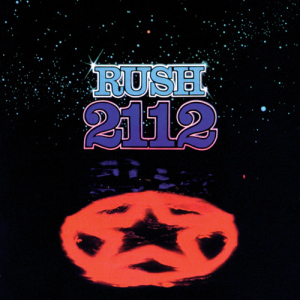
Album title:2112 Artist: Rush Nationality: Canadian Sub-genre: Heavy Prog Year: 1976 Position on list for that year: 6 Chronology: 4 of 19 Familiarity with artist: 5 Familiarity with album: 5 Gold Rated track(s): 2112, Tears Silver Rated track(s): Something for Nothing, Lessons, A Passage to Bangkok Wooden Rated track(s): Comments: The concept album to end all concept albums? Rush’s best album? There’s evidence to support both arguments, but one thing is certain: though there had been concept albums before this, 2112 stood, and still stands to a large degree, as the most cohesive single-story concept in progressive rock, or perhaps any rock, and is certainly the first, or at least one of the very few, concept albums based around a science fiction theme. I mean, sure, Hawkwind were always going on about science fiction on their albums, but let’s be honest: half the time it was hard to know what they were singing about, if they even knew themselves. 2112 was the brainchild of drummer and lyricist, the late, great Neil Peart, and concerns a society in which all forms of freedom are suppressed and banned, especially music. Against this backdrop, an ancient guitar is found, the “natural order” is threatened, and the album deals with really the struggle for free speech and free will, and ends with an attack on the Solar Federation, resulting in the freeing of all the worlds held under the power of the Priests of the Temple of Syrinx.
It’s also possibly the first, maybe only, concept prog album to also have much heavier elements of rock in it. Look at others like The Lamb Lies Down on Broadway or Rick Wakeman’s The Wives of Henry VIII, or even later material such as Spock’s Beard’s Octane: most if not all of these, while they may have heavier guitar passages and some shouted vocals, adhere to the concept (sorry) of progressive rock: long, convoluted keyboard passages, acoustic guitar, lengthy intros and outros, suites, with instruments like flute, cello, violin and harp used. Rush didn’t do that. Their concept (again, sorry) of prog rock was far more on the heavier side, which for my money really pushes them closer to the idea of being progressive metal, though this is classified on PA as “heavy prog”, which it certainly is.
This was Rush’s last chance saloon. Their first three albums had bombed, and despite the fact that I love it to death, the previous outing, 1975’s Caress of Steel had not sold well, and audiences were shrinking at their stage shows. The label was considering dropping them, but gave them one more chance. Expecting an album with better commercial material and hit singles, what they got was the opposite of that: a side-long composition that tells a story, much in the vein of “The Necromancer” and “The Fountain of Lamneth” from the previous album, and yet which rocketed them to the status of prog gods, ensuring their longevity and popularity right up to today and beyond, even though they have now broken up. Rush stuck to their guns, refused to be pushed into making a pop prog album to satisfy their paymasters, and were rewarded in spades, as was the label.
Like all good concept albums, this opens on a overture, which runs for nearly five minutes, a suitably spacey intro with feedback and wind sounds and effects before the first blasts of Alex Lifeson’s guitar punch through, and the whole thing takes off at a gallop, leaving you in no doubt that this is rock with a capital R, and hell, even an M too, perhaps. What? For Metal, dummy. Do I have to explain everything? Now, now! No need to get violent. I’ll just… be over here. After the introduction we hear the lilting tones of Geddy Lee singing “The meek shall inherit the earth”, as we power into “The Temples of Syrinx”, where Lee comes into his own as we meet the Priests, who control the worlds of the Solar Federation and are a totalitarian theocracy bent on retaining power. Geddy Lee’s high screeching voice is perfectly suited to singing the claim of the Priests as they lord it over their subjects and shriek out their arrogance.
Softly tuned guitar leads in “Discovery”, as the protagonist (I think they refer to him as the Man) discovers the ancient guitar and wonders what it is. Clever indeed here how Lifeson plays the instrument as if he is only learning to understand how it works, then we hear the more restrained side of Lee, before the Man brings the guitar to the Priests, who unsurprisingly put it down and scream and shriek at him, throwing him out of the temple after having the guitar destroyed. This song shows the first example of one of the populace standing up to the Priests, which no doubt angers and worries them. A population can only be held in thrall by fear if everyone is so held; once one person begins to fight back, you can end up with a revolution on your hands. The song veers between quiet acoustic and powerful, upfront hard rock, ending in a soaraway solo from Lifeson, which would make you think he’s going to be the hero, but it’s not the case. One man can’t take on the system, and so he wanders off, in despair now that his wonderful new discovery has been dismissed and taken from him.
“Oracle: the Dream” is another hard rock track, showing the Man that others exist beyond his planet, where music is not only allowed but celebrated and played openly, but he knows he can never be part of this and so in “Soliloquy” he loses what little hope he had and kills himself. It begins as a reflective acoustic style ballad but quickly kicks up into a punchy rocker as Lifeson lets loose. The “Grand Finale” then has the worlds of the Solar Federation taken over by another, unnamed enemy, who will, presumably, bring better times. Peart has said these are “the good guys”, though there’s never any mention of who they are. It’s assumed the Priests will be kicked out, the Temples of Syrinx knocked down, and the computers that run the planet probably used to create the internet or PornHub or something.
After the breath-taking epic, the second side of the album is more in the nature, I think, of the previous albums, with the drug anthem “A Passage to Bangkok” raising a mischievous eyebrow, a good rock track and great fun, while to be honest “The Twilight Zone” (written about the show) is the one track I always forget on the album. It’s all right I guess but if I had to pick a worst track on a classic, almost faultless album like this, it would be it. There’s more really I suppose of a sense of actual prog rock about this than there is about most of the others on side two, but it just doesn’t do anything for me. The next two are the only ones on the album not written by Peart, with Lifeson penning “Lessons”, not surprisingly very guitar-led but kind of restrained in its way, while “Tears” is a soft ballad on Mellotron written by Lee, which comes very close to being my favourite on the album, other than the title of course. The album ends then on a rip-roaring “Something for Nothing” which rocks along with real purpose and a sense of bitter accusation in Lee’s voice, perhaps a finger to the record executives who thought they knew what the world wanted from Rush, when the Canadian power trio had better ideas.
Rush ran into some problems when they name-checked Ayn Rand, upon whose novella Anthem much of the title track is based. They faced accusations of being right-wing, of supporting Nazism, which was certainly a major offence to Lee, whose parents were holocaust survivors. Soon enough though, the music media found new amusement and left Rush alone, and now that the album is reckoned one of the all-time best progressive rock albums, there’s not really anything anyone can say to damage that reputation. Nor should they.
Location: The state that proudly brought you Disco Duck
Posts: 1,513
The title track steals the show but side B is good too with Tears being the highlight for me, lovely ballad with some excellent use of mellotron which Rush didn't use very often, I wish they did more ballads.
As great as Rush were in the 70s I actually prefer their early 80s stuff, of all the classic prog bands they were the most successful at updating the prog rock sound for that decade.
I prefer early 80s Rush on the whole as well. I also think their mid-80s synth period is great; Grace Under Pressure and Power Windows are underrated and not really talked about as much as part of their legacy.
Meh, I don't know. Caress of Steel, A Farewell to Kings, Hemispheres, 2112, Fly by Night even - there's a huge slice of their best work there in the 70s. I'm not as familiar with their 80s work, but didn't it get a little more poppier and commercial?
__________________ Trollheart: Signature-free since April 2018









 Hybrid Mode
